
The Era of Sterile Symmetry
We have reached a saturation point with the algorithmic aesthetic. For the last few years, generative AI has promised a utopia of efficiency, delivering flawless gradients and mathematically perfect symmetry at the click of a button. But in the studios of Seoul and Tokyo, a different sentiment is taking hold: boredom. This is not a lack of technical capability, but a visceral reaction to the flattening of visual culture. When everything is optimized for a global average, nothing feels specific. The result is a design landscape that feels like a high-resolution void.
This shift is particularly evident in the luxury sector. The luxury watch industry, for instance, is finding that its traditional strategies of incremental price hikes are no longer sufficient to capture the attention of Gen Z. There is a growing demand for bolder innovation and ideas that break from the well-worn paths of heritage (Source: Business of Fashion, 2026). The youth market is not looking for more of the same perfection; they are looking for invention that feels risky, raw, and intentionally disruptive.

Why now? The delta between 2024 and 2026 has been the realization that prompt engineering has a ceiling. We've moved from the awe of 'AI can make this' to the frustration of 'AI always makes it look like this.' The current trend is a deliberate retreat from the 'perfect' output. Designers are now introducing 'friction'—intentional errors, asymmetric layouts, and raw textures—to signal human presence in a world of synthetic polish.
The Authenticity Gap
The problem isn't that AI cannot be beautiful. It's that beauty, in the context of cultural heritage, is a secondary metric. Research into AI-designed heritage reveals a critical two-stage model of audience acceptance: aesthetics matter, but their influence is funneled through authenticity rather than acting independently (Source: Bioengineer.org, 2026). If a design is perceived as beautiful but lacks legitimacy, the audience does not engage. They don't want to own it, share it, or celebrate it.
"AI systems trained on visual data can reproduce surface stylistic features of a tradition—the color palettes, the symmetry, the characteristic motifs—but they do not inherently encode the narratives, values, and communal practices that make heritage meaningful."— Research Findings, Bioengineer.org (2026)
This is where the 'Anti-Design' movement finds its teeth. By rejecting the surface-level symmetry that AI excels at, designers are attempting to re-encode the communal narratives that algorithms ignore. They are moving away from the 'prompt' and back toward the 'process.' This means embracing the messy reality of physical materials and the idiosyncratic choices that a machine would optimize away as an 'error.'
| Design Attribute | AI-Generated Perfection | Human-Centric Anti-Design |
|---|---|---|
| Symmetry | Mathematically precise | Intentionally asymmetric |
| Cultural Depth | Surface stylistic features | Embedded narratives/values |
| Audience Reaction | Passive aesthetic appreciation | Active desire to own/share |
| Primary Driver | Prompt efficiency | Cultural resonance |
This tension is playing out in real-time across the globe. While North American markets have long dominated the design conversation, we are seeing a massive pivot toward Asian practices. Matrix Design, for example, recently ranked No. 1 on Interior Design’s 2026 International Giants list (Source: Business Insider, 2026). This isn't just a win for one firm; it signals a broader trend of Asian design practices gaining dominant international presence by blending high-end commercial viability with a distinct regional perspective that resists Western homogenization.
The friction is most palpable in the studio. I've spoken with practitioners who describe the 'prompt war'—the exhausting cycle of trying to tell an AI to be 'less perfect' or 'more soulful,' only to have the machine return another sanitized version of beauty. The real debate isn't about whether AI is a tool, but whether the tool is erasing the very 'glitches' that make a piece of work feel human. The professional consensus is shifting: the value is no longer in the output, but in the evidence of the struggle to create it.
Beyond the Prompt: Reclaiming the Narrative
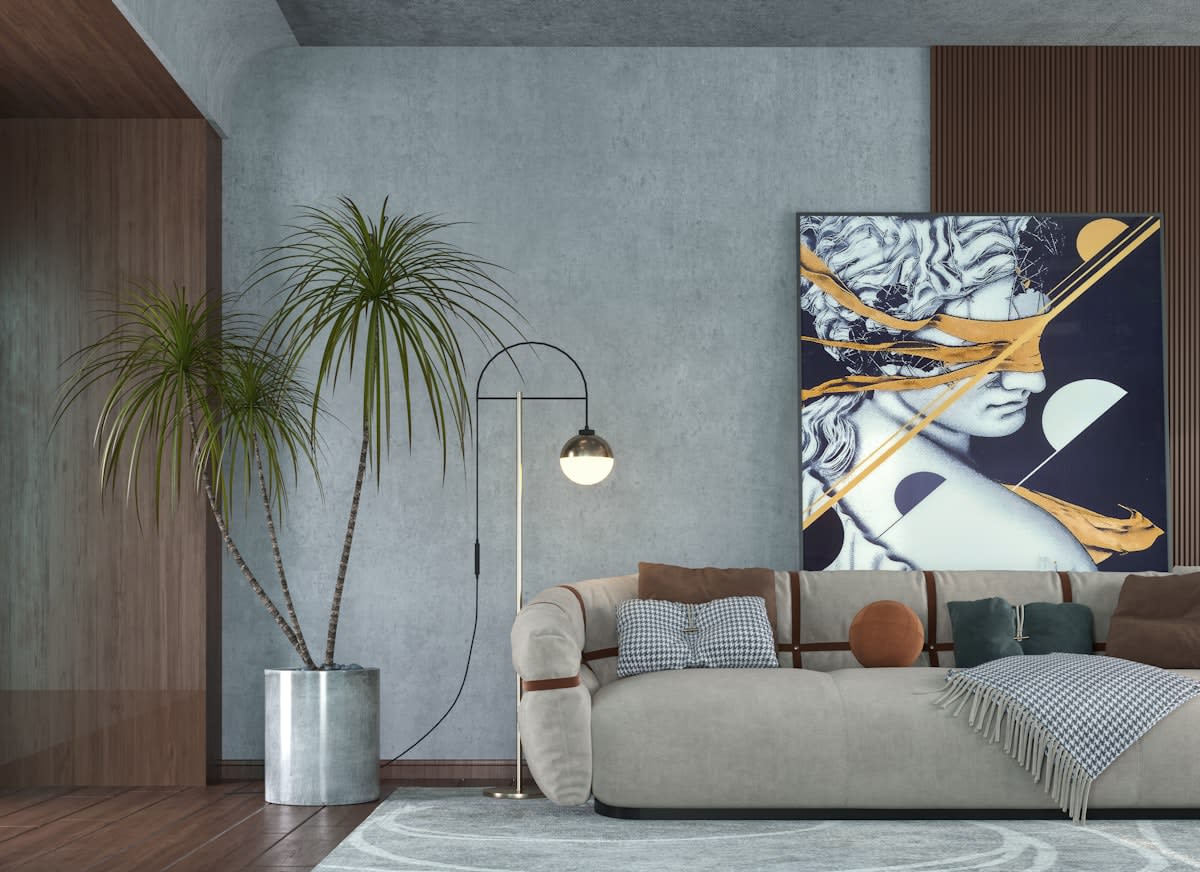
To fight the boredom of AI perfection, the next generation of designers is treating 'imperfection' as a luxury good. In a world where a perfect image is cheap and instantaneous, the 'ugly' becomes exclusive. This is the core of the Anti-Design ethos: it is a strategic deployment of chaos to signal authenticity. By breaking the rules of layout and color theory, designers create a visual speed bump that forces the viewer to stop and actually look, rather than passively scrolling through a stream of AI-optimized content.
This approach is not merely an aesthetic choice; it is a survival strategy for cultural transmission. As generative systems produce heritage-inspired designs at a scale no human craft can match, the danger is that living traditions will be flattened into mere 'styles' (Source: Bioengineer.org, 2026). The response from the vanguard is to lean into the parts of design that AI cannot simulate: the historical context, the communal value, and the intentional flaw.
- Rejection of surface-level symmetry in favor of narrative-driven layouts.
- Integration of 'human friction' to combat the sterility of generative AI.
- Shift toward Asian design leadership, as seen with the rise of firms like Matrix Design.
- Prioritization of cultural legitimacy over pure aesthetic beauty to drive audience engagement.
Ultimately, the battle against AI perfection is a battle for meaning. The industry is learning that when you remove the struggle from the creative process, you remove the soul from the result. The rise of Anti-Design is not a rejection of technology, but a recalibration of its role. The tool should assist the vision, not define the aesthetic.
Fact-Check & Accuracy Note
Key claims regarding audience acceptance models and the limitations of AI in cultural heritage are sourced from Bioengineer.org (2026). Market rankings for Asian design firms are based on Interior Design’s 2026 International Giants list via Business Insider. The demand for innovation in luxury watches is attributed to The Business of Fashion (2026). Ongoing debate remains regarding the exact threshold where 'anti-design' ceases to be a trend and becomes a new standard of 'perfection' itself.