LED-bleached glass is dying. The Transport Research Laboratory found that touchscreen infotainment systems increase driver reaction times by 57%, a metric that exceeds the 46% delay caused by handheld phone calls (Source: TechTimes, 2026). This failure is not a glitch but a systemic collapse of the silicon-etched paradigm. For a decade, designers chased the aesthetic of a seamless black slab, ignoring the copper-wire reality of human cognition. Now, the data shows that the cognitive load of navigating buried menus for basic functions like windshield wipers is creating a lethal environment on the roads of the American Midwest and the congested arteries of Los Angeles.
The Haptic Backlash
Greasy fingerprints now smudge the promise of the digital cockpit. A survey of 92,000 US car buyers reveals that infotainment systems generate more complaints in the first 90 days of ownership than any other vehicle system (Source: TechTimes, 2026). Drivers are reporting visceral frustration with temperature controls and lighting systems that have been buried under layers of fiber-optic menus. This is a street-level rebellion against the removal of physical buttons. In the workshops of Detroit and the showrooms of Tokyo, the demand for tactile, click-heavy interfaces is returning as a safety mandate rather than a luxury preference.
"Using a touchscreen infotainment system increased drivers' reaction times by 57% — worse than a handheld phone call, which increased reaction time by 46% in the same study."— Transport Research Laboratory (TRL), via TechTimes
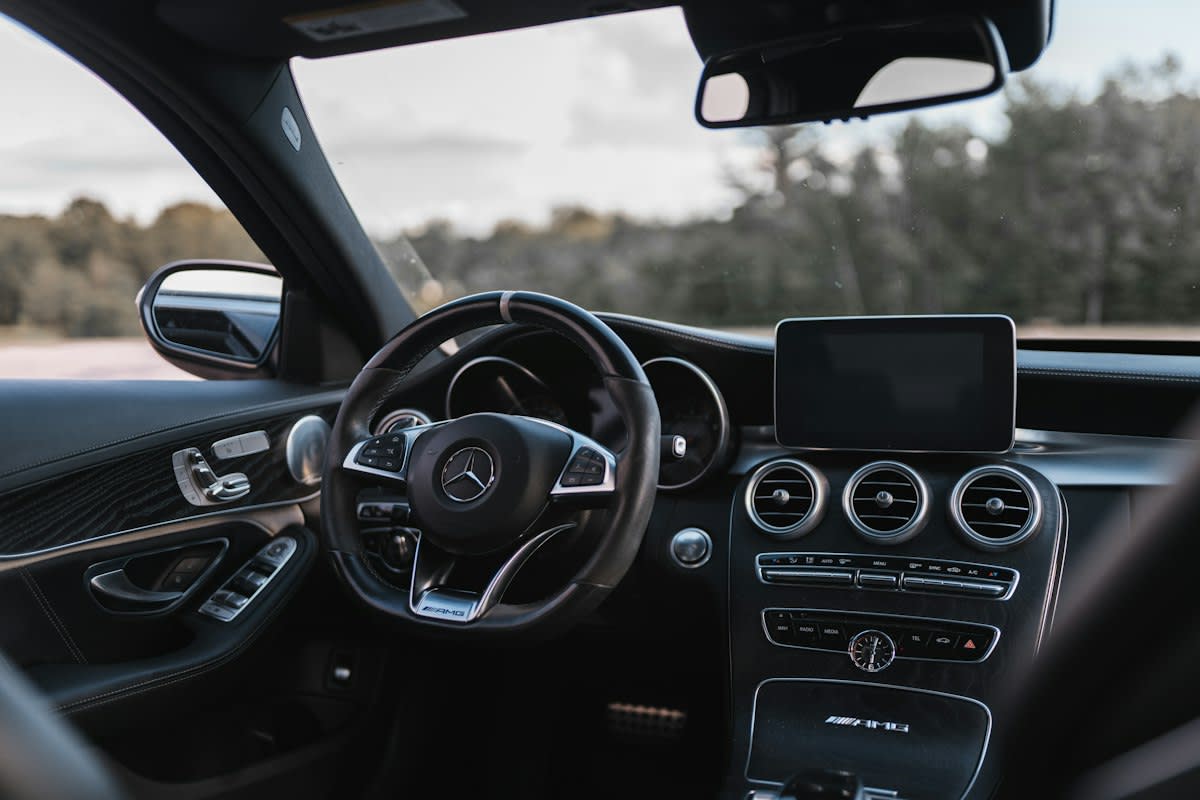
The delta between 2025 and 2026 is a violent correction. Twelve months ago, the industry standard was to erase every physical switch in favor of a single, glowing pane of glass. Today, three safety bodies are mandating the return of physical buttons to mitigate the visual and manual attention demands that lead to collisions (Source: TechTimes, 2026). The friction is no longer in the hardware, but in the human brain's inability to process a flat surface while moving at 70 miles per hour. We are seeing a forced return to the oxidized, clicky reality of the analog switch.
| Interface Type | Reaction Time Increase | Primary Attention Demand |
|---|---|---|
| Full Attention | 0% | None |
| Handheld Phone Call | 46% | Cognitive |
| Touchscreen System | 57% | Visual, Manual, Cognitive |
This movement toward tactile redundancy is not limited to the automotive sector. The Expert Academic Panel on Neurodiversity has highlighted the necessity of sensory intelligence in workplace design, pushing for tool kits that move beyond the visual (Source: GOV.UK, 2026). The report suggests that essential information must be presented through redundant modes—pictorial, verbal, and tactile—to ensure accessibility for those with sensory limitations. The flat screen is a bottleneck, a single point of failure that ignores the multifaceted nature of human perception.
The Architecture of Sensory Intelligence
Legibility is now a battle of contrast and texture. Design guides are moving away from the sterile, LED-bleached minimalism of the previous era to embrace needs-led tool kits that prioritize function over form (Source: GOV.UK, 2026). This includes the abandonment of block capitals, underlining, and italics in favor of high-contrast, sans-serif fonts that maximize the ease of information retrieval. The goal is to reduce the cognitive friction that occurs when a user is forced to fight with a poorly designed interface. It is a move toward a more inclusive, grit-textured approach to media consumption.
- Redundant presentation using pictorial, verbal, and tactile modes (Source: GOV.UK, 2026).
- High-contrast text backgrounds to eliminate visual strain.
- Avoidance of block capitals and italics to improve legibility.
- Implementation of needs-led tool kits for literacy, numeracy, and executive function.
Practitioners in the field are currently locked in a war between the aesthetic of the minimal and the utility of the tactile. In design studios across London and New York, the debate has moved from 'how do we make it sleeker' to 'how do we make it feelable.' There is a growing realization that the silicon-etched screen is a sensory deprivation chamber that limits user interaction to a single, numb dimension. The friction occurs when the marketing department's desire for a 'clean' look clashes with the safety engineer's requirement for a physical knob that can be operated by feel alone.
Neural Voids and Induced Hallucinations
Screens are being replaced by the void. Research into Multimodal Ganzfeld (MMGF) demonstrates that sensory deprivation can induce complex visual hallucinations in healthy individuals by altering predictive inference (Source: BioRxiv, 2026). By stripping away the LED-bleached noise of the modern world, the brain begins to generate its own imagery, mapped by distinct EEG microstate dynamics. This suggests that the ultimate end-game for the flat screen is not a better screen, but the removal of the screen entirely in favor of direct neural stimulation.
The fringe of design is already experimenting with these 'neural chrome' concepts. Discussions in underground designer circles suggest a future where interfaces act as sensory deprivation chambers that plug directly into the brain, bypassing the optic nerve entirely (Source: Reddit, 2026). This would allow for art and data that are only visible to the user, etched not in pixels but in electrochemical pulses. The flat screen is merely a clumsy bridge to this fiber-optic future, a temporary crutch that we are now beginning to discard.
The Failure Point
The collapse of the flat screen occurs at the intersection of cognitive overload and sensory starvation. When a driver in a rain-slicked suburb of Ohio must navigate three sub-menus to activate a defroster, the interface has failed (Source: TechTimes, 2026). When a neurodivergent employee is forced to interact with a sterile, non-tactile system that provides no sensory feedback, the design has failed (Source: GOV.UK, 2026). The failure point is the assumption that the eye is the only reliable sensor. By ignoring the tactile and the neural, the silicon-etched era created a bottleneck that is now being forcibly widened.
Editorial Note
The current trend is a violent swing back toward haptics. We are moving from the 'Glass Age' to the 'Sensory Age,' where the value of an interface is measured by its tactile density and cognitive efficiency rather than its pixel count.
Fact-Check & Accuracy Note
All reaction time data is attributed to the Transport Research Laboratory (TRL) and IAM RoadSmart as reported by TechTimes in 2026. Neurodiversity guidelines are sourced from the GOV.UK Expert Academic Panel report. Hallucination data is sourced from BioRxiv multimodal Ganzfeld studies.