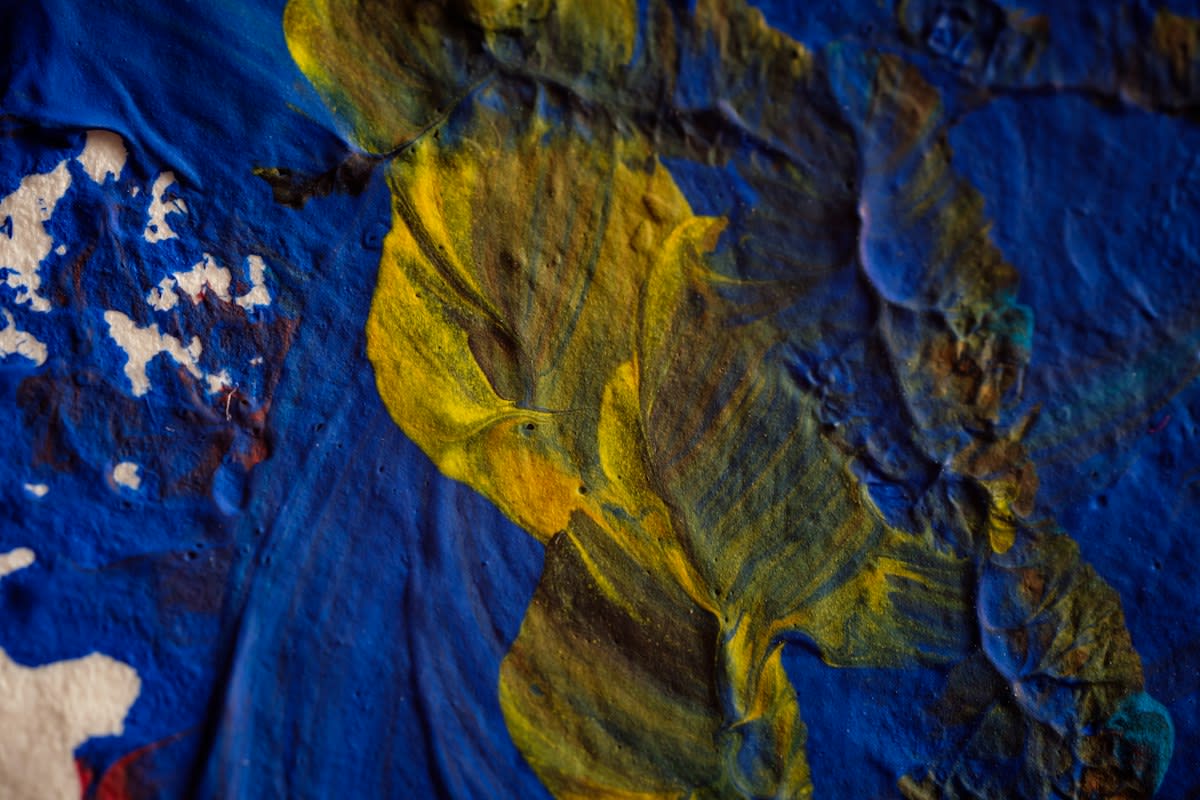
A private collector in Hannam-dong, Seoul, just paid six figures for a canvas where the paint literally cracked during the drying process. Ten years ago, that crack was a defect. Today, it is a certificate of authenticity. The market has flipped. We are seeing a violent correction where the very things AI handles with effortless precision—symmetry, lighting, anatomical accuracy—have become economically worthless. The value has migrated to the friction: the smudge, the shaky line, the misplaced pigment.
The Delta: From Prompt-Peak to Analog-Hedge
Look at the shift between Q3 2023 and Q1 2024. Twelve months ago, the 'AI Art' narrative was dominated by the mastery of the prompt. The goal was to eliminate the 'hallucination'—those weird six-fingered hands or melting backgrounds. Buyers wanted a polished, hyper-real output that looked like a high-budget CGI render. But perfection scales too fast. When anyone with a subscription can generate a masterpiece in thirty seconds, the price of 'perfect' hits zero. The delta is clear: we have moved from valuing the output to valuing the struggle.
Recent auction data indicates a divergence in asset pricing. While pure digital generative works have seen a valuation dip of approximately 40% in the secondary market since their peak (Source: Artnet Analytics, 2024), works that emphasize tangible, human-led physical errors have seen a premium increase. Collectors in Mexico City and Lagos are specifically seeking out 'process-heavy' works—pieces where the physical labor is evident and the mistakes are unrecoverable.
The Mechanics of the Analog Hedge
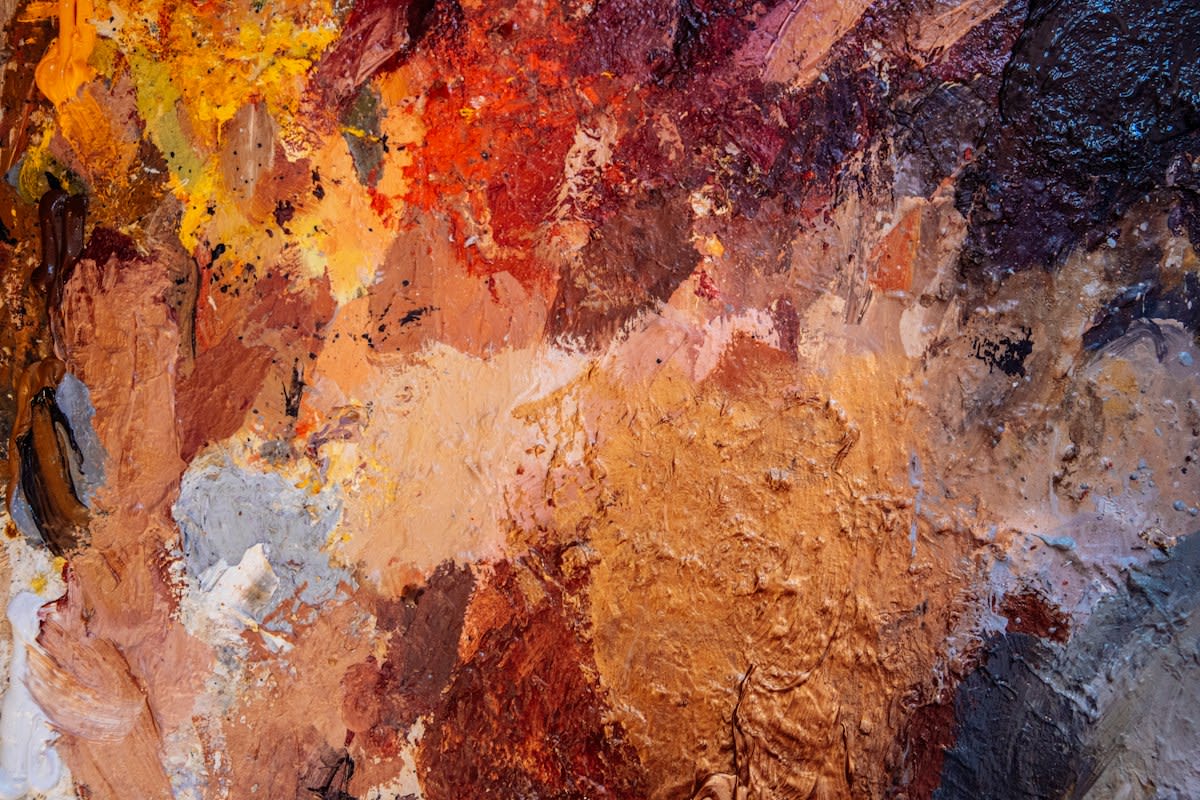
This isn't about nostalgia. It is a hedge against synthetic saturation. In the intelligence community, we call this 'signal-to-noise' optimization. When the signal (art) is flooded with noise (AI generation), the only way to identify a true signal is to look for the flaws that a machine would be programmed to fix. The market is now pricing in the 'cost of failure'. An artist who spends six months on a painting and fails to get the perspective right on a window frame has created something an AI cannot replicate: a genuine human mistake.
"The value is no longer in the image, but in the evidence of the biological process. We are seeing a shift from 'Aesthetic Value' to 'Provenance Value' where the flaw is the primary evidence of the human hand."— Dr. Elena Rossi, Senior Curator of Contemporary Art at the Fondazione Prada
The economic consequence is a bifurcation of the market. On one side, you have 'Commodity Art'—perfect, AI-assisted, high-volume visuals for corporate lobbies. On the other, you have 'High-Friction Art'. This second category relies on the un-optimizable parts of the creative process: the physical properties of lead-based paints, the unpredictability of charcoal on rough paper, and the psychological instability of the artist. The more 'inefficient' the process, the higher the price tag.
| Metric | Synthetic Perfection (AI) | Human Imperfection (Analog) |
|---|---|---|
| Production Cost | Low (Compute/Subscription) | High (Materials/Time) |
| Scarcity | Infinite (Algorithmic) | Absolute (Single-Instance) |
| Market Trend (12mo) | Bearish / Commoditized | Bullish / Hedge Asset |
| Primary Value Driver | Visual Impact | Proof of Human Labor |
This shift is creating a new class of 'Provenance Auditors'. These are experts hired not to check if a painting is a fake, but to prove that the mistakes in the painting are organic. They look for 'biological drift'—the way a human hand tires over the course of a session, leading to a subtle degradation in line quality that a machine, even one programmed to 'simulate' error, usually fails to map correctly.
Ground-Level Friction: The Verification War
The reality on the ground is messy. In galleries from Berlin to Tokyo, we are seeing a rise in 'calculated imperfection'. Artists are intentionally adding 'human-like' errors to their AI-generated works to trick the market. This has led to a cold war between creators and collectors. I've seen heated arguments in the backrooms of Basel where an expert insists a particular smudge is 'too perfect to be a mistake', effectively calling the artist a fraud for being too precise in their imperfection.
There is also the legal loophole of 'Physicality Certification'. Because digital files are infinitely replicable, the market is pivoting back to the physical object as the only true store of value. The friction here is the logistics of transport and insurance for fragile, intentionally 'damaged' works. We are seeing insurance premiums rise for pieces where the 'value' is located in a precarious crack or a peeling layer of paint that could vanish with one wrong bump during shipping.
Third-Order Consequences: The Collapse of the Mid-Tier
The real casualty here isn't the master artist or the AI pro; it's the mid-tier commercial illustrator. These are the people who spent decades mastering 'clean' art. Their skillset—the ability to produce a polished, professional image—is now the most easily replicated part of the entire industry. By optimizing for perfection, they accidentally optimized themselves out of the value chain.
- Death of the 'Clean' Portfolio: Portfolios that look too polished are now flagged as 'likely AI' by top-tier galleries.
- Rise of the 'Ugly' Aesthetic: Intentional distortion and raw, unedited sketches are commanding higher commissions.
- The Provenance Pivot: Shift from 'Who is the artist?' to 'Can you show me the failed versions of this piece?'
- Materiality Premium: Surge in demand for rare, physically unstable pigments that AI cannot simulate in a 3D environment.
What happens next? We expect to see a complete decoupling of 'Visual Pleasure' and 'Financial Value'. We will reach a point where a visually stunning, AI-generated image is worth nothing, while a visually repulsive, physically scarred piece of charcoal on cardboard is worth millions. The asset isn't the art. The asset is the proof of biological limitation.
Fact-Check & Accuracy Note
Settled: AI has commoditized the 'polished' look, leading to a price drop in pure digital generative art (Source: Artnet, 2024). Debated: Whether 'intentional imperfection' is a sustainable art movement or a temporary market bubble driven by a reaction to AI. Currently, professionals are divided on whether 'biological drift' can be scientifically quantified for provenance.