The Death of the Polished
For decades, the trajectory of media production was a relentless march toward the frictionless. We chased higher resolutions, cleaner audio, and mathematically perfect symmetry. We built tools to erase the smudge, the stutter, and the stray brushstroke. But we have reached a tipping point. When a machine can generate a flawless 8K image or a perfectly modulated voice in seconds, perfection ceases to be a marker of quality. It becomes a commodity. In a world flooded with synthetic perfection, the 'perfect' output is now the baseline—and the baseline is boring.
This shift isn't just an aesthetic preference; it is a psychological reaction to the Uncanny Valley. As synthetic media becomes indistinguishable from reality, the human brain begins to crave the 'tell'—the subtle, erratic signifier that a living, breathing person was involved in the creation. We are seeing a systemic pivot where the value of a piece of art or design is no longer derived from its technical execution, but from its resistance to automation. The 'Imperfection Premium' is the emerging economic value placed on the mistakes that a machine would be programmed to avoid.
The Economics of the Glitch
Why does a handwritten letter carry more weight than a perfectly formatted email? Why is a vinyl record's crackle more desirable than a lossless digital stream? The answer lies in the cost of production. In the traditional economy, errors were expensive because they required restarts. In the synthetic economy, perfection is free, making the intentional error an expensive choice. We are witnessing the birth of 'Proof of Effort' as a new currency in the creative industries.
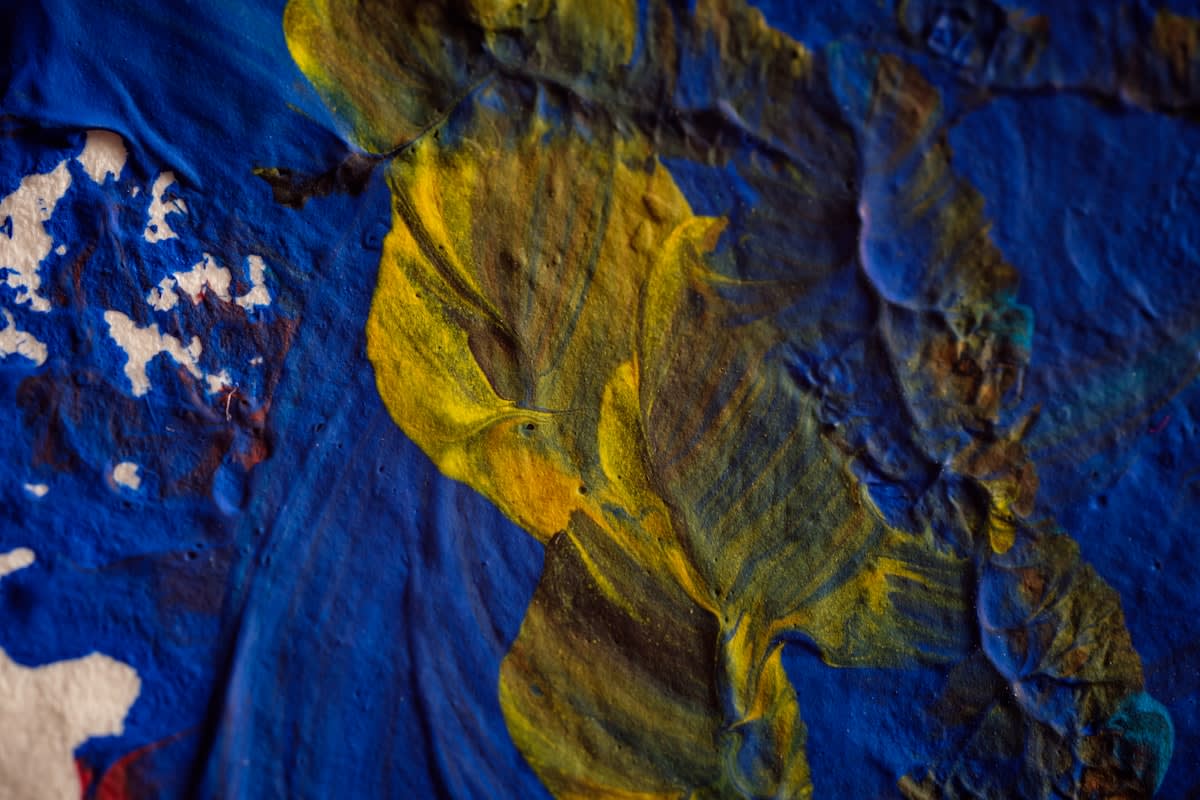
According to the 2024 Edelman Trust Barometer, consumer trust in AI-generated content continues to fluctuate, with a growing preference for 'transparently human' origins (Source: Edelman, 2024). This distrust of the seamless is driving a market where 'analog' is no longer a technical description, but a luxury brand. When the cost of generating a perfect image drops to near zero, the value of a physical canvas—with its uneven texture and accidental drips—skyrockets. The error is the receipt; it proves that a human spent time, effort, and risk on the work.
"The paradox of the AI era is that as we gain the ability to remove all friction from creation, we find that friction was the only thing giving the work soul. We aren't paying for the art; we are paying for the evidence of the human struggle against the medium."— Marcus Thorne, Creative Strategist at The New Aesthetic Lab
This isn't just happening in galleries. It's happening in high-end branding. Luxury houses are moving away from the hyper-sanitized CGI look of the 2010s and returning to grainy film, raw photography, and asymmetric layouts. They are intentionally introducing 'noise' to signal authenticity. If a brand looks too perfect, the modern consumer suspects it's synthetic, and therefore, disposable.
| Attribute | Synthetic Media (The Commodity) | Human-Centric Media (The Luxury) |
|---|---|---|
| Symmetry | Mathematically Perfect | Organic/Asymmetric |
| Predictability | High (Pattern-based) | Low (Erratic/Intuitive) |
| Texture | Smooth/Clean | Tactile/Grainy |
| Value Driver | Efficiency & Speed | Scarcity & Effort |
| Emotional Signal | Competence | Intimacy |
Is this just another trend cycle, or a fundamental shift in how we perceive value? To understand this, we have to look beyond the West.
A Global Renaissance of the Raw
The Imperfection Premium is manifesting differently across the globe, reflecting deep-seated cultural attitudes toward error. In Japan, the philosophy of Wabi-Sabi—finding beauty in imperfection and impermanence—has always provided a framework for this. But now, it is being weaponized as a strategic counter-balance to the digital onslaught. We see a resurgence in Kintsugi (the art of repairing broken pottery with gold), where the break is not hidden but highlighted. This is the ultimate expression of the Imperfection Premium: the damage becomes the most valuable part of the object.
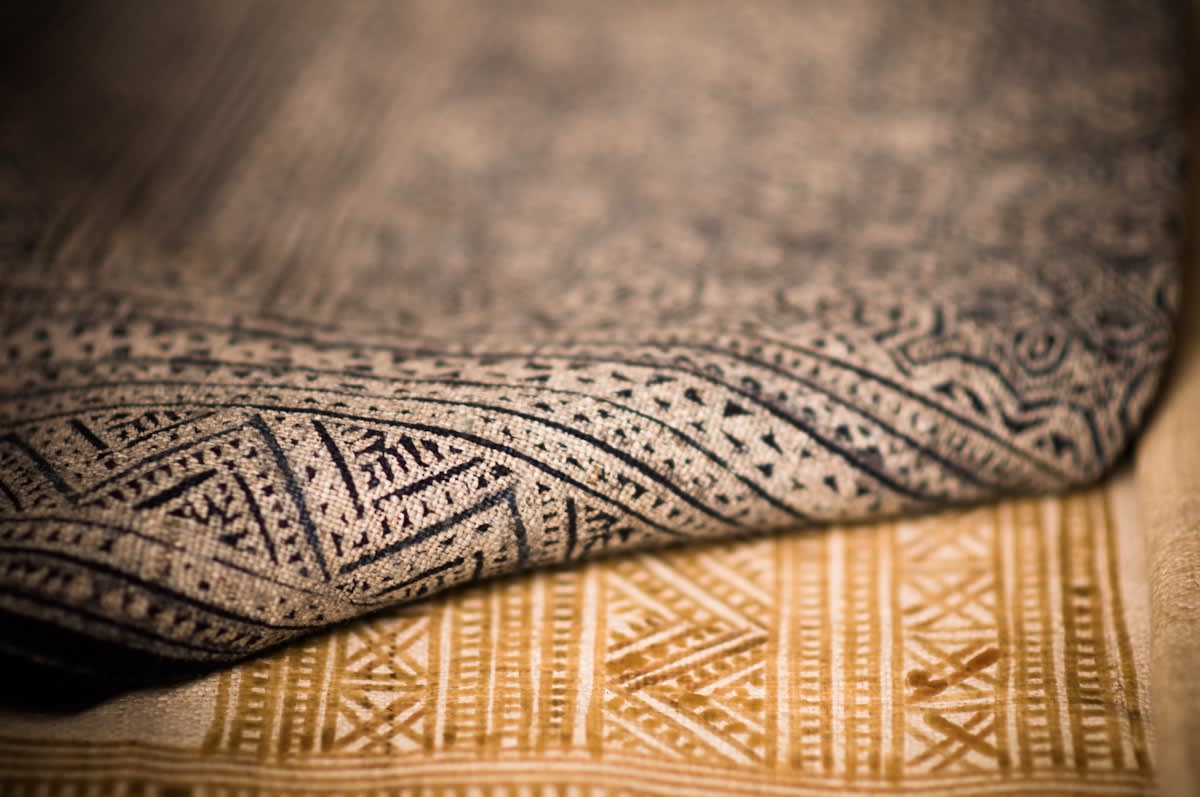
Meanwhile, in the Global South, artisanal movements in India and Peru are seeing a renewed interest from international luxury markets. The subtle irregularities in hand-loomed textiles, which were once seen as 'defects' compared to factory-made fabrics, are now being marketed as 'signatures of authenticity.' The market is shifting from wanting the 'best' version of a product to wanting the 'most human' version.
Even in the digital realm, we see the 'Lo-fi' movement. From the chilled-out beats of YouTube streams to the intentional use of 8-bit aesthetics in modern gaming, there is a global rejection of high-fidelity. By limiting the technical capability, artists force the listener or viewer to focus on the emotion rather than the production value. It is a strategic retreat from the arms race of resolution.
The Practitioner's Dilemma: Designing the Flaw
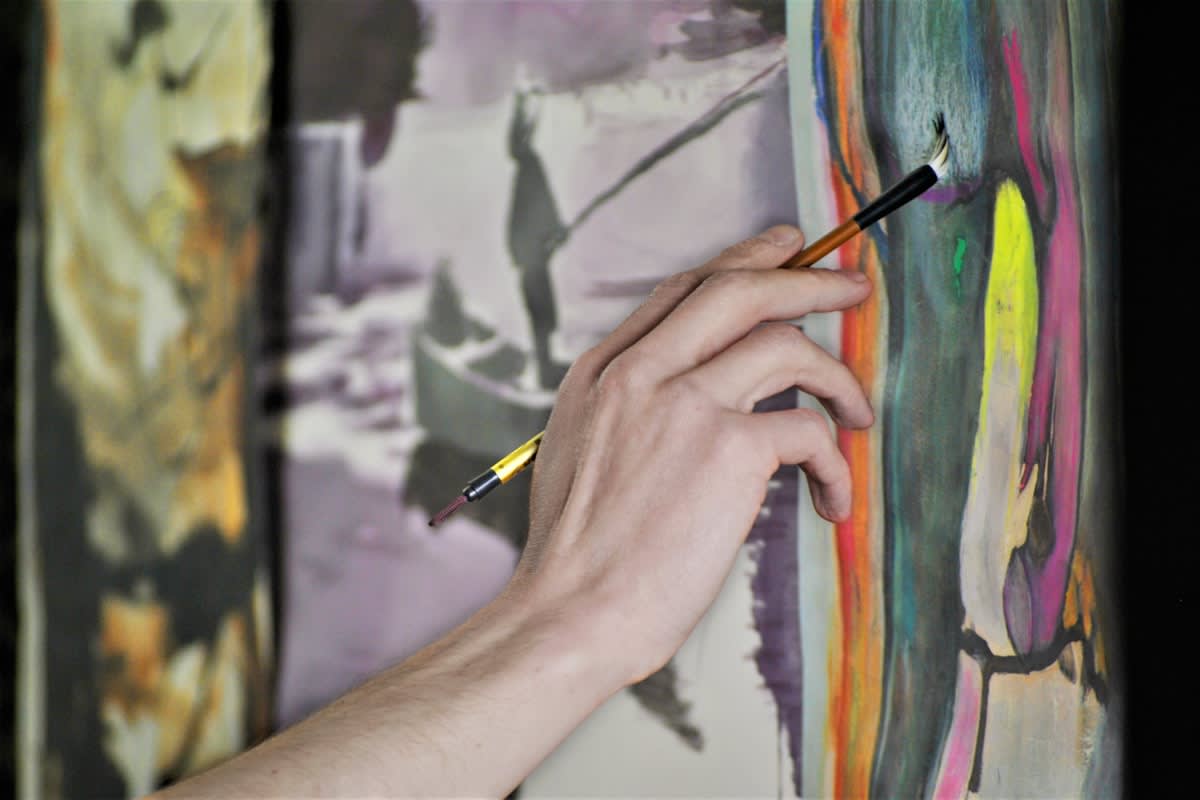
On the ground, this creates a bizarre paradox for the modern creative. In the war rooms of top-tier agencies from London to Seoul, the conversation has shifted. We aren't arguing about which tool produces the cleanest render anymore. We're arguing about how to strategically re-introduce the 'shiver'—that slight, human instability in a voiceover or the uneven ink bleed of a physical print. The goal is no longer quality in the traditional sense; it's the evidence of effort. Practitioners are now spending hours 'de-perfecting' work that a machine finished in seconds.
This leads to a heated internal debate: is an intentional mistake still a mistake? If a designer uses a plugin to add 'analog noise' to a digital image, are they creating authenticity or just simulating it? The industry is currently split between the 'Purists,' who believe the Imperfection Premium only applies to truly manual labor, and the 'Strategists,' who believe that the feeling of humanity is what matters, regardless of how it is achieved. The friction lies in the transparency of the process.
- The Purist View: Value is derived from the actual risk of failure during creation.
- The Strategist View: Value is derived from the psychological perception of human presence.
- The Synthetic View: Perfection is the goal; imperfection is a stylistic choice to be optimized.
The reality is that as AI becomes the primary engine of production, the role of the human shifts from 'creator' to 'curator of flaws.' The expert is no longer the person who can execute the perfect line, but the person who knows exactly where to break the line to make the viewer feel something.
The Strategic Pivot
For brands and creators, the path forward is not to fight the synthetic wave, but to lean into the gaps it leaves behind. The strategy is simple: automate the mundane and manualize the meaningful. If everything in your brand experience is seamless, you are invisible. To be seen, you must be slightly broken.
We are moving toward a bifurcated market. On one side, we will have 'Utility Media'—perfect, efficient, AI-generated content designed for speed and information. On the other, we will have 'Experience Media'—imperfect, slow, human-centric content designed for connection and status. The premium will always accrue to the latter because it offers the one thing AI cannot: a shared biological vulnerability.
The bottom line is that we are redefining luxury. Luxury is no longer about the absence of flaws; it is about the presence of a human being. In the age of the algorithm, the most radical thing you can be is flawed.
Fact-Check & Accuracy Note
The claims regarding consumer trust in synthetic media are based on the 2024 Edelman Trust Barometer. The analysis of the 'Imperfection Premium' as an economic driver is an emerging synthesis of current trends in the luxury arts and design sectors. There is ongoing debate among practitioners regarding whether 'simulated imperfection' holds the same value as 'organic imperfection.'