Why has Brazil accused the US of election interference?
Source Entity
BBC News
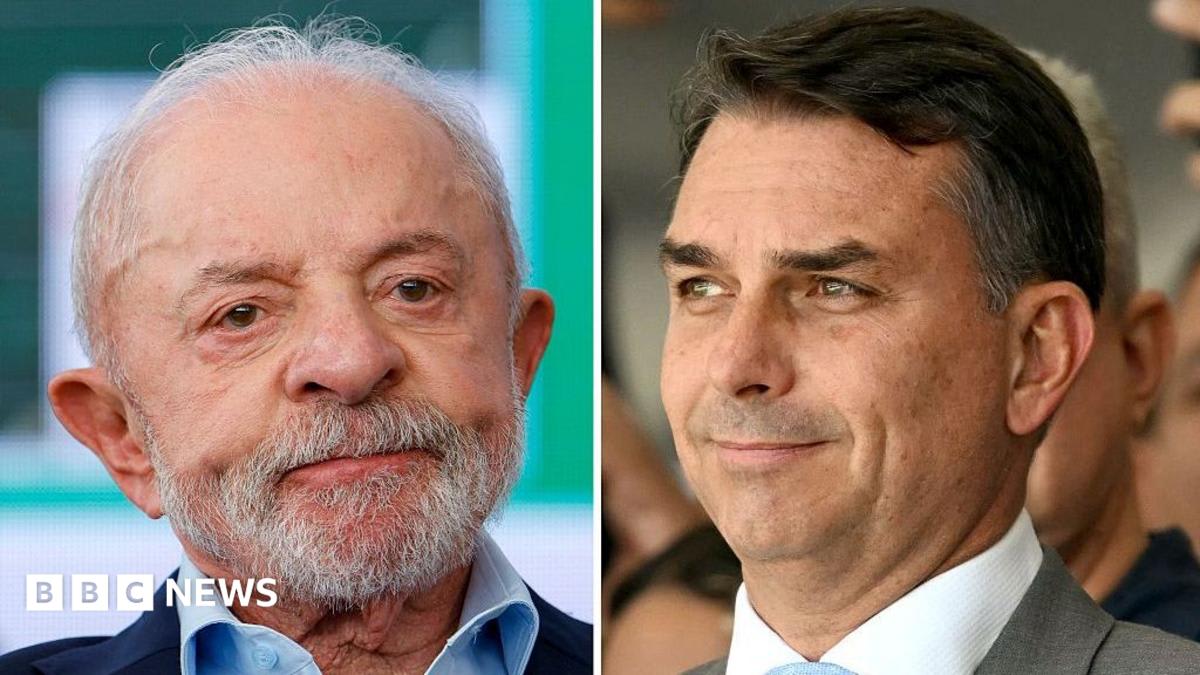
Brazilian President Lula da Silva is campaigning for a fourth term, framing the election as a critical battle against the far-right influence of Flávio Bolsonaro. The race is tight, with international markets and geopolitical blocs closely watching the outcome.
The High-Stakes Battle for Brazil's Future
As Brazil approaches a pivotal election, President Luiz Inácio Lula da Silva has positioned his candidacy as the singular barrier against the resurgence of far-right governance. Leading a massive campaign march through Rio de Janeiro, the 80-year-old incumbent has explicitly framed the contest as a binary choice between his leadership and what he describes as the "barbarism" of his political rivals. This rhetoric underscores a deeply polarized landscape where the ideological divide has reached a boiling point.
The Rise of the Bolsonaro Legacy
At the center of the opposition is Flávio Bolsonaro, whose campaign represents a continued challenge to the current administration. The political influence of the Bolsonaro family remains a potent force in Brazilian politics, with recent rallies in São Paulo demonstrating their capacity to mobilize significant crowds. The symbolic imagery of the campaign, including a giant balloon of Donald Trump holding the current president, highlights the transnational nature of this political friction.
Geopolitical Alignments and the 'Shield of the Americas'
This election is occurring against a backdrop of shifting regional power dynamics. The "Shield of the Americas," a coalition of 15 countries led by right-wing or far-right governments, reflects a broader trend across Latin America. U.S. President Donald Trump has actively cultivated this bloc, boasting that his endorsed candidates have seen consistent success in recent regional elections. This international context adds a layer of complexity to the Brazilian race, as the outcome could either reinforce or disrupt this growing hemispheric alliance.
Economic Implications and Market Volatility
Wall Street and global investors are closely monitoring the electoral data as they prepare for two vastly different economic futures. Market sentiment has shown significant sensitivity to the fluctuating poll numbers of the candidates. While prediction markets have recently favored Flávio Bolsonaro with a 60% probability of victory, analysts suggest these figures may not fully capture the local sentiment, given that such betting platforms are prohibited within Brazil.
The Impact of Market Expectations
Interestingly, as Bolsonaro's polling numbers have improved in the final months leading up to the vote, Brazilian stocks have responded with upward movement. This correlation suggests that investors are pricing in a potential shift in governance. However, experts like Richard Lapper of Aurora Macro Strategies caution that the "balance has shifted" toward the opposition, but perhaps not to the extent suggested by speculative prediction markets, leaving the final outcome in a state of high uncertainty.
Conclusion: A Nation at a Crossroads
The upcoming election represents more than just a change in leadership; it is a fundamental test of Brazil’s political trajectory. With Lula da Silva emphasizing his role as the protector against far-right "fascism" and the opposition gaining momentum through international backing and market favor, the country stands on the precipice of a definitive shift. As voters head to the polls, the global community remains focused on whether Brazil will maintain its current path or pivot toward the right-wing coalition gaining traction elsewhere in the Americas.
Multiple Citing Sources