What Meta got right with Muse
Source Entity
Hacker News
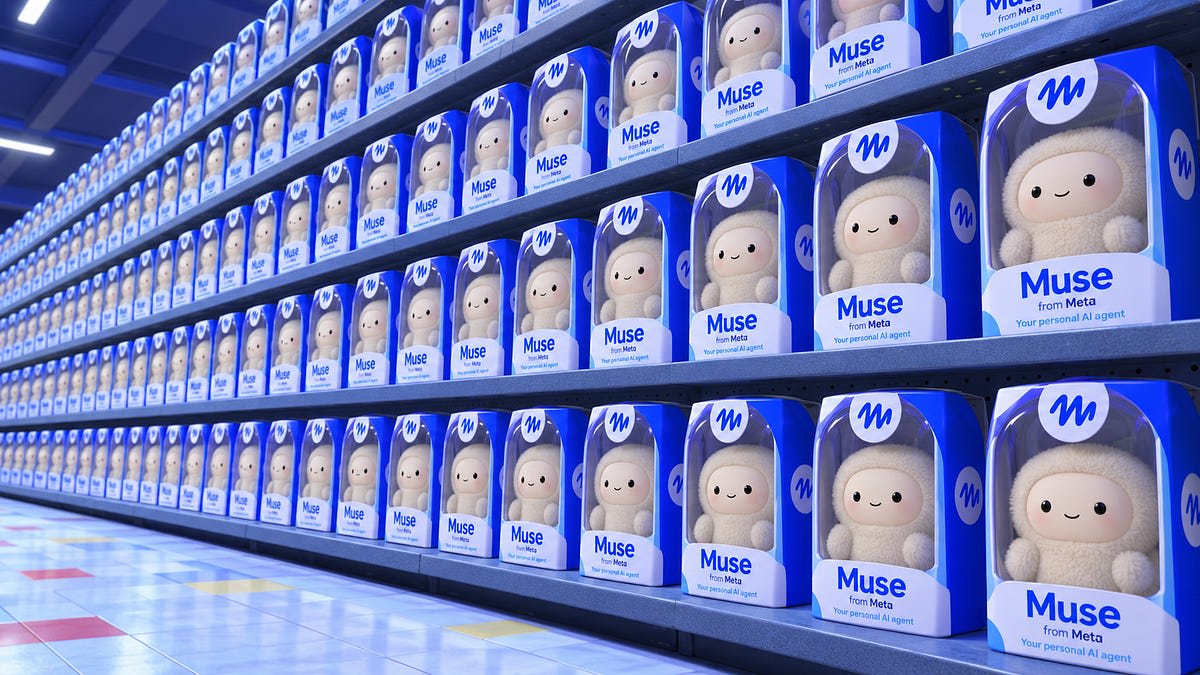
Meta's Muse tool reflects the current state of agentic AI, where success stems from superior product design rather than groundbreaking technical novelty. While its core capabilities mirror existing tools, its execution highlights the growing importance of user experience in AI development.
The Evolution of Agentic AI: Lessons from Meta's Muse
Deconstructing the Hype
In the rapidly accelerating landscape of artificial intelligence, Meta’s recent release of the Muse tool has sparked significant discourse among product designers and AI engineers. While the tool has garnered attention for its capabilities, industry veterans like Mete—a designer with extensive experience at firms like Netflix and Peloton—note that there is little fundamentally novel about the underlying technology. The core components driving Muse have been accessible for over a year through various frontier agentic products, including Codex, Claude Code, and Hermes.
The Product Design Advantage
If the technology is not new, why is Muse significant? The answer lies in the intersection of engineering and product craft. For years, the AI industry has been obsessed with model performance and parameter counts, often neglecting the user interface (UI) and user experience (UX) layers. Meta’s success with Muse underscores a shift where the "how" of interaction—the seamless integration of agentic workflows into a daily builder's routine—matters more than the raw power of the underlying LLM.
Contextualizing the Agentic Landscape
To understand Muse, one must look at the broader ecosystem of agentic AI. For the past six months, developers have been able to replicate similar functionalities using open-source harnesses and existing APIs. However, the friction involved in setting up these environments often acts as a barrier to entry. Meta has managed to package these capabilities into a cohesive product, proving that accessibility and design-led implementation can be a competitive moat even when the backend technology is widely available.
The Role of Craft in AI Development
As AI tools become commoditized, the role of the product designer becomes increasingly critical. The "craft" of building AI products involves sweating the details: handling edge cases, managing token costs, and ensuring that the agent remains helpful rather than obstructive. Meta’s approach with Muse suggests that future AI winners will not necessarily be those with the most advanced models, but those with the most refined, user-centric interfaces.
Future Trends in AI Tools
Looking ahead, we can expect a bifurcation in the AI market. On one side, we will see the continued arms race of frontier model providers; on the other, we will see a surge in "agentic product builders" who prioritize the user journey. The success of Muse is a harbinger of this trend, signaling that the industry is moving past the "wow factor" of LLMs and into a phase of mature, practical product integration.
Conclusion
Meta’s Muse serves as a vital case study for the current state of AI. It reinforces the idea that while technical capability is the foundation, product design is the ceiling. As the sector matures, the ability to build intuitive, reliable AI agents will define the next generation of software development, prioritizing the human-in-the-loop experience over raw computational novelty.