Research roundup: 6 cool science stories we almost missed
Source Entity
Jennifer Ouellette
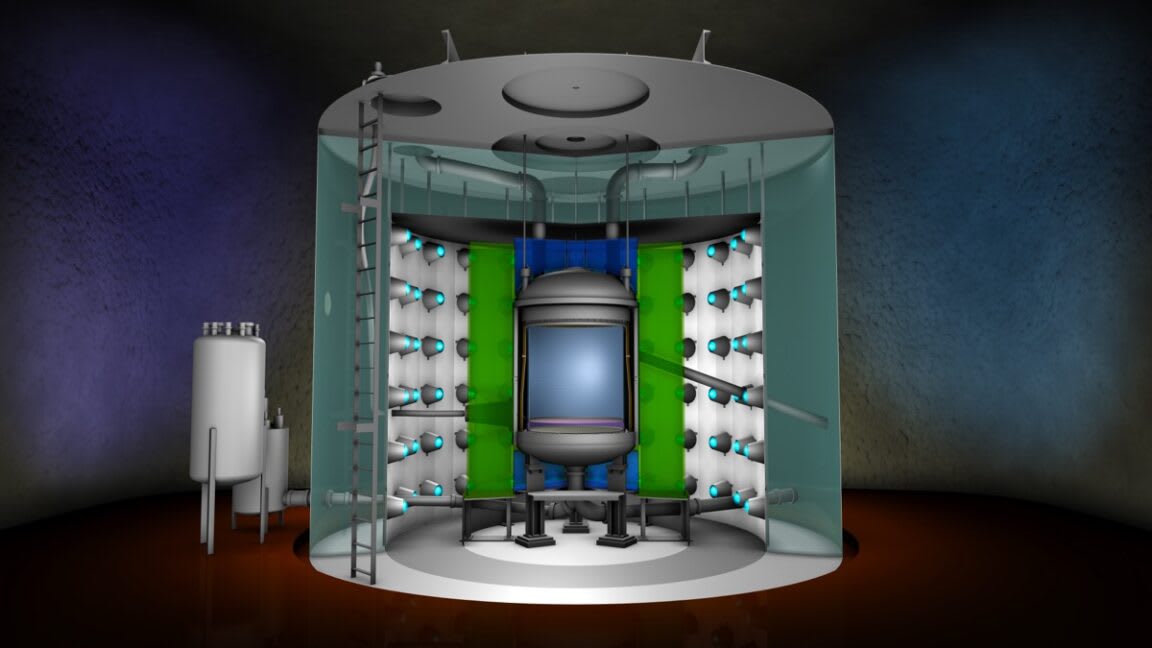
Recent scientific research highlights include potential dark matter detections at the LUX-ZEPLIN detector and quantum entanglement studies at the LHC. Additionally, researchers are investigating ancient psychoactive use and historical telescope designs alongside future-facing concepts like Martian architecture.
Exploring the Frontiers of Modern Science: A Monthly Digest
The landscape of contemporary scientific discovery is vast, often moving faster than public discourse can track. As highlighted in the recent research roundup, significant breakthroughs in particle physics, archaeology, and space exploration often occur simultaneously, yet many remain under-reported. By examining these overlooked stories, we gain a clearer picture of how interdisciplinary research continues to reshape our understanding of the universe.
The Elusive Quest for Dark Matter
At the heart of cosmological inquiry remains the mystery of dark matter, which constitutes approximately 85 percent of the matter in our universe. The LUX-ZEPLIN detector has recently provided tantalizing hints regarding Weakly Interacting Massive Particles (WIMPs), the leading theoretical candidate for dark matter. Detecting WIMPs is notoriously difficult due to their lack of electromagnetic interaction, but refined sensitivity in current detectors is moving us closer to confirming their existence, a breakthrough that would fundamentally alter the Standard Model of physics.
Quantum Mechanics at the LHC
Simultaneously, the Large Hadron Collider (LHC) continues to push the boundaries of quantum field theory. The observation of entangled Z bosons represents a significant milestone in particle physics. Quantum entanglement, often described as 'spooky action at a distance,' challenges our classical understanding of locality. By studying these particles at high energies, physicists are not only confirming theoretical predictions but also exploring the limits of the quantum realm under extreme conditions.
Archaeology and the Human Past
Science is not limited to the future; it also provides a lens through which we view our ancestors. Recent findings suggest the possibility of psychoactive substance use during the Late Pleistocene. Such research provides critical insights into the cognitive evolution of early humans and their relationship with their environment, indicating that the human drive to alter consciousness may be deeply rooted in our history.
Historical Innovation and Future Architecture
Beyond pure physics and anthropology, scientific curiosity bridges the gap between historical instrumentation and future survival. The identification of an intriguing technical description of a telescope attributed to Galileo reminds us of the iterative nature of scientific progress. Conversely, the exploration of using yeast to build homes on Mars highlights the necessity of synthetic biology in future space colonization. These disparate topics underscore a singular theme: the human capacity to innovate across time and space.
Conclusion: The Value of Comprehensive Research
While these stories represent a diverse array of disciplines, they are unified by the relentless pursuit of knowledge. Whether it is identifying the building blocks of the universe or learning how to sustain life on other planets, these findings are essential. Staying informed on these 'missed' stories is vital for anyone wishing to understand the trajectory of modern scientific development and its broader implications for our future.