Inside Track: Lessons From Past
Source Entity
Coomi Kapoor
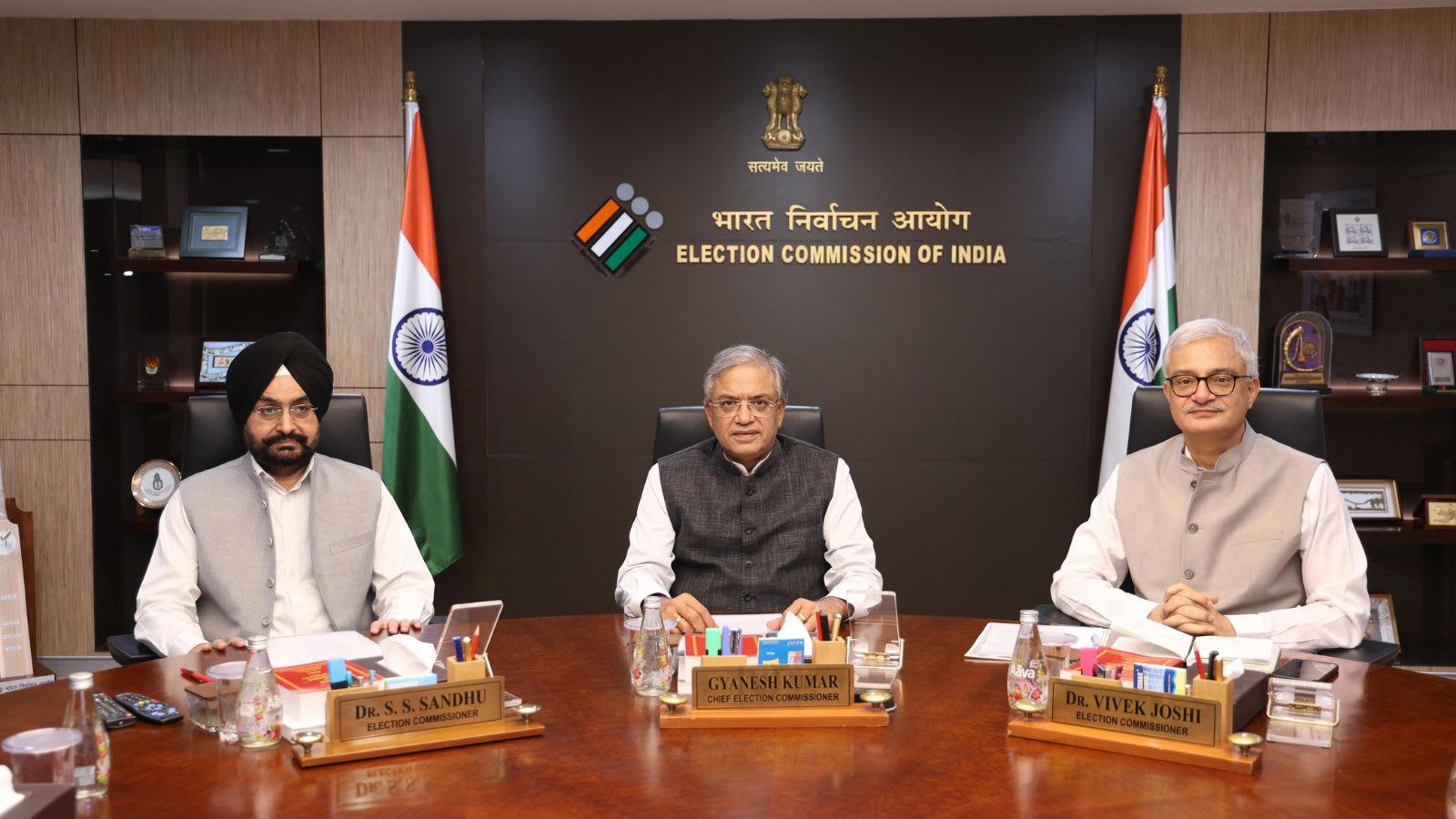
Recent reports regarding internal disagreements within the Election Commission have drawn parallels to the 1993 institutional shift involving TN Seshan. The BJP maintains these differences are routine deliberations, while historical context suggests a complex legacy of power dynamics within the poll body.
The Evolution of Internal Dissent in the Election Commission
Recent investigations by The Indian Express have brought to light internal friction within the Election Commission (EC), highlighting instances where Election Commissioners (ECs) differed from the Chief Election Commissioner (CEC) regarding the implementation of electoral processes. These disagreements, reportedly occurring 14 times in a 10-month span, involve technical aspects such as changes to the ECIN software. The Bharatiya Janata Party (BJP) has publicly downplayed these incidents, characterizing them as a standard component of institutional deliberation that ultimately yields unanimous decisions. However, the history of the Commission suggests that internal discord is rarely merely procedural.
The Historical Precedent of 1993
To understand the current climate, one must look back to October 1993, when the structure of the Election Commission was fundamentally altered. Under the administration of Prime Minister P.V. Narasimha Rao, the government issued an ordinance establishing the commission as a three-member body, appointing M.S. Gill and G.V.G. Krishnamurty alongside the then-CEC, T.N. Seshan. This move was a watershed moment that introduced the principle of majority rule within the Commission, explicitly stating that business should be transacted unanimously or, in the event of disagreement, by majority vote.
The Seshan Era and the 'One-Man Show'
Before this transformation, T.N. Seshan had become synonymous with the Election Commission, having taken office in December 1990. Seshan had successfully elevated the poll body into the public consciousness, forcing political entities to reckon with a newly assertive and proactive regulator. However, the introduction of two additional commissioners led to immediate friction. M.S. Gill and G.V.G. Krishnamurty famously protested that Seshan continued to operate the institution as a 'one-man show,' often failing to consult them or hold formal meetings before critical decisions were finalized.
Institutional Implications of Majority Rule
The 1993 ordinance was intended to dilute the absolute authority of the CEC, yet it inadvertently created a landscape of institutional tension. Seshan’s tendency to ignore his colleagues' objections led to a high-profile standoff that eventually reached the Supreme Court. This historical context underscores the volatility inherent in a multi-member body where the power dynamic between the CEC and the ECs is not strictly defined by a culture of consensus, but rather by legal mandates regarding majority decision-making.
Analyzing Current Dynamics
When comparing the current reports of internal disagreements to the 1993 crisis, it becomes evident that the Election Commission has always functioned at the intersection of administrative necessity and political friction. While the BJP views current disagreements as healthy institutional debate, the historical record warns that such friction can escalate when the process of consultation is bypassed. The transition from a single-authority figure to a collegiate body has consistently been marked by the challenge of balancing individual expertise with the necessity of a unified institutional front.
Future Trends and Institutional Integrity
The ongoing discourse regarding the EC’s internal processes highlights the critical role of transparency in maintaining public trust. As the Commission continues to navigate technical updates and complex electoral procedures, the legacy of the 1993 reforms serves as a reminder that the institutional design—specifically the balance of power between the CEC and fellow commissioners—remains a defining factor in how the body exercises its authority. Whether current disagreements remain 'normal deliberations' or signal deeper structural tensions will depend on the Commission's commitment to consultative governance moving forward.