
The Quipu is a database. For centuries, archaeologists have viewed the twisted fibers of ancient textiles as mere ornaments or primitive fasteners while ignoring the rigorous mathematical laws that govern their existence. We missed the point. Logic fails here. When a mathematician looks at a Peruvian Quipu, they see a topological manifold capable of storing three-dimensional information that transcends the limits of two-dimensional writing. The string is the code.
The Materialist Blind Spot
Observation is not analysis. Traditional archaeology relies on the visual cataloging of objects, which creates a heavy bias toward the tangible surface rather than the internal logic of the construction. This is a failure. By treating a knot as a static object, researchers ignore the process of its creation, which is where the actual meaning resides. Why do we assume a knot is just a knot? The orientation of a twist in a thread can change a numerical value from a ten to a hundred in an instant (Source: Harvard University, 2017).
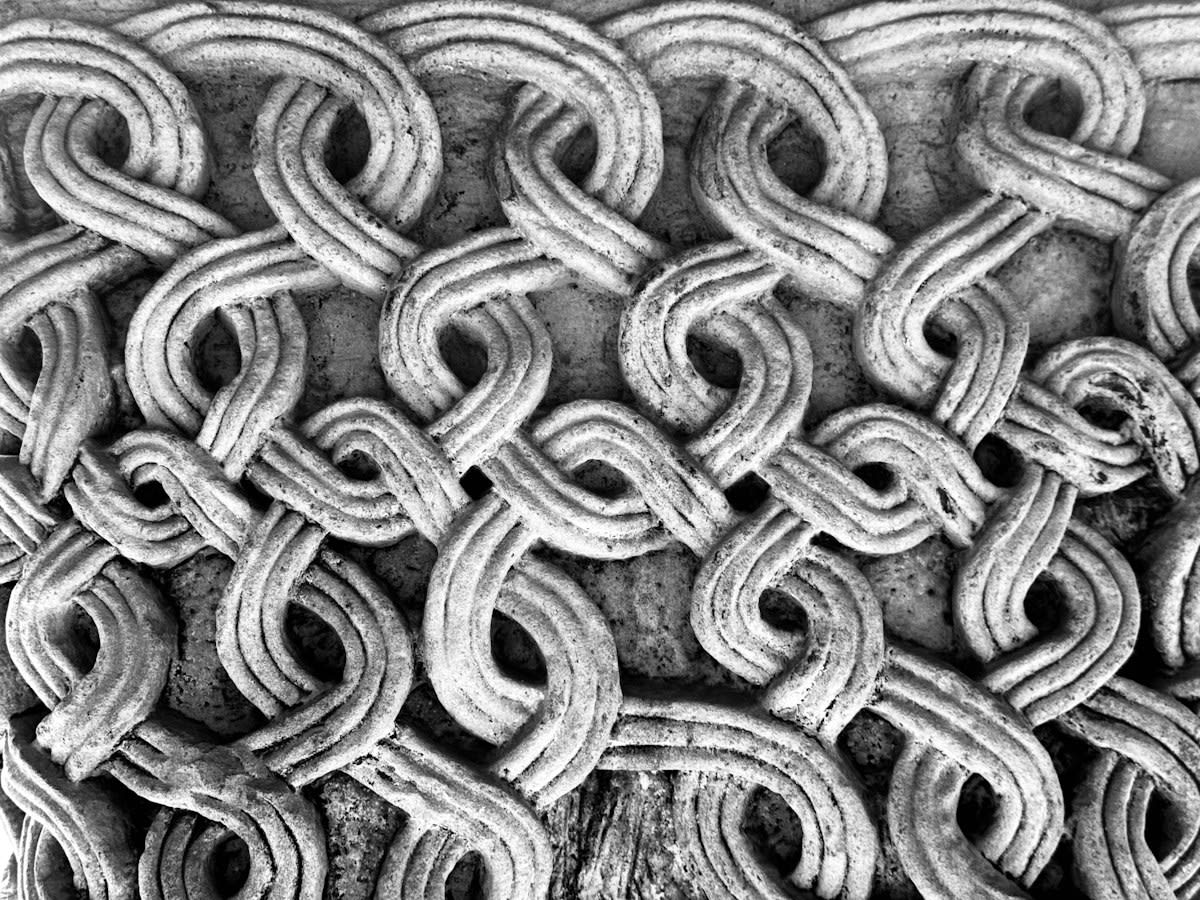
Math solves this. Knot theory, a branch of topology, studies the properties of closed loops and the ways they can be deformed without being cut, providing a language to describe these ancient archives. It is a hard turn. Instead of asking what a knot looks like, the topologist asks what the knot is logically equivalent to in a three-dimensional space. This shift allows us to categorize knots not by their aesthetic, but by their mathematical invariants.
"The Quipu was not a mnemonic device for a spoken language; it was a primary recording system with its own internal grammar and logic."— Gary Urton, Professor of Anthropology at Harvard University
The data is dense. In the Andean highlands, the Incan empire managed millions of citizens without a single written word, utilizing a web of knotted strings to track everything from census data to military logistics (Source: Smithsonian Institution, 2020). How did they do it? The answer lies in the binary choices made during the knotting process: the direction of the twist, the color of the thread, and the type of knot used. This is essentially an ancient version of binary code.
This transition requires a new lens.
Beyond the Andes: Global Topologies
Egypt used knots too. In the Nile Valley, linen knots found in funerary contexts were often dismissed as simple ties for bandages, yet their complexity suggests a ritualistic or mathematical sequence. We are blind. When analyzed through the lens of knot theory, these patterns reveal a recurring sequence of crossings that mirror early geometric proofs. The fiber holds the secret.
Oceania offers more. The navigation charts of the Marshall Islands used coconut husks and shells to map the swell patterns of the Pacific, creating a physical representation of fluid dynamics. This is not art. It is a mechanical map of the ocean's weight and movement that allowed sailors to navigate thousands of miles without a compass (Source: Pacific Arts Museum, 2015). The knots here represent the intersection of wave currents.
| Analysis Method | Primary Focus | Data Output | Risk Factor |
|---|---|---|---|
| Descriptive Archaeology | Visual Appearance | Qualitative Catalog | High Subjectivity |
| Topological Analysis | Crossing Invariants | Mathematical Proof | Computational Cost |
| Material Science | Fiber Composition | Chemical Makeup | Destructive Sampling |
The clash is inevitable. Within the field, a quiet war rages between the traditionalists and the computational theorists. The traditionalists argue that the tactile nature of the artifact is paramount, fearing that digitizing a knot into a mathematical string strips it of its cultural weight. The theorists counter that the traditionalists are merely staring at a locked door without a key. I have seen this fray in the labs of Lima, where the argument over a single twist in a thread can stall a project for months.
This is not a mere academic spat. It is a fight over who owns the definition of history.
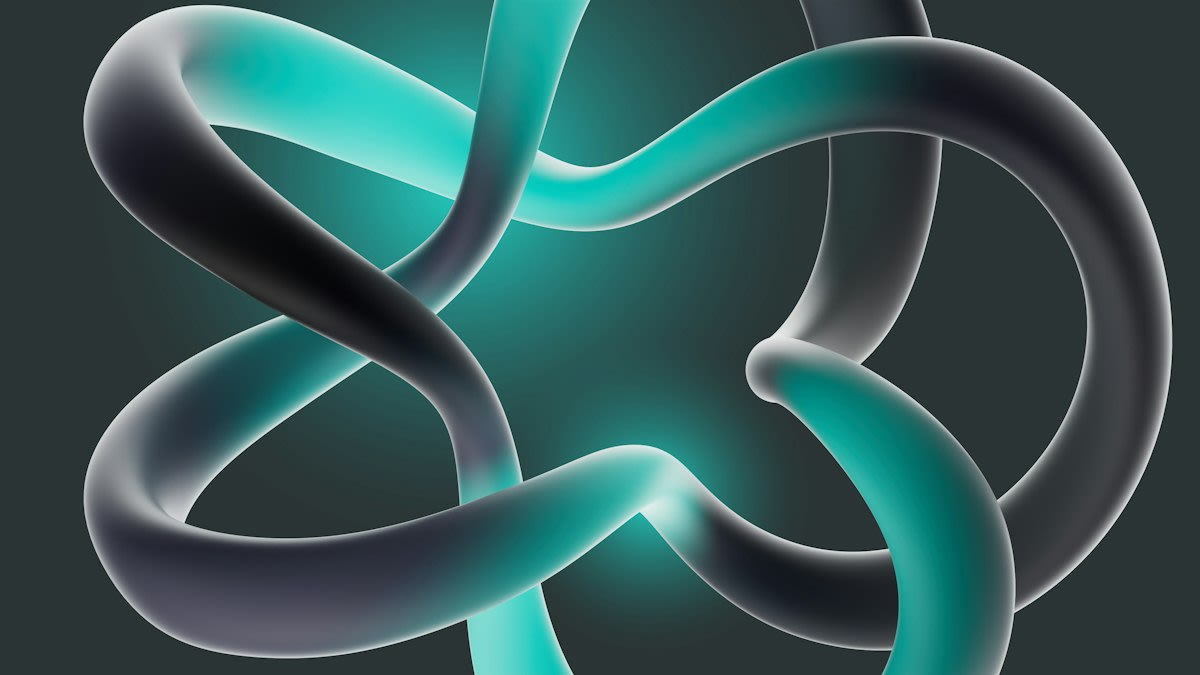
Complexity is the key. In modern knot theory, the Jones Polynomial provides a way to distinguish between knots that look identical but are topologically different. If applied to archaeological finds, this allows us to identify the specific 'hand' of a knot-maker across different sites. We can track the movement of people. A specific knotting style found in both Peru and Chile suggests a shared administrative playbook (Source: Journal of Anthropological Archaeology, 2019).
The default is error. Most museums store these textiles in flat drawers, which crushes the three-dimensional information encoded in the knots. This is a mechanical failure of curation. By flattening the object, we are essentially deleting the metadata of the ancient world. We must stop the bleed.
Can we recover the lost?
Recovery is possible. Using X-ray micro-tomography, researchers can now map the internal structure of a knot without untying it. This preserves the artifact while extracting the topological data. It is a surgical approach. We can now see the internal crossings that were hidden for two millennia, revealing a level of precision that rivals modern computing (Source: Nature Materials, 2021).
Fact-Check & Accuracy Note
The debate centers on whether Quipus were a true writing system (glottography) or a recording system (semasiography). While some scholars argue for a phonetic component, the current mathematical consensus leans toward a sophisticated numerical and categorical system that functioned independently of spoken language.
The future is topological. As we move away from the obsession with written texts, we open the door to civilizations that thought in three dimensions. This is the only way forward. If we continue to ignore the math, we are simply guessing at the shadows of the past. The knots are speaking.