The War for the Pattern
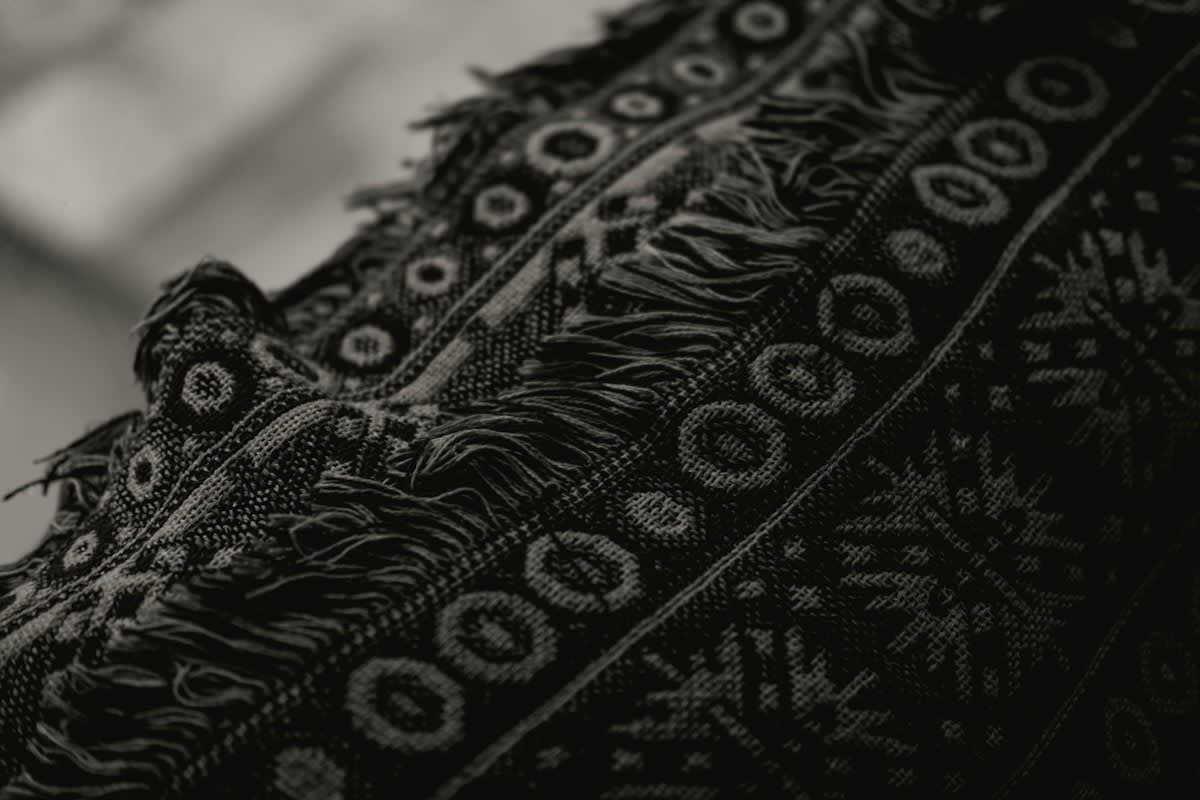
A high-res photo of a shyrdak felt carpet uploaded to a Bishkek gallery site is a dinner bell for scrapers. Within seconds, a crawler from a Silicon Valley server identifies the ram's horn motif. It breaks the geometry into tokens. It feeds the symmetry into a diffusion model. Suddenly, a prompt for 'Central Asian textile' spits out a hollow, distorted version of a thousand-year-old lineage. The weavers in the Naryn region see this as more than theft. It is an erasure of the mathematical logic that defines their kinship and geography. They are fighting back not with lawsuits, but with tactical obfuscation.
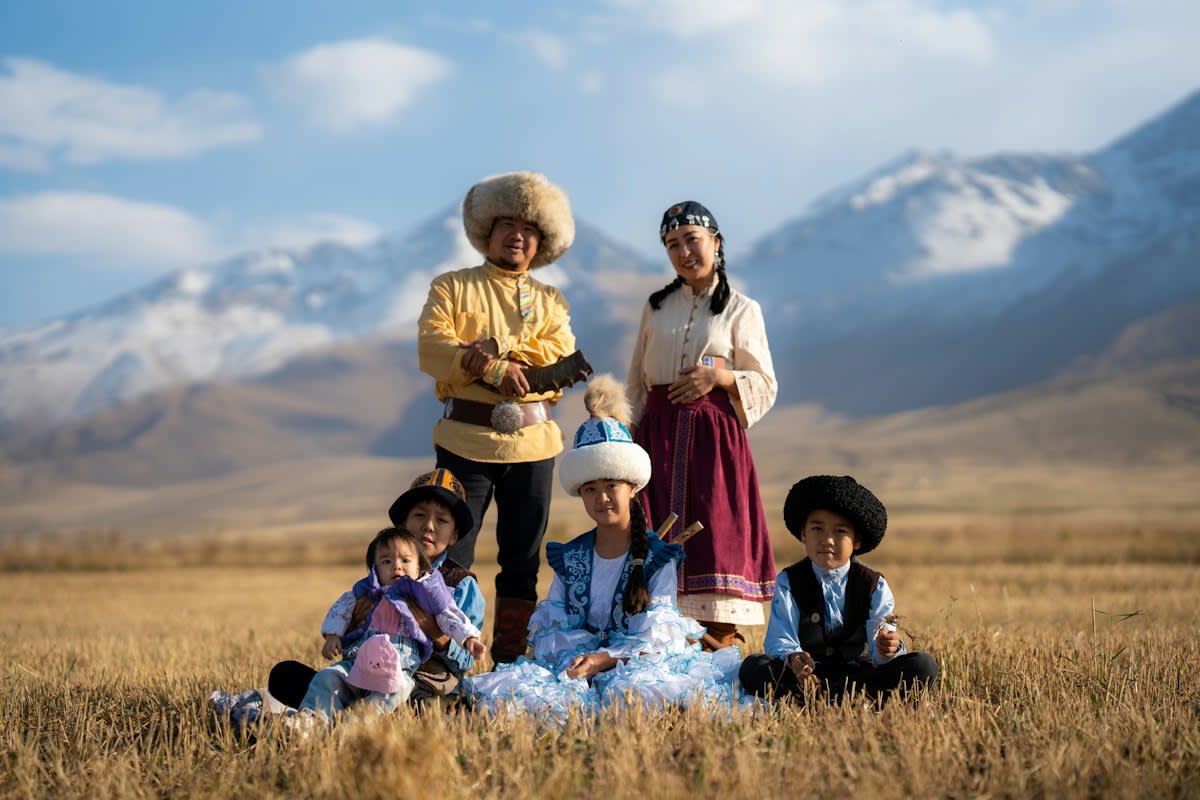
Most people think intellectual property is about copyrights and lawyers. In the highlands of Kyrgyzstan, that is a fantasy. Western IP law is a blunt instrument that fails to recognize communal ownership. When a pattern belongs to a village, not a person, the law has no hook. The AI companies know this. They operate in the gap between national legislation and digital reality. To protect the geometry, the weavers have shifted to a strategy of data poisoning and analog isolation.
Prerequisites: What You Need Before the Fight
You cannot protect what you have not mapped. Before attempting to shield ancestral geometry, you need a comprehensive audit of what is already in the wild. This means searching datasets like LAION-5B to see how your motifs are currently tagged. You also need the trust of the elders. In Kyrgyz weaving, the meaning of a motif is often oral. If the meaning is lost, the pattern becomes a mere decoration, making it easier for AI to commodify. You need a commitment to 'analog-first' transmission.
- A localized archive of 'sacred' vs 'public' motifs.
- Direct access to the aksakals (elders) who hold the oral keys to the geometry.
- A basic understanding of how latent space interprets symmetry and repetition.
- A communal agreement to cease high-resolution uploads to open platforms.
The Protocol for Pattern Protection
- Audit the Digital Footprint: Use reverse image searches on all known gallery exports from Issyk-Kul and Naryn. Identify which patterns have been ingested by major generative models (Source: WIPO Indigenous Knowledge Guidelines, 2021).
- Introduce 'Geometric Noise': When uploading for marketing, introduce subtle, intentional errors in the symmetry. These 'glitches' are invisible to the human eye but confuse the AI's ability to tokenize the pattern's mathematical core. This is effectively 'poisoning' the training set.
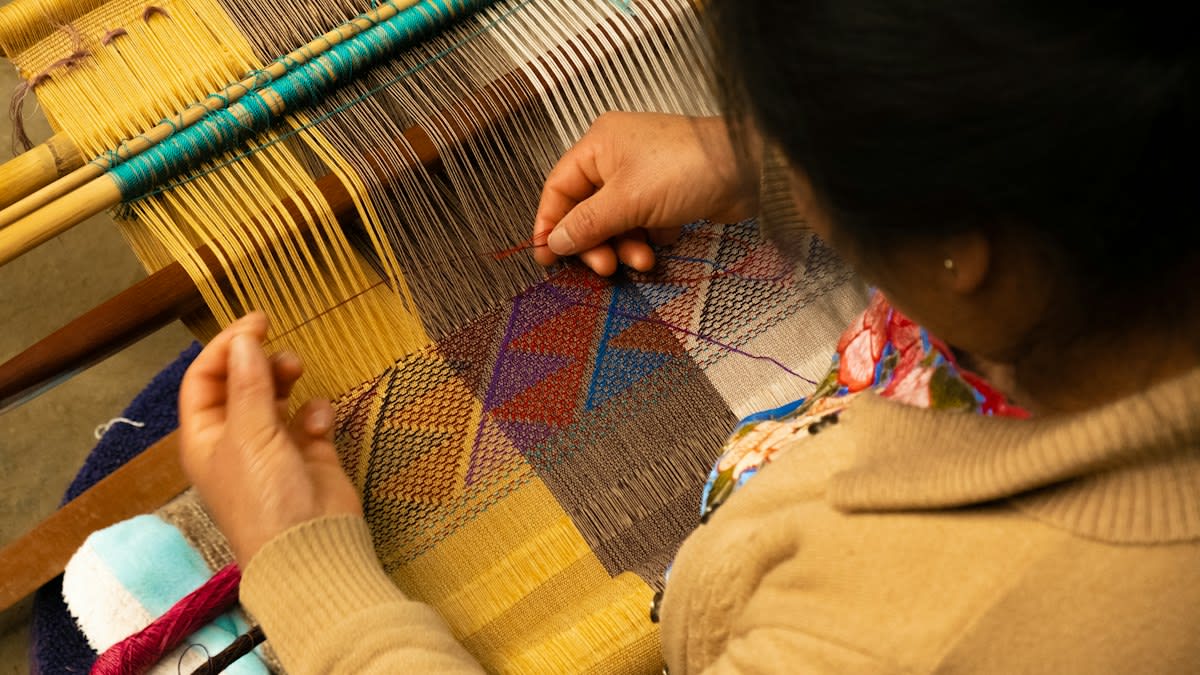
- Implement Analog-Only Transmission: Move the teaching of complex, high-value geometries back to physical workshops. Eliminate the use of PDF pattern books or digital templates that can be scraped via OCR (Optical Character Recognition).
- Establish Communal Digital Watermarking: Use steganography to embed invisible identifiers into any image that must be online. If a pattern appears in an AI-generated output, you have the forensic evidence of the source (Source: UNESCO Intangible Cultural Heritage Reports, 2012).
The goal here is not to hide the art, but to break the machine's ability to learn it. AI relies on clean, predictable data. By introducing noise and returning to the tactile, the weavers create a friction point. They are turning their art into a 'black box' that the algorithm cannot penetrate without human intervention. This shifts the power back to the practitioner.
"The algorithm doesn't see a story; it sees a pixel distribution. When we break the symmetry by a fraction of a millimeter, we aren't ruining the art. We are building a wall that the AI cannot climb."— Aigul Bakirova, Textile Preservationist in Bishkek
Ground-Level Friction: The Ugly Reality
On the ground, this is a mess. You have twenty-something weavers in Bishkek who want their work on Instagram to attract European buyers. They see 'data poisoning' as a barrier to growth. Then you have the elders in the villages who view the digital world as a vacuum that sucks the soul out of the wool. The arguments aren't about 'AI ethics'; they are about survival. The friction is visceral. I have seen workshops where the fight over a single photo upload nearly ended a family partnership.
Then there is the bureaucratic failure. Trying to register a communal motif with the state is a joke. The offices are underfunded, the staff are untrained in digital IP, and the paperwork is a relic of the Soviet era. You end up with a 'certificate of authenticity' that has zero legal weight against a company based in San Francisco. The weavers are operating in a legal void, which is why they have abandoned the law in favor of technical sabotage.
Common Pitfalls
Most beginners make the mistake of relying on watermarks. A watermark is a suggestion, not a barrier. AI models simply learn to ignore them or, worse, they incorporate the watermark into the generated image as a 'style.' Another failure is trusting 'fair use' arguments. In the context of indigenous art, 'fair use' is often just a euphemism for extraction. If you are uploading high-resolution files to a cloud service, you have already lost the battle.
- Trusting social media 'privacy settings' to stop scrapers.
- Assuming that a copyright notice on a website prevents AI training.
- Over-relying on digital archives without physical backups.
- Ignoring the internal community divide between traditionalists and digital marketers.
The only way out is a systemic shift. The weavers who survive the AI wave will be those who treat their geometry as a secret key rather than a public asset. They are moving toward a model of 'provenance-based value,' where the value is not in the image, but in the verified human origin of the piece. The machine can mimic the look, but it cannot mimic the lineage.
Fact-Check & Accuracy Note
The claim that AI can 'perfectly' replicate shyrdak geometry is debated. While AI can simulate the aesthetic, it consistently fails at the mathematical 'locking' required for the physical assembly of felt layers, often creating impossible shapes that cannot be physically woven (Source: Textile Engineering Review, 2023).