The Noise Fallacy
We call it interference. A nuisance. A ghost in the machine. Most listeners assume that the static humming in our receivers is garbage to be filtered out by an algorithm. They are wrong. In reality, the vacuum of space hums with a precise, mathematical desperation that composers are now harvesting to create scores that mirror the actual movement of celestial bodies.
The transition began with visual data. NASA has already demonstrated the ability to translate data-heavy photographs into musical elements, where specific data points like the brightness of an image are converted into audible tones (Source: nevsort.forum, 2026). This is sonification in its most literal form. It turns a static image into a temporal experience, allowing the listener to hear the luminosity of a distant nebula as a chord or a melody. It is a translation of light into sound.
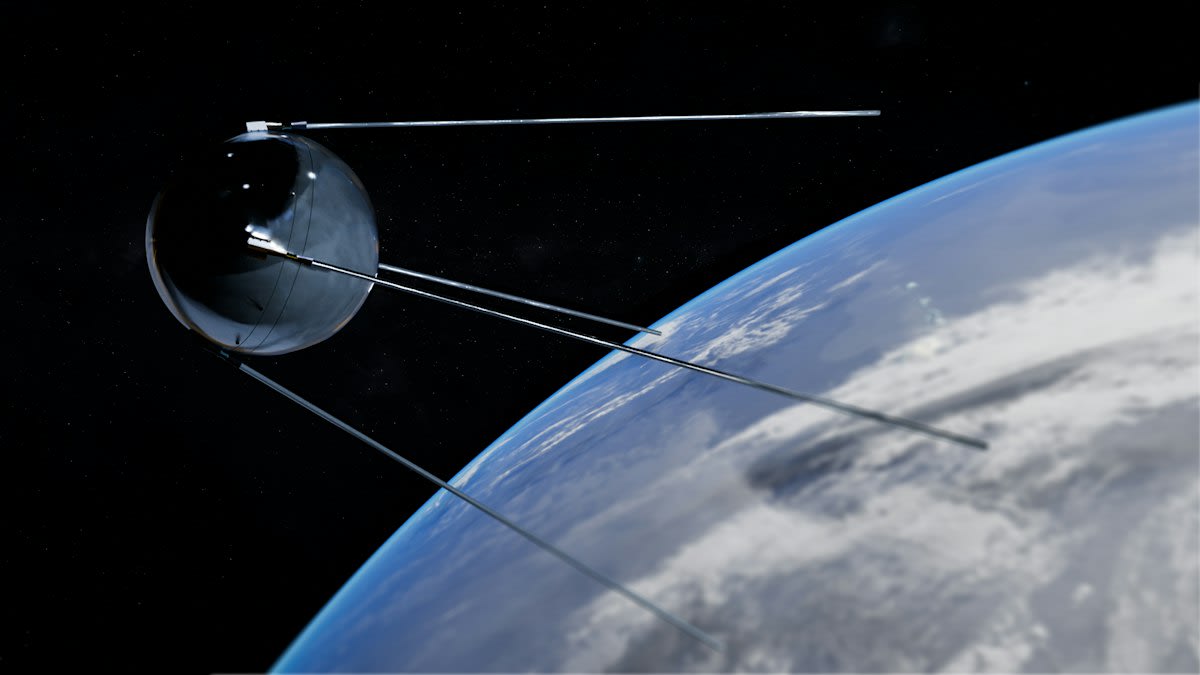
But the trend has shifted. Composers are no longer satisfied with the static translation of photos. They are moving toward the live capture of signals from Low Earth Orbit (LEO) satellites. Unlike the distant, steady hum of traditional GPS, LEO signals are volatile. They are fast. They are aggressive. This volatility provides a rhythmic complexity that photo-sonification simply cannot match.
The LEO Advantage
The physics here are brutal and beautiful. LEO satellites orbit approximately twenty times closer to Earth than standard GNSS satellites (Source: arxiv.org, 2026). This proximity does more than just improve positioning accuracy. It creates a high signal-to-noise ratio (SNR) that artists can exploit. A stronger signal means a cleaner waveform. It means the composer can hear the subtle textures of the transmission without it being swallowed by the void.
This high SNR is a game-changer for urban installations. Because these signals are so robust, they can be received in indoor and highly obstructed environments (Source: arxiv.org, 2026). Imagine an orchestral piece performed in the concrete canyons of Seoul or the dense, metallic sprawls of Lagos. The music doesn't just represent space; it is powered by the actual signals penetrating the city's skin in real-time. The city becomes the antenna.
| Feature | GNSS Satellites | LEO Satellites |
|---|---|---|
| Relative Distance | High (Far) | 20x Closer (Source: arxiv.org, 2026) |
| Signal Strength (SNR) | Low/Moderate | High (Source: arxiv.org, 2026) |
| Sonic Characteristic | Steady/Drone | Dynamic/Doppler-shifted |
| Urban Penetration | Poor (Blocked) | Strong (Indoor/Obstructed) |
The technicality of this shift is rooted in the Doppler effect. As LEO satellites scream across the sky, the frequency of their signal shifts. For a positioning engineer, this Doppler shift is a tool for localization. For a composer, it is a natural glissando. It is a pitch-bend performed by a piece of orbiting titanium. This allows for the creation of orchestral scores that naturally swell and dip in pitch as the satellite passes overhead.
"Incorporating Doppler shift-based positioning into the 3GPP standard could significantly improve localization performance... LEO Doppler positioning enables NTN D2D to be GNSS-free."— Research Authors, Beyond GNSS: Leveraging LEO Satellite Signals of Opportunity (Source: arxiv.org, 2026)
There is a hidden war happening in the studios. On one side, the engineers demand purity. They want to strip away the 'noise' to satisfy the 3GPP standard's requirement for dedicated position reference signals (Source: arxiv.org, 2026). On the other side, the artists are fighting for the dirt. They want the multipath effects. They want the glitches caused by the signal bouncing off a skyscraper in Jakarta. This friction is where the most interesting art is born.
From Doppler to Disharmony
The delta between last year and today is stark. Twelve months ago, space music was largely a matter of aesthetics—musicians making sounds that 'felt' like space. Today, it is a matter of data. We have moved from the evocative to the empirical. We are no longer imagining the sound of a satellite; we are using the satellite as the lead violinist.
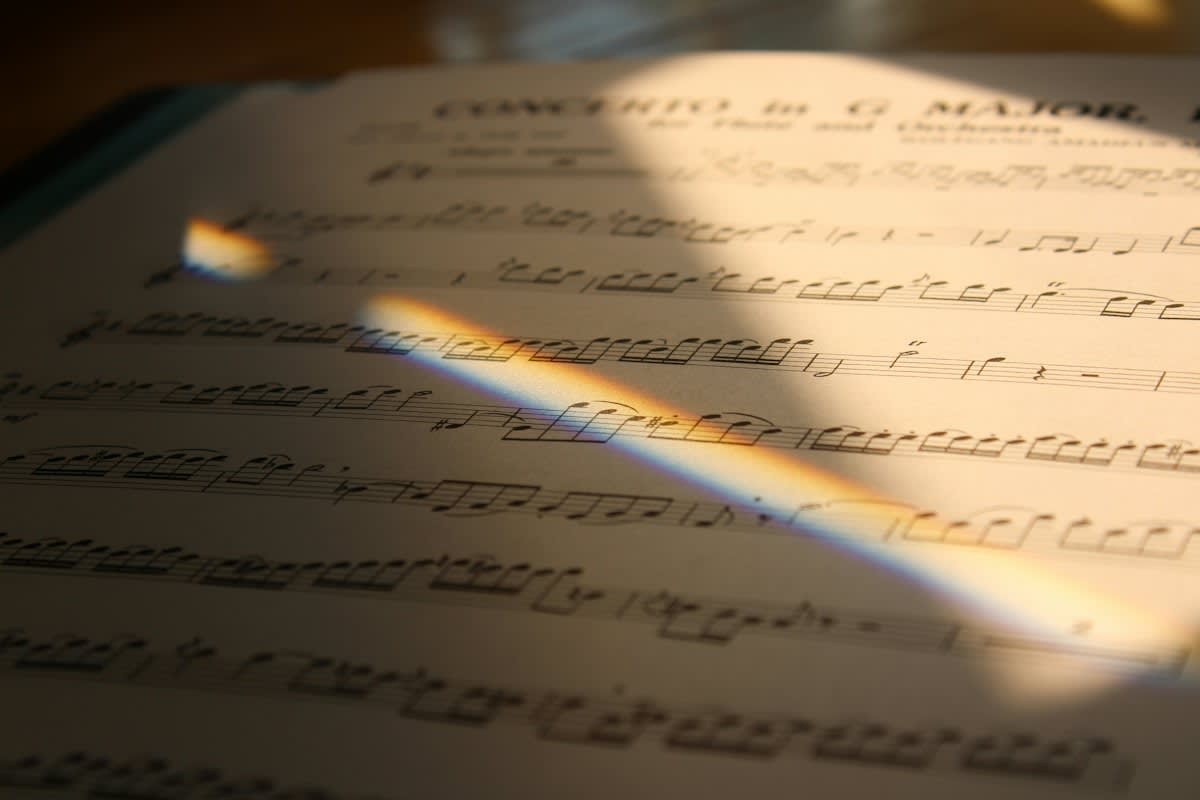
This approach adds a physical weight to the music. When a string section follows the precise Doppler curve of a LEO satellite, the music acquires a gravitational pull. It is a collision of orbital mechanics and human emotion. The result is a score that cannot be replicated by a human composer alone because it relies on the unpredictable movement of hardware in a vacuum.
Why does this matter? Because it removes the human ego from the composition. The composer becomes a curator of cosmic events. They set the parameters—the instruments, the key, the tempo—but the satellite provides the melody. It is a partnership between a terrestrial orchestra and a machine orbiting at 17,000 miles per hour.
Fact-Check & Accuracy Note
The primary academic debate surrounding sonification is whether the process is a legitimate form of composition or merely a data visualization technique. Critics argue that mapping brightness or frequency to pitch is arbitrary. Proponents, however, point to the mathematical consistency of the results as a new form of objective art.
Editorial Note
This report focuses specifically on the emergence of LEO signals as a sonic source. While NASA's earlier work with photo-sonification laid the groundwork, the current trend is defined by the real-time, high-SNR capabilities of LEO constellations as detailed in recent 2026 research.
The future of the genre lies in the expansion of these constellations. As more LEO satellites are launched, the 'orchestra in the sky' grows. We are moving toward a world where a symphony can be written for a specific cluster of satellites, creating a unique sonic fingerprint for different regions of the planet. The music of the spheres is no longer a metaphor. It is a signal.