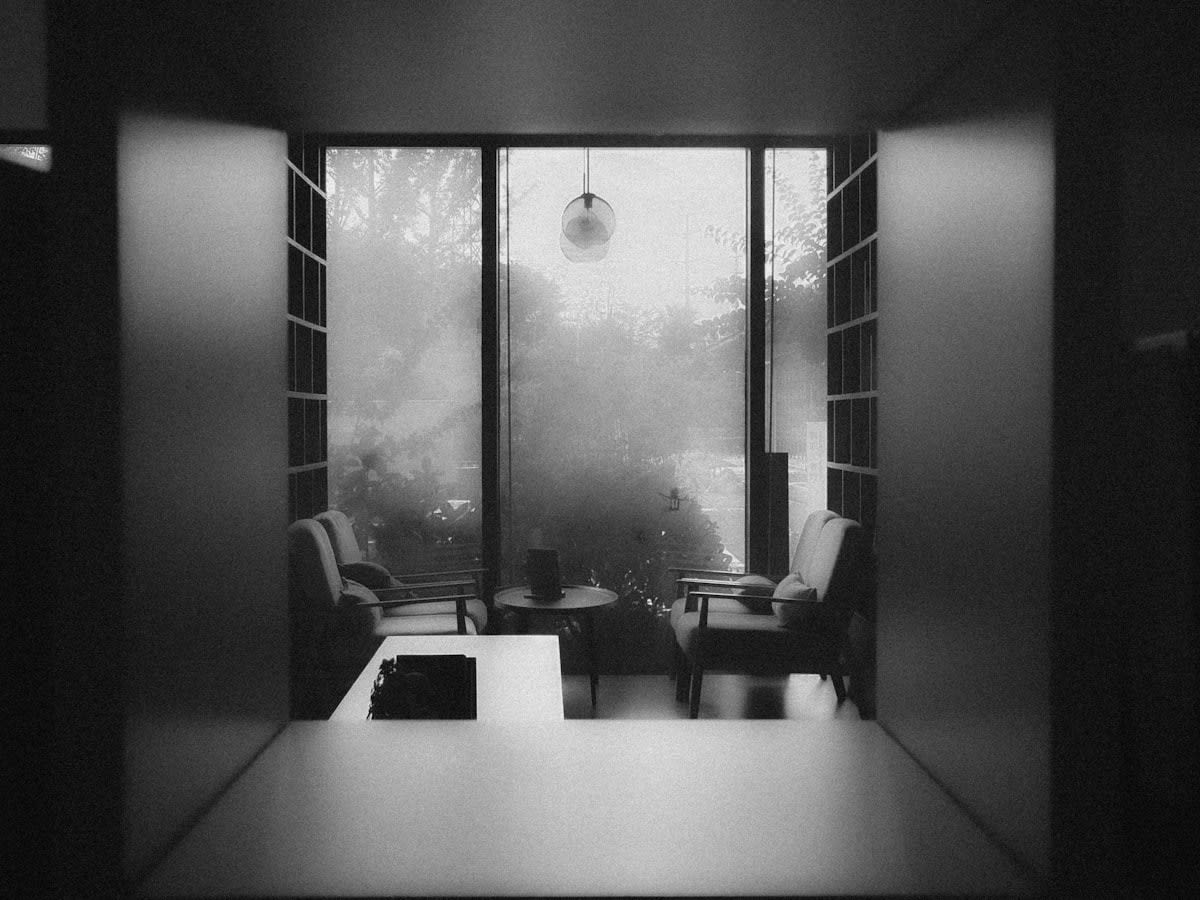
Most people mistake low-stimulus design for minimalism. They think a white box with a single chair is the pinnacle of calm. It is not. In fact, stark minimalism often creates a sensory vacuum that can be just as agitating as a crowded city street. True low-stimulus design is not about the absence of input, but the curation of it. It is the intentional reduction of 'cognitive friction'—those tiny, invisible stressors like the hum of a refrigerator, the flicker of a cheap LED, or the jarring contrast of a neon sign against a grey wall. When we design for the nervous system, we are not just decorating; we are regulating biology.
The modern environment is a battlefield of attention. We are bombarded by notifications, erratic lighting, and acoustic chaos that keeps our cortisol levels in a state of perpetual low-grade elevation. According to the World Health Organization (Source: WHO, 2021), environmental noise is one of the most significant threats to mental health in urban settings, contributing to sleep disturbance and cardiovascular stress. Designing a low-stimulus environment is an act of resistance. It is about creating a sanctuary where the brain can shift from a state of high-alert vigilance to a state of restorative recovery.
Prerequisites: The Designer's Toolkit
Before moving a single piece of furniture, you need the right tools to measure what the human eye often ignores but the brain always registers. You cannot design for the subconscious using only your conscious perception. You need objective data to identify the 'leaks' in your environment's calm. Start by auditing your space for sensory triggers that cause micro-stress responses.
- Decibel Meter: To identify ambient noise floors and intermittent spikes (target: 30-45 dB for restorative spaces).
- Lux Meter/Color Temperature App: To measure light intensity and Kelvin levels (avoiding the 4000K-5000K 'office glare').
- Color Palette Swatches: Focus on low-saturation, muted tones with low LRV (Light Reflectance Value).
- Tactile Sample Board: A collection of natural materials (linen, wool, unfinished wood) to replace synthetic, high-sheen surfaces.
The Step-by-Step Implementation Process
- Audit the Sensory Load: Walk through the space and note every 'spike.' A spike is anything that grabs your attention involuntarily—a buzzing light, a bright red folder on a desk, or a draft of cold air. Map these triggers on a floor plan. The goal is to eliminate the involuntary shifts in attention that drain cognitive energy.
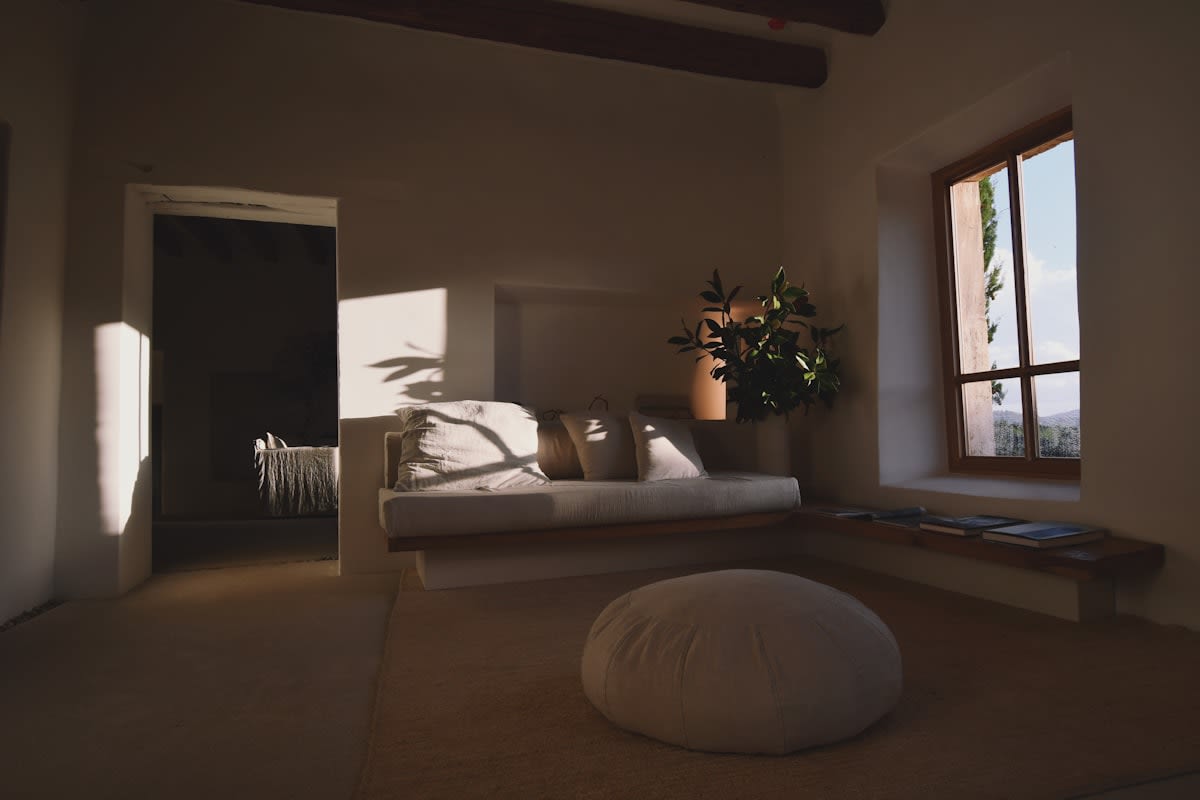
- Establish Chromatic Neutrality: Replace high-contrast color schemes with a monochromatic or analogous palette. Avoid pure white, which can cause glare and eye strain. Instead, use 'warm neutrals' like sage, oatmeal, or dusty blue. These colors have lower visual frequency and do not trigger the 'alert' response in the amygdala.
- Engineer Acoustic Dampening: Sound is the most invasive stimulus. Use heavy textiles, acoustic panels, or bookshelves to break up flat surfaces that cause echo. If you cannot stop the noise, mask it. Implement a consistent, low-frequency soundscape—such as brown noise—which is more soothing than white noise and helps the brain ignore erratic external sounds.
- Integrate Biophilic Patterns: Introduce nature, but do it strategically. According to the principles of Biophilic Design (Source: Terrapin Bright Green, 2014), humans respond positively to 'fractals'—repeating patterns found in nature, like the veins of a leaf or the grain of wood. Use real plants or natural textures to provide 'soft fascination,' which allows the mind to wander without effort.
- Optimize Lighting Transitions: Eliminate overhead fluorescent lighting. Use layered lighting: a combination of floor lamps, table lamps, and natural light. Ensure the color temperature shifts throughout the day—bright, cool light in the morning and warm, amber tones (below 2700K) in the evening to align with the body's circadian rhythm.
Once these steps are implemented, the space begins to function as a cognitive prosthetic. It no longer demands your energy; it returns it to you. The transition is often subtle at first. You might notice that you can focus on a single task for longer, or that the 'noise' in your own head begins to quiet down as the external noise vanishes. This is the biological result of reducing the load on the prefrontal cortex.
"The ability to recover from mental fatigue depends on the environment's capacity to provide soft fascination—stimuli that capture attention effortlessly, allowing the directed attention mechanisms to rest."— Stephen Kaplan, PhD in Environmental Psychology and co-developer of Attention Restoration Theory
The Practitioner's Perspective: The Friction of Reality
In the field, the biggest battle I fight isn't with the budget—it's with the 'aesthetic of emptiness.' I often deal with clients who want a 'Zen' space but insist on polished concrete floors and glass walls. From a practitioner's eye, that is a nightmare. Polished concrete is an acoustic mirror; it bounces every footstep and cough back at the occupant. Glass creates visual noise through reflections and glare. The real debate in our industry right now is between 'Visual Minimalism' and 'Sensory Minimalism.' One is about how the room looks in a photograph; the other is about how the room feels to a nervous system on the edge of burnout. I always push for the latter, even if it means adding more 'stuff'—like heavy curtains or textured rugs—to kill the echo.

Common Pitfalls to Avoid
Even with a blueprint, it is easy to overcorrect. The most common mistake is creating a 'sensory void.' When you remove all stimulation, the brain often begins to amplify the remaining sounds—like your own heartbeat or the ticking of a clock—which can actually increase anxiety. This is why 'soft fascination' is critical. You don't want a dead room; you want a breathing room.
- The Sterile Trap: Using too much white and grey, making the space feel like a clinic rather than a home. This triggers a 'stress response' associated with institutional settings.
- The Lighting Gap: Relying on a single light source. This creates harsh shadows and high-contrast zones that keep the brain in a state of scanning for threats.
- Ignoring Olfactory Load: Forgetting that scent is the fastest route to the limbic system. Strong artificial fragrances can override all other low-stimulus efforts, triggering headaches or irritation.
Fact-Check & Accuracy Note
Key claims regarding Attention Restoration Theory (ART) and Biophilic Design are sourced from the foundational work of Stephen Kaplan and the research published by Terrapin Bright Green. Statistics on urban noise are based on World Health Organization (WHO) environmental guidelines. Note that 'optimal' decibel levels can vary based on individual sensory processing sensitivities (e.g., neurodivergent individuals may require even lower thresholds).