'Pee on your brain, rip your heart out': How Jensen Huang 'tortured' employees repeatedly
Source Entity
AASTHA JHA
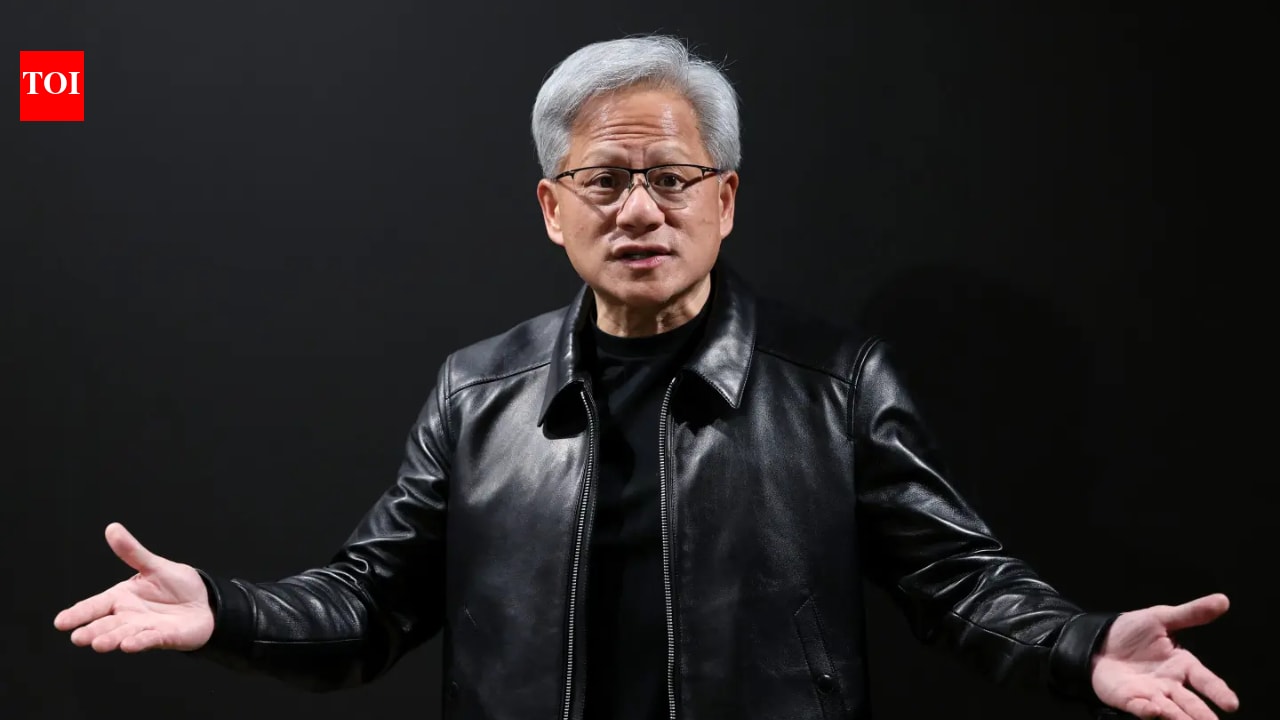
A recent New York Times investigation details a history of verbal abuse and public humiliation by former Nvidia CEO Jensen Huang. The report alleges that Huang used threats and degradation as management tools to drive performance, sparking a debate over his leadership legacy.
The Dark Side of Nvidia’s Growth: A Leadership Crisis
A recent investigation by the New York Times has brought to light a deeply concerning workplace culture at Nvidia, centered on the management practices of former CEO Jensen Huang. The report, which details allegations spanning nearly two decades, suggests that Nvidia’s meteoric rise to a $5 trillion valuation was achieved through a culture of fear, public humiliation, and extreme verbal abuse. These revelations have cast a long shadow over Huang’s 33-year tenure, raising significant questions about the human cost of corporate success.
The Mechanics of 'Management by Humiliation'
According to the investigation, Huang’s leadership style was not merely demanding but actively abusive. Employees reported instances where Huang used explicitly violent language, including threats to physically harm subordinates and disturbing insults regarding their personal lives. One particularly egregious claim states that Huang told an employee their mother should have aborted them, while others recount threats of physical mutilation. Huang allegedly viewed these episodes as a form of 'entertainment' and a necessary test of resilience for newcomers, arguing that because his staff were financially secure, he had to resort to psychological pressure to maintain efficiency.
A Legacy of 'Cultish' Loyalty vs. Professional Ethics
Despite the toxicity described by many, the report notes that Huang inspired a 'cultish' loyalty among segments of his workforce. This divide highlights a classic corporate paradox: the extent to which extreme, high-pressure environments can drive short-term technical innovation at the expense of human dignity. For years, HR complaints regarding Huang’s conduct were reportedly dismissed, suggesting a structural failure within the company to check the behavior of a founder who had become synonymous with the company’s market dominance.
Historical Context and Institutional Failure
These complaints are not entirely new, with reports of problematic management styles dating back as far as 2005. The persistence of this behavior over two decades indicates a systemic tolerance for abuse, provided the financial results remained stellar. By framing his abuse as a method to 'torture employees into greatness,' Huang effectively normalized a culture where the psychological well-being of staff was secondary to the output of the chipmaker’s engineering teams.
Implications of the Resignation
Jensen Huang’s resignation on November 12, 2026, marks the end of an era for Nvidia. This transition is further complicated by concurrent controversies surrounding his personal life, including reports of an extramarital affair with an executive from the Singaporean AI firm Megaspeed. As the company moves forward, it faces the difficult task of decoupling its corporate identity from the volatile legacy of its co-founder. The challenge for Nvidia’s new leadership will be to prove that the company can sustain its market position without the toxic management practices that characterized its growth under Huang.
Conclusion
The revelations regarding Jensen Huang serve as a sobering reminder of the ethical pitfalls inherent in 'founder-centric' corporate cultures. While Nvidia’s technological achievements are undeniable, the internal cost of these successes—characterized by humiliation, threats, and a blatant disregard for professional boundaries—demands a serious re-evaluation of how we measure leadership success in the modern tech industry.
Multiple Citing Sources