
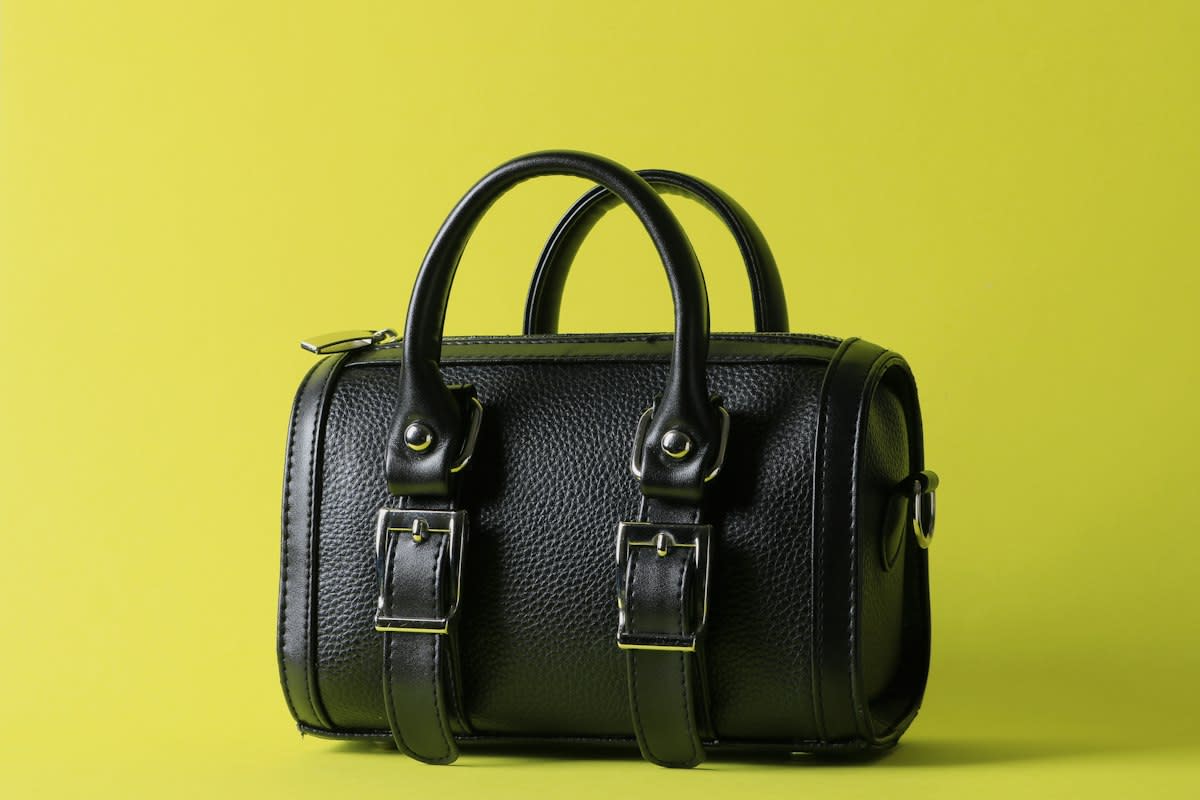
Look at the most expensive bags in the room today. You will likely find very few gold plaques or oversized monograms screaming for attention. Instead, you see the structural silhouette of a Margaux bag or the specific drape of a heavy cashmere coat. This is not an accident. Luxury brands are deliberately scrubbing their identities from the surface of their products, moving away from the era of the walking billboard. Why would a company spend millions on brand recognition only to hide the logo? Because the goal has shifted from mass awareness to exclusive signaling.
This movement toward invisibility is rooted in a systemic shift in how the global elite perceive status. For decades, luxury was about the broadcast—a loud, clear message that the wearer had attained a certain level of wealth. Now, that broadcast feels gauche. The new currency is stealth wealth, where the product is recognized not by a name, but by an expert eye. This creates a filter. If you have to ask what the brand is, you are not the intended audience. It is a sophisticated game of social exclusion disguised as minimalism.
The Architecture of Stealth Wealth
The Row, helmed by Mary-Kate and Ashley Olsen, serves as the primary case study for this phenomenon. By focusing on the Hudson slide or the zipped boot rather than a flashing logo, the brand has redefined the power dynamic between the consumer and the product. The Row does not chase trends; instead, it anchors itself in personal style and artistic expression (Source: Observer, 2026). This approach turns clothing into a statement of identity rather than a trend-following exercise. When the logo disappears, the craftsmanship becomes the only remaining evidence of value.
"What current consumers want is to feel that they belong in the cast of luxury, and not be walking ads for their products."— Warburton, Celebrity Stylist (Source: Observer, 2026)
This sentiment reflects a broader psychological transition. Consumers are no longer seeking the validation of the masses; they are seeking the validation of their peers. When a piece of clothing is an expert craft, it speaks to the wearer's care for their own identity and self-image (Source: Observer, 2026). The logo, in this context, is a distraction. It is a crude tool that simplifies the relationship between the wearer and the garment, whereas the absence of a logo complicates it, requiring the observer to be 'in the know' to appreciate the item.
Is this merely a Western trend? Hardly. This aesthetic is migrating globally, adapting to local cultural contexts while maintaining the core tenet of invisibility. We are seeing a surge in Eastern aesthetics that leverage this same quiet luxury design to enter international markets (Source: South China Morning Post, 2026). Brands like Songmont and Bosideng are not just exporting products; they are exporting a specific, understated philosophy of wealth that resonates across borders.
| Feature | Traditional Luxury Signaling | Modern Quiet Luxury Signaling |
|---|---|---|
| Primary Identifier | Oversized Logos / Monograms | Silhouette / Material / Cut |
| Target Audience | Mass-Market Aspiration | In-Group Connoisseurs |
| Psychological Driver | External Validation | Internal Identity / Peer Recognition |
| Product Life Cycle | Trend-Driven / Seasonal | Timeless / Archival |
| Brand Relationship | Consumer as Brand Ambassador | Consumer as Curator |
The transition is particularly evident in the evolution of menswear. In the Chinese market, for instance, brands like GFinnerthought are dismantling the old logic of 'as long as it is wearable' (Source: 36kr, 2026). They are replacing it with a focus on minimalist quiet luxury, where the luxury is found in the fabric itself. In some cases, they are even adopting fabrics traditionally reserved for womenswear to elevate the tactile experience of menswear (Source: 36kr, 2026). This proves that the logo is being replaced by the material; the 'touch' is the new 'tag'.
The Internal Friction: Branding vs. Brand Building
From the ground level, this shift creates immense tension within luxury houses. I have seen the debates in the boardrooms: the marketing executives are terrified. They argue that if the logo is gone, the brand's equity evaporates. They worry about 'brand awareness' and the fear that the product will be mistaken for a generic high-street item. On the other side, the creative directors view the logo as a crutch. They argue that if a product requires a logo to be perceived as luxury, the product itself has failed. It is a clash between the desire for scale and the desire for prestige.
This friction highlights a fundamental misunderstanding of what a brand actually is. Too often, industry players treat branding as the creation of physical artifacts—the logos, the colors, the symbols. But true brand building is about mapping associations onto a consumer's understanding (Source: Campaign UK, 2026). When a brand removes its logo, it is not deleting its brand; it is evolving the brand from a visual symbol into a behavioral or aesthetic code. The symbol is the furniture; the association is the house.
However, established brands cannot simply mimic the 'insurgent' approach of new, quiet luxury labels without structural change. Insurgent brands often operate with patient capital and flexible, small-scale manufacturing that allows for low volumes and long payback periods (Source: Adweek, 2026). A legacy house attempting to 'go quiet' while maintaining the volume requirements of a public company faces a paradox: they need the mass market to fund the growth, but the mass market buys the logo.
This is why we see the 'hybrid' approach. Many brands maintain a 'loud' line for new entrants to the luxury world—the 'gateway' products—while reserving the truly logo-less pieces for their highest-spending VIPs. It is a tiered system of visibility. The more you spend, the less the world knows you are spending. The logo becomes a ladder that the consumer eventually climbs off of.
The Future of the Invisible Asset
Looking ahead, the disappearance of the logo is not a death knell for branding, but a rebirth. We are moving toward an era of 'aesthetic signatures.' Instead of reading a name, the consumer reads a stitch, a specific shade of beige, or a particular way a shoulder is structured. This requires a much higher level of design precision. When you cannot hide behind a logo, every single flaw in the garment is magnified. The stakes for quality control have never been higher.
This shift also opens doors for new players. When the barrier to entry is no longer a century of heritage associated with a logo, but the ability to source the finest fabrics and execute a perfect cut, the playing field levels. This is exactly how Chinese creators are now leveraging direct-to-consumer strategies and rich cultural resonance to build footprints in Paris and beyond (Source: South China Morning Post, 2026). They aren't fighting for logo recognition; they are fighting for aesthetic authority.
Ultimately, the purposeful obfuscation of logos is a bet on the intelligence of the consumer. It assumes that the wearer is sophisticated enough to appreciate the nuance and that the observer is knowledgeable enough to recognize the quality. In a world of digital noise and constant broadcasting, silence has become the loudest luxury of all.
Fact-Check & Accuracy Note
Key claims regarding the strategic shift of The Row and the rise of quiet luxury in Chinese menswear (GFinnerthought) are sourced from Observer and 36kr (2026). The distinction between 'branding' as a symbol versus an association is based on industry analysis from Campaign UK (2026). The debate regarding insurgent vs. established brand structures is sourced from Adweek (2026). The tension between creative direction and marketing metrics remains an area of ongoing internal industry debate without a standardized resolution.