The Death of the Curated Gaze
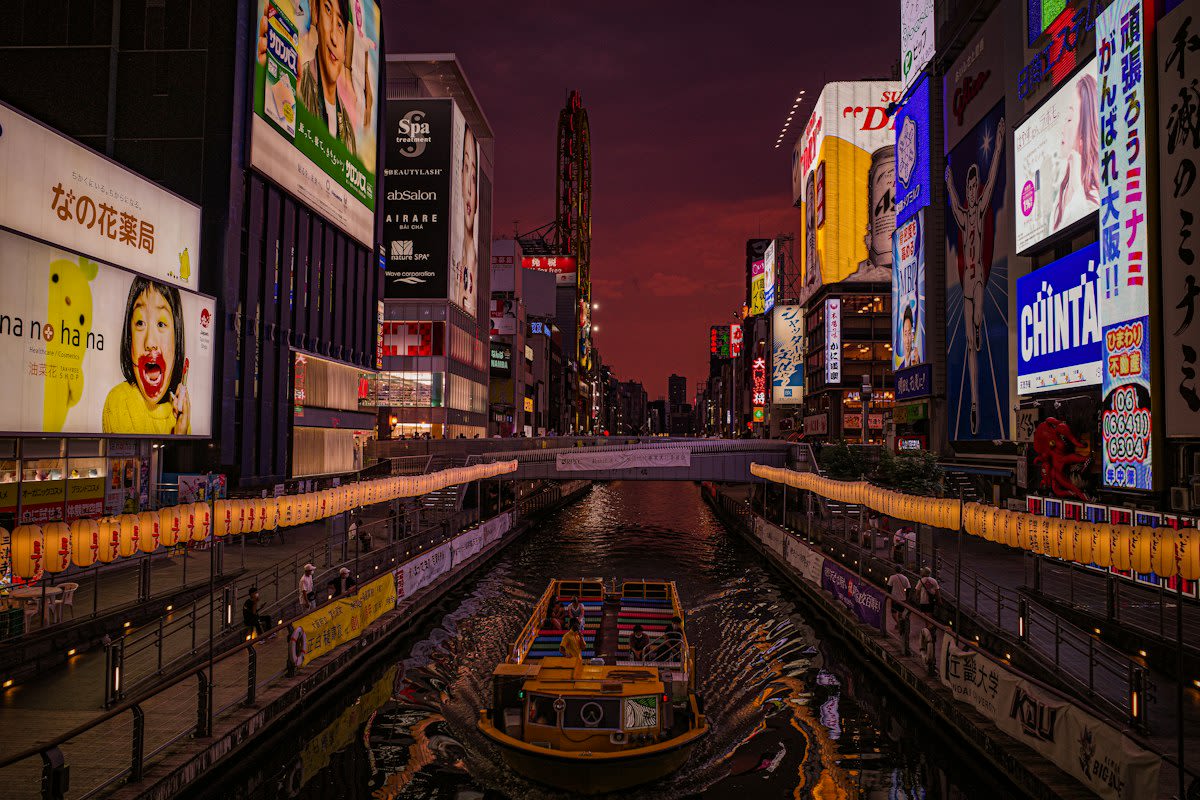
Do we still believe that high art exists in a vacuum, safe from the reach of the performance marketer? The assumption that prestige is immune to automation is dead. This November, the push toward programmatic dominance has accelerated, treating every visual surface as a mere slot for an impression. We are witnessing a collision between the slow time of art history and the millisecond logic of the real-time bid.
The scale is staggering. In the first week of November 2026, the programmatic expansion hit a new gear. VIOOH, a global digital out-of-home supply-side platform, announced strategic partnerships that effectively turn the physical terrain of entire nations into a programmable grid. In the United States, the partnership with Adams Outdoor Advertising provides programmatic access to over 460 digital billboards across 14 states (Source: Marcommnews, 2026). Simultaneously, a deal with JCDecaux in the Baltics has opened 254 digital screens across Estonia, Latvia, and Lithuania to the global programmatic marketplace (Source: Marcommnews, 2026). These are not just ads. They are the replacement of local visual curation with an automated, globalized default.
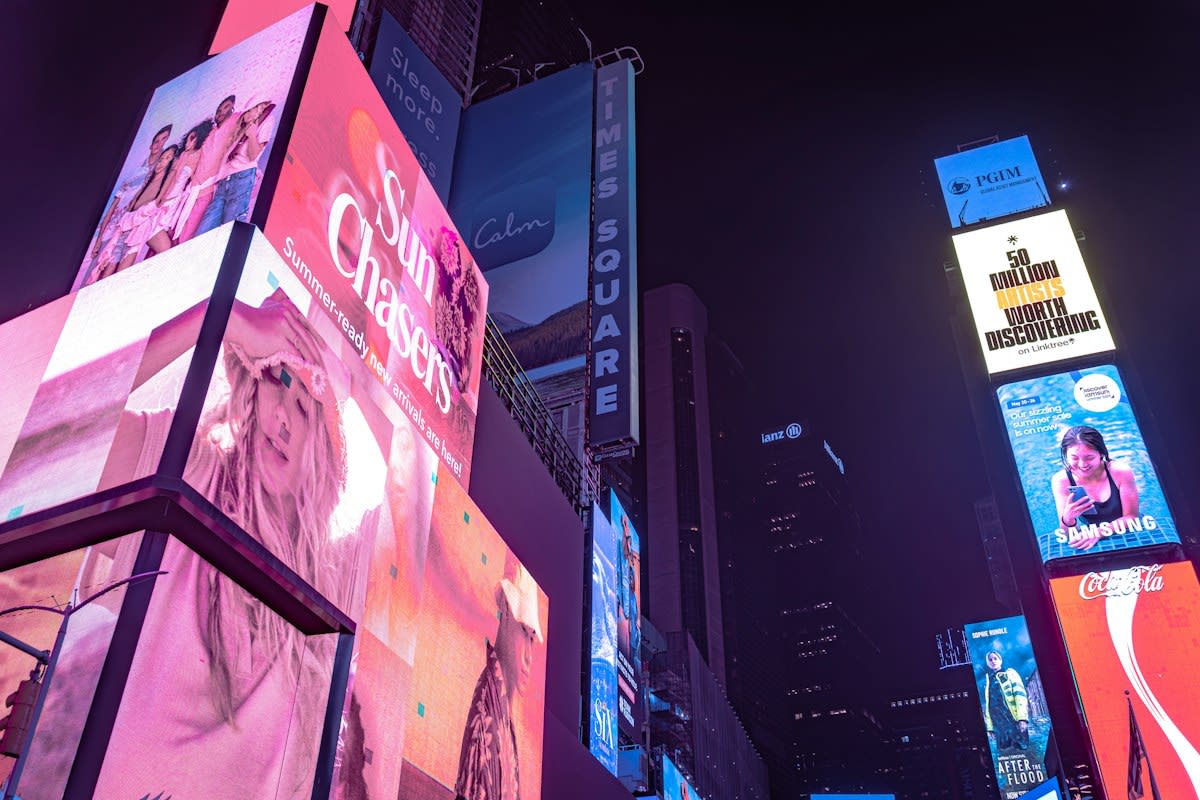
This is a hard turn from the curation of a decade ago. Previously, outdoor media required a human hand to negotiate the relationship between the image and the environment. Now, the software decides. The visual weight of a city is no longer determined by architects or artists, but by the highest bidder in a programmatic auction.
Algorithmic Cultures and the Museum
The erosion does not stop at the billboard. It has entered the gallery. Kathryn Brown, Reader in Art Histories at Loughborough University, has spent recent years examining the intersection of AI and museum culture, specifically through her work on Designing a Museum of AI Cultures (Source: CRASSH, 2026). When art history is viewed through an algorithmic lens, the nuance of the human hand is often lost. We are no longer looking at images; we are looking at the outputs of an algorithmic culture (Source: CRASSH, 2026).
"The integration of AI into art history necessitates a new way of looking—one that acknowledges the algorithmic mediation of the image."— Kathryn Brown, Reader in Art Histories at Loughborough University
This mediation creates a vacuum. If the museum becomes a place for AI-curated experiences, the distinction between a masterpiece and a high-performing brand asset begins to fray. The goal of the algorithm is not enlightenment. It is engagement. When the metric for success is a click or a gaze-duration, the 'high' in high art is stripped away, replaced by a flat, optimized utility.
This shift is a mechanical failure of intent. Art is meant to challenge; programmatic branding is meant to soothe and convert. By merging the two, we risk creating a visual environment that is aesthetically pleasing but intellectually hollow.
The Conversion Gap: When Math Fails Art
Despite the aggressive rollout, the programmatic promise is lying. The math does not always add up. Look at the current state of AI-driven advertising. As of November 2026, ChatGPT ads are experiencing a significant conversion problem despite massive adoption by over 6,000 brands (Source: Digiday, 2026). The growth of the ad placements is outrunning the proof that they actually work (Source: Digiday, 2026).
Why the failure? Programmatic branding relies on the assumption that a user's intent can be perfectly mapped to a visual trigger. But prestige and art operate on a different frequency. You cannot automate the feeling of awe. You cannot programmatically trigger a deep emotional connection to a brand's 'heritage' using the same logic used to sell a pair of sneakers via a retargeting pixel.
| Metric | Traditional Curated Branding | Programmatic Branding (2026) |
|---|---|---|
| Decision Driver | Aesthetic Intent / Human Curation | Real-Time Bidding / Algorithmic Fit |
| Primary Goal | Brand Equity / Cultural Resonance | Conversion / Impression Volume |
| Deployment Speed | Weeks to Months | Milliseconds |
| Success Metric | Critical Acclaim / Long-term Loyalty | Click-Through Rate (CTR) / CPA |
This discrepancy is where the real industry fight happens. In the agency world, there is a silent war between the 'Creatives' and the 'Performance Leads'. The Creatives argue that the programmatic approach is destroying the brand's soul. The Performance Leads point to the dashboard. They see 6,000 brands on ChatGPT ads and call it a success, ignoring the fact that the actual conversion remains elusive (Source: Digiday, 2026).
The friction is palpable in the boardroom. I have seen campaigns where a stunning, high-art visual is rejected because it does not 'test' well with a programmatic audience. The result is a race to the middle. Everything starts to look the same because the algorithm rewards the average. It rewards the safe. It rewards the bland.
The Technical Underpinnings of Bias
Under the hood, this erasure is powered by specific architectural choices in Large Language Models (LLMs). Recent research suggests that models benefit from domain-specific inductive biases to improve generalization (Source: Arxiv, 2026). By tuning models on specific datasets—like the FineWeb dataset—developers can force faster convergence (Source: Arxiv, 2026). This is the technical equivalent of a filter.
When these models are used to generate branding or curate art, they carry these biases. They do not see the 'art' in the image; they see the token embeddings and the rotary embeddings (Source: Arxiv, 2026). The 'beauty' of a piece is reduced to a mathematical probability of what a 'beautiful' piece should look like based on a training set. This is not creation. It is statistical mimicry.
The risk is a closed loop. If AI generates the branding, and programmatic tools deploy it, and AI-driven analytics measure it, the human element is entirely removed from the loop. We are creating a visual culture that is designed by machines, for machines, and merely viewed by humans.
Fact-Check & Accuracy Note
The claims regarding VIOOH's expansion in the US and Baltics are based on official press releases from November 3, 2026. The data on ChatGPT ad conversion problems is sourced from Digiday's reporting on November 5, 2026. Academic discussions on AI in art history are centered on the work of Kathryn Brown and the CRASSH center. There is ongoing academic debate regarding whether 'algorithmic culture' constitutes a new form of art or merely a sophisticated tool for reproduction.
Is there a way back? Perhaps. The failure of DTC (Direct-to-Consumer) models has already shown that pure efficiency is not a sustainable strategy. Marketing failures often stem from an inability to reconcile economics with reputation and commitment (Source: MarketingWeek, 2026). The cost of ignoring the human element in branding has been, in some cases, horrendous (Source: MarketingWeek, 2026).
The opportunity lies in the gap. Brands that reject the programmatic default and return to intentional, high-art curation may find a new kind of staying power. In a world of 460 automated billboards, the one billboard that feels human is the one that will actually convert.