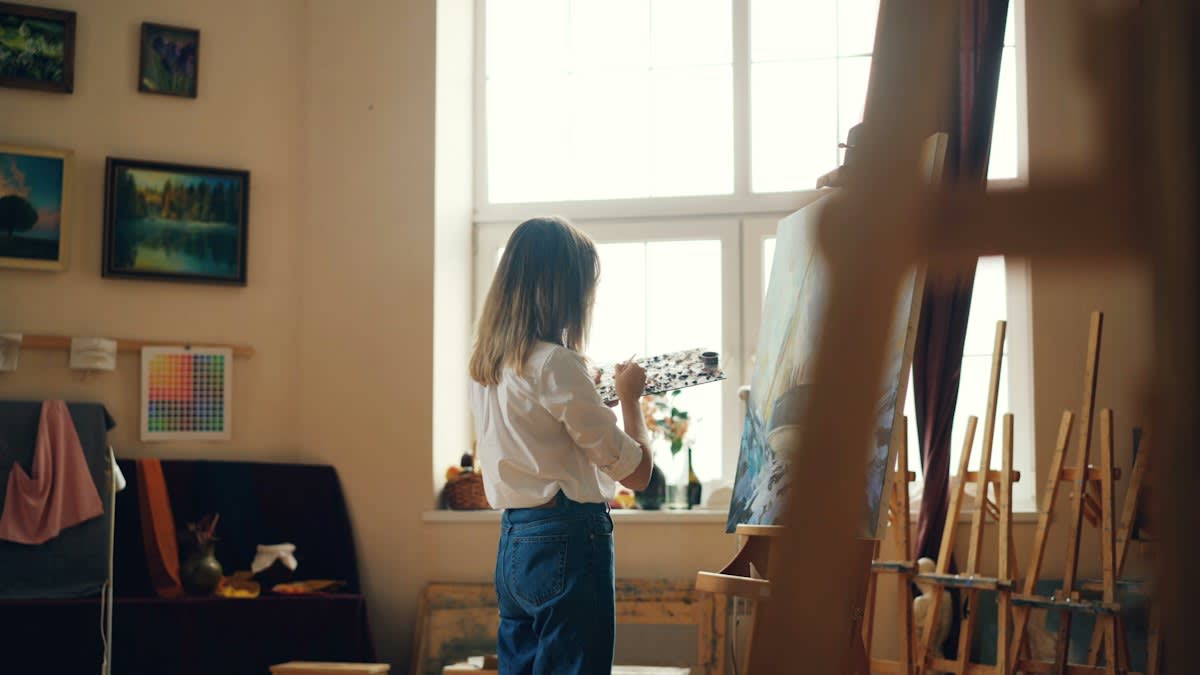
Most artists believe the quality of the work dictates the price. They are wrong. In the high-stakes art market, the object is often just a souvenir of the artist's brand. Why does a painting sell for millions while a technically superior piece gathers dust in a studio? Because the market isn't buying pigment on canvas; it is buying a piece of a persona. When you sell the art, you are competing on aesthetics, which is a race to the bottom. When you sell the artist, you are selling scarcity, narrative, and social signaling.
Prerequisites for the Persona Shift
Before attempting to pivot your market position, you need more than a portfolio. You need a documented history of process. The modern collector, particularly the Gen Z cohort who have emerged as the market's biggest spenders (Source: The Art Newspaper, 2026), values the 'how' and 'why' over the 'what.' You must possess a direct line of communication to your audience that does not rely on a gallery's permission. Without a direct-to-collector pipeline, you are merely a ghost in someone else's machine.
- A documented archive of failures, sketches, and process videos.
- A direct communication channel (newsletter, private group) to bypass intermediaries.
- A clear, non-negotiable personal philosophy that creates intellectual friction.
- An understanding of the 'insider' information loops that drive hype.
The friction here is real. Many practitioners struggle with the internal conflict between 'pure art' and 'personal branding.' I have seen countless artists sabotage their own growth by refusing to engage in the narrative game, viewing it as a betrayal of the work. This is a mechanical failure of perspective. The narrative doesn't distract from the art; it provides the frame that allows the art to be valued. If the frame is invisible, the work is just a commodity.
The Implementation: How to Sell the Persona
The first step is to decouple the value of the work from the technical skill involved. This is no longer a choice; it is a survival requirement. As AI becomes capable of producing sophisticated art in seconds, the technical barrier to entry has vanished. The value has shifted. It is no longer about whether a piece is 'attractive,' but about the experiences that shape the artist and the culture they inhabit (Source: The Jerusalem Post, 2026).
"The real potential of AI is not just to help us produce more music, images, or designs, but to open new possibilities for how we experience, understand, and engage with the world around us."— Amit Zoran, Researcher at the Hebrew University of Jerusalem
- Audit your output. Shift from presenting 'finished works' to presenting 'chapters of a life.' Stop posting the final painting; post the argument you had with your mentor that led to the painting.
- Establish direct-to-collector sales. A growing number of buyers are now bypassing dealers and auction houses entirely to purchase directly from artists (Source: The Art Newspaper, 2026). This removes the bottleneck of gallery gatekeeping and increases your profit margin.
- Curate your 'Insider Information.' The art world is notoriously opaque. Use this to your advantage. Instead of broad announcements, leak information about upcoming shows or new directions to a small, elite group of collectors. This creates the 'insider' feeling that drives high-net-worth spending.
- Expand into lifestyle collisions. Don't just sell canvases. Look at how luxury brands are translating art into furniture and textiles (Source: Modern Luxury, 2026). By moving your aesthetic into functional objects, you embed your persona into the collector's daily environment.
Why does this work? Because the high-end market is driven by a desire for edge and exclusivity. Painting remains the dominant medium, accounting for 76% of buyer participation and 31% of total fine art expenditure (Source: Art Basel and UBS Survey of Global Collecting, 2026). However, the competition in painting is absolute. To win, you cannot just be a better painter; you must be a more compelling human. You are not selling a product; you are selling an invitation to a private club.
This strategy requires a hard turn in how you handle your public image. You must move from being a 'service provider' who creates art to a 'thought leader' who happens to produce objects. When a collector buys your work, they are not buying a decoration for their wall; they are buying a signal to other people that they 'get' you. The more complex and specific your persona, the higher the signal value.
The Economics of Opacity
Transparency is the enemy of high art pricing. In a transparent market, prices are based on utility or comparable sales. In the art market, prices are based on secrets. The 'insider information' regarding who has bought a piece or which museum is planning a show in two years is what actually triggers price jumps (Source: CNBC, 2026). If you are an outsider, you are always chasing the wave; if you are the artist, you are the one creating the wave.
| Medium | Buyer Participation (%) | Total Expenditure (%) |
|---|---|---|
| Painting | 76% | 31% |
| Sculpture | N/A | 15% |
| Works on Paper | N/A | 10% |
| Digital Art | N/A | 9% |
Note the distribution in the table above (Source: Art Basel and UBS Survey of Global Collecting, 2026). While painting dominates, the smaller percentages in digital and paper works suggest an overlap where persona-driven selling can carve out a niche. The goal is to make the medium irrelevant. When the artist's brand is strong enough, they can move from a painting to a digital asset to a piece of furniture without losing value, because the value is tied to the name, not the material.
Fact-Check & Accuracy Note
This guide relies on data from the 2026 Art Basel and UBS Survey of Global Collecting and reporting from The Art Newspaper and CNBC. There is an ongoing professional debate regarding the sustainability of direct-to-collector models versus the long-term prestige provided by traditional gallery representation. While direct sales increase immediate profit, some argue that gallery 'vetting' is still the primary driver of institutional value.
Common Pitfalls
The most frequent failure is 'Over-Polishing.' When an artist tries to sell their persona, they often make the mistake of creating a sanitized, corporate version of themselves. This kills the friction. Collectors are not looking for a polished brand; they are looking for an authentic, often flawed, human experience. If your social media looks like a brochure, you are selling a product, not a person.
Another bottleneck is the 'Fear of Directness.' Many artists feel that selling directly to collectors is 'unprofessional' or 'low-brow.' This is a holdover from a 20th-century model where the dealer was the only way to reach the wealthy. In the current terrain, bypassing the middleman is a sign of power, not a lack of prestige. If you rely solely on a dealer, you are giving away your most valuable asset: your relationship with the buyer.
Editorial Perspective
Editorial Note: The shift toward 'selling the artist' is a response to the commoditization of imagery. As the cost of producing a 'beautiful' image drops to near zero due to AI, the only remaining scarcity is human identity.