Gulliver’s Travels turns 300: The surprising India connection in Jonathan Swift’s classic
Source Entity
Aishwarya Khosla
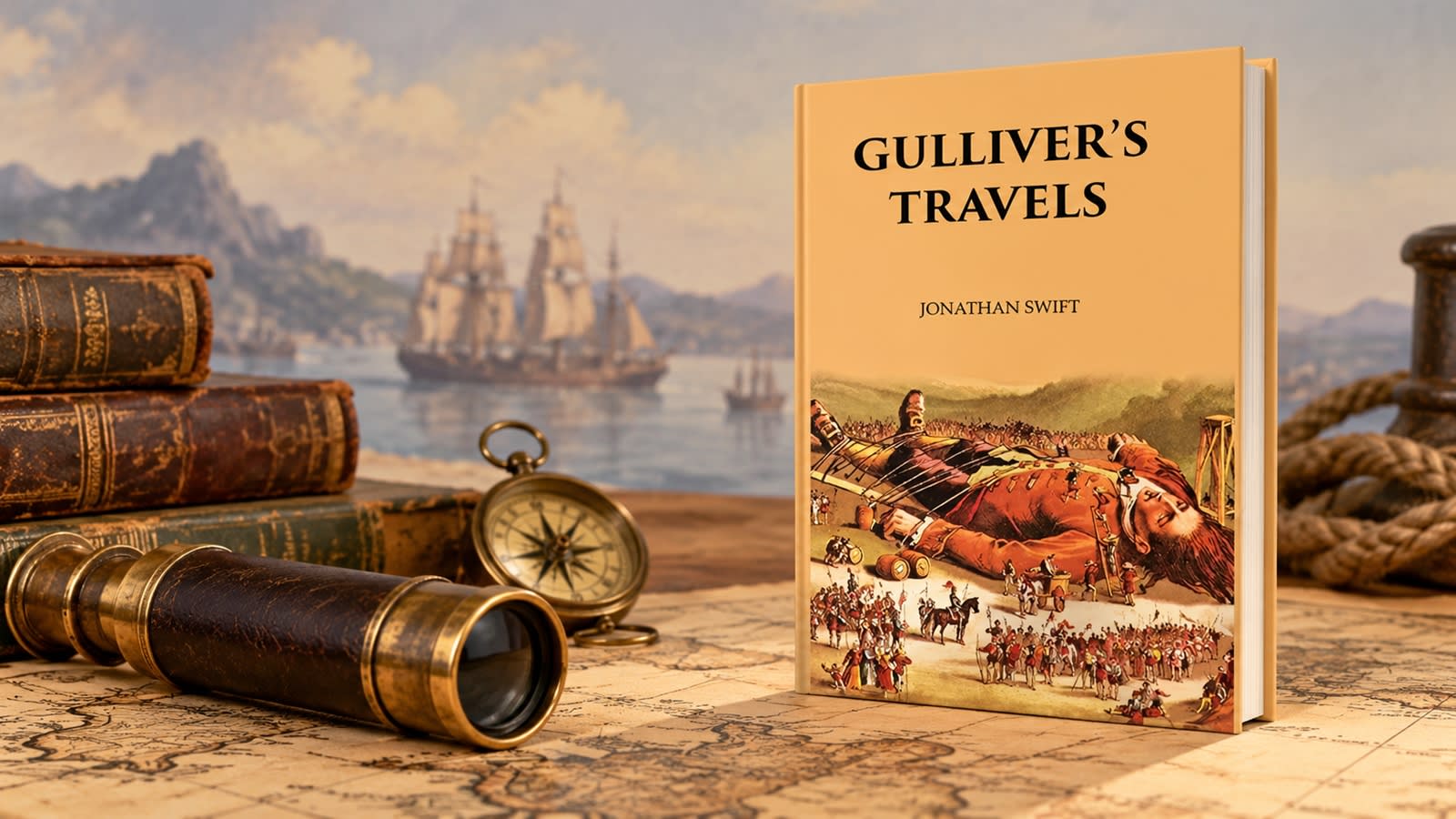
Jonathan Swift’s 'Gulliver’s Travels' celebrates its 300th anniversary, revealing a deeper critique of colonial society beyond its famous Lilliputian narrative. The work notably integrates early 18th-century Indian maritime hubs like Surat and Madras into its satirical landscape.
Three Centuries of Satire: Re-evaluating Gulliver's Travels
As Gulliver’s Travels reaches its 300th anniversary, the text remains a pillar of English literature, though often misunderstood. While childhood adaptations focus on the whimsical imagery of the Lilliputians, the original 1726 work by Jonathan Swift was a biting, sophisticated satire aimed at the political and scientific institutions of his era. The enduring nature of these symbols—'Lilliputian' becoming a shorthand for petty, small-minded disputes—masks the darker, more cynical exploration of human nature that Swift intended for his adult readers.
Beyond the Children's Tale
To view Gulliver’s Travels merely as a fantasy adventure is to ignore the author's intent. Swift utilized the 'pseudo-travelogue' format, a popular genre in the 18th century, to mirror the burgeoning European obsession with exploration and mapping. By stripping away the veneer of civilized society, Swift exposes the fragility of political structures and the inherent cruelty found in the colonial ambitions of the time. The transition from the miniature world of Lilliput to the land of giants serves as a rhetorical device to force the reader to confront their own relative significance in the grand scheme of human history.
The Indian Connection and Colonial Context
An often overlooked aspect of the narrative is its grounding in the authentic maritime commerce of the 18th century. Swift’s inclusion of Indian trade hubs like Surat and Fort St. George in Madras (now Chennai) highlights the reach of the East India Company. By placing Lemuel Gulliver within these specific geographical and economic contexts, Swift anchors his fantastical voyages in the brutal reality of colonial conquest. These locations were not mere set pieces; they were the engines of European wealth, serving as critical touchpoints for the ships that fueled the global empire.
Scientific Pretensions and Human Nature
Swift’s critique extended deep into the scientific discourse of his day. Throughout the voyages, he lampoons the scientific pretensions of the Enlightenment, suggesting that knowledge without moral grounding is a dangerous tool. His depiction of societies driven by cold logic or unchecked power serves as a cautionary tale that remains relevant as modern societies navigate their own complex relationships with technological advancement and bureaucratic expansion.
A Lasting Legacy of Critique
Three centuries later, the enduring appeal of the book lies in its flexibility. It functions simultaneously as a travel narrative, a philosophical treatise, and a political polemic. As we reflect on the 300-year history of the work, it is clear that Swift’s vision of a world defined by its contradictions—including the stark realities of maritime trade in India and the hubris of empire—continues to provide a mirror for our own societal shortcomings. The 'India connection' serves as a vital reminder that the global reach of the 18th century was fundamentally tied to the same questions of power and identity that the book explores today.