Why are paper ballots used for MLC polls? Explained
Source Entity
India Latest News: Top National Headlines Today & Breaking News | The Hindu
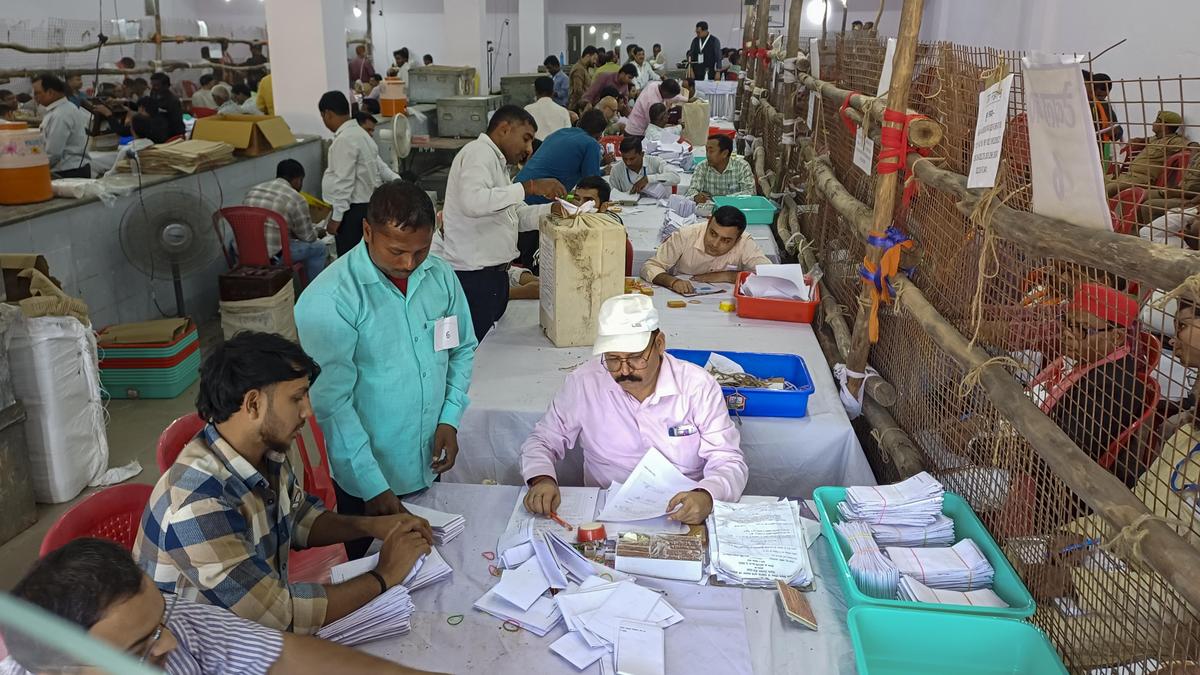
The recent MLC elections, conducted via paper ballots, saw the BJP and its NDA allies secure a significant majority. Prime Minister Modi used these results to critique the Congress party's ongoing opposition to Electronic Voting Machines.
The Mechanics of MLC Elections and the Shift to Paper Ballots
Recent elections for 28 Member of Legislative Council (MLC) seats concluded on October 23, revealing a significant political shift as the Bharatiya Janata Party (BJP) secured 13 seats. With its NDA alliance partners—the Shiv Sena (Eknath Shinde faction), Janata Dal (United), and Janata Dal (Secular)—each contributing one seat, the coalition reached a total of 16. In contrast, the Congress party managed to secure only a single seat in Maharashtra, a result that has triggered intense political discourse regarding electoral processes in India.
Why Paper Ballots Persist in MLC Elections
While the general public is accustomed to Electronic Voting Machines (EVMs) for Lok Sabha and Vidhan Sabha elections, MLC polls utilize paper ballots for a specific technical reason. MLC elections operate under the system of proportional representation through a single transferable vote. In this mechanism, voters are required to rank candidates in order of preference rather than selecting a single individual. Because India’s standard EVMs are engineered specifically for 'first-past-the-post' elections—where a voter chooses one candidate from a list—they lack the software architecture required to record and calculate complex ranked preferences.
Political Implications and the EVM Debate
Following the election results, Prime Minister Narendra Modi publicly critiqued the Congress party, highlighting the irony of their performance. The Congress has long campaigned against the use of EVMs, frequently demanding a return to paper ballots as a means to ensure electoral integrity. By winning a significant portion of seats in an election conducted entirely via paper ballots, the BJP-led coalition has effectively utilized the results to challenge the credibility of the Congress party's long-standing narrative regarding the supposed vulnerability of digital voting systems.
The Contrast in Electoral Systems
Understanding the distinction between these electoral systems is vital for political literacy. The 'first-past-the-post' system used in general elections is designed for simplicity and speed, which is why EVMs have become the standard. However, the deliberative nature of the Legislative Council, which represents various interests and constituencies through ranked voting, necessitates a more flexible approach. The reliance on paper ballots in this context is not a rejection of technology, but a logistical requirement of the proportional representation model.
Future Trends and Electoral Discourse
As the debate between digital and paper-based voting continues, the MLC results serve as a focal point for political maneuvering. The discourse is likely to remain polarized, with the BJP continuing to emphasize the efficiency and reliability of EVMs in general elections, while opposition parties may continue to raise concerns about electoral transparency. This episode demonstrates how technical electoral requirements can become deeply intertwined with broader national political messaging and partisan strategy.
Verification Required?