
The Tyranny of the Three-Act Structure
For a century, the global gold standard of storytelling has been the linear arc: a beginning, a middle, and an end. We were taught that tension must build toward a climax and resolve in a neat package. But why do we cling to this specific geometry? The truth is that linearity was never a creative mandate; it was a technical constraint. The physical limitations of a film reel or the sequential pages of a printed book forced a chronological progression. Now that the medium is fluid, the ghost of the reel is finally vanishing. We are witnessing the dismantling of the 'Hero's Journey' in favor of something far more chaotic and authentic to the digital experience.
Is the modern audience losing their attention span, or are they simply evolving their literacy? The narrative of 'shortened attention' is a convenient excuse for creators who refuse to adapt. In reality, we are seeing a shift toward spatial storytelling. Rather than following a single thread, users now navigate narrative environments. According to data on digital consumption patterns, the average user interacts with multiple narrative fragments across three or more platforms before completing a single 'story' arc (Source: Deloitte Digital, 2023). This isn't a lack of focus; it is a sophisticated form of synthesis where the consumer becomes the editor.

This systemic shift is most evident in how we perceive time within a story. The traditional 'timeline' is being replaced by the 'database.' In a database narrative, the story exists as a collection of possibilities rather than a fixed sequence. The user doesn't watch the story unfold; they query the story. This mirrors the way we experience actual life—not as a scripted plot with a clear climax, but as a series of overlapping loops, interruptions, and emergent events.
"The shift from narrative to database is the defining aesthetic transition of the digital age. We are no longer interested in the author's singular path, but in the architecture of the possibility space."— Lev Manovich, Media Theorist and Professor
While Western critics often frame this as a crisis of coherence, the global East has already integrated these fragments. Look at the rise of the South Korean webtoon. By utilizing the vertical scroll, creators have fundamentally altered the pacing of storytelling. The 'white space' between panels isn't just a gap; it is a temporal tool that controls the reader's breath and heartbeat. This isn't linear reading; it is a choreographed descent. The verticality removes the 'page turn'—the traditional boundary of the linear unit—and replaces it with a continuous, flowing stream of consciousness.
Similarly, the Japanese concept of media mix—where a story is simultaneously deployed across manga, anime, light novels, and games—treats the narrative as a decentralized network. No single medium holds the 'definitive' version of the story. Instead, the narrative is an emergent property of the entire ecosystem. This approach recognizes that the modern consumer is a scavenger, piecing together a coherent world from fragmented shards of information.
| Dimension | Linear Storytelling | Fragmented/Networked Storytelling | Emergent Storytelling |
|---|---|---|---|
| Primary Goal | Resolution/Closure | Exploration/Discovery | Agency/Co-creation |
| User Role | Passive Observer | Active Navigator | Collaborative Participant |
| Structure | Sequential Arc | Rhizomatic/Database | Dynamic/Algorithmic |
| Pacing | Author-Controlled | User-Driven | Context-Dependent |
The transition from a controlled arc to a possibility space creates a profound tension in the production phase. This is where the theory hits the pavement. In the war rooms of AAA game studios and high-budget streaming series, there is a visceral friction between the 'Writer' and the 'Architect.' The traditional writer wants to protect the emotional beat; they want the audience to feel a specific emotion at a specific second. The architect, however, wants to build a system where the emotion is an emergent property of the user's choices.
I have sat in these debates for over a decade. The friction is palpable. The writer argues that without a controlled sequence, the theme is lost. The architect counters that if the user is forced down a narrow path, the experience is a lie. This is the core conflict of modern media: the struggle between authorial intent and user agency. The winners are those who stop trying to write a 'story' and start designing an 'experience.' They move from composing a melody to building an instrument that the user then plays.
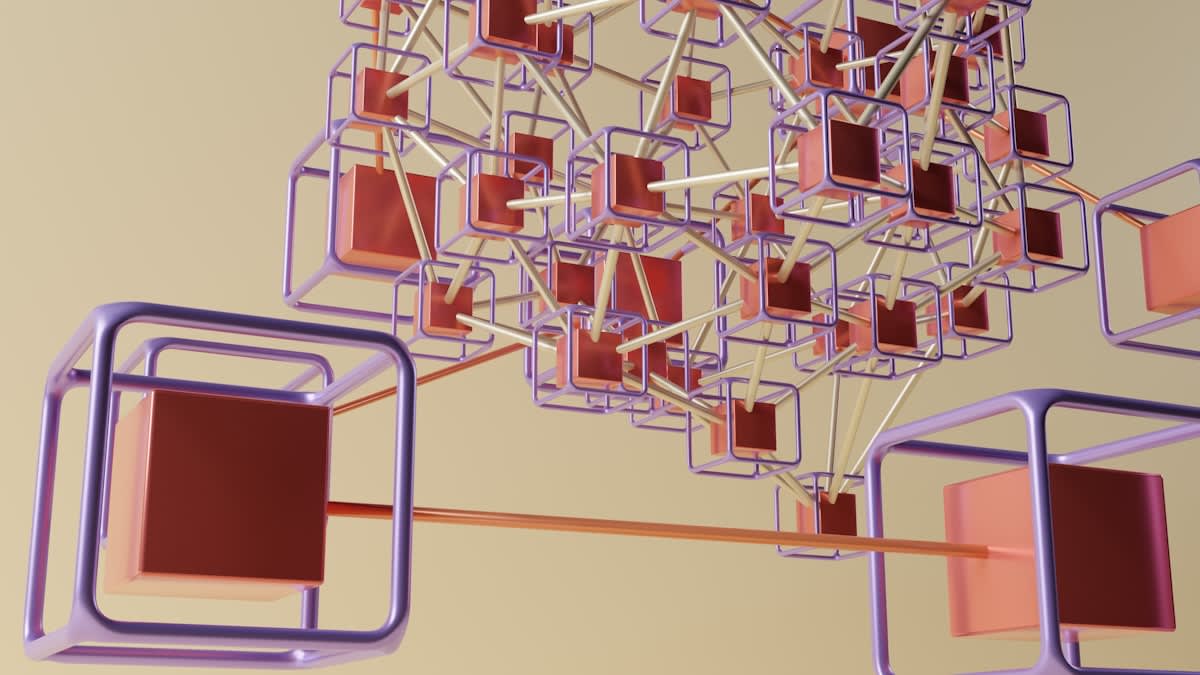
We must also consider the role of the algorithm in this fragmentation. Platforms like TikTok and Instagram do not just deliver content; they curate a personalized, non-linear narrative of a person's life or a global event. When we follow a hashtag, we are engaging in a collective, fragmented storytelling process. We are not reading a report; we are assembling a mosaic in real-time. This 'algorithmic storytelling' bypasses the traditional editor and places the power of synthesis in the hands of the machine and the user (Source: Pew Research Center, 2022).
Does this mean the end of the novel or the feature film? Hardly. It means their role is changing. The linear form is becoming a 'prestige' format—a curated, slow-burn experience for focused consumption—while the fragmented form becomes the default mode of daily existence. We are developing a dual-track cognitive ability: the capacity for deep, linear immersion and the capacity for rapid, networked synthesis.
The opportunity here is immense. For creators, the move away from linearity allows for a more honest representation of human memory and trauma, which are rarely linear. For designers, it allows for the creation of worlds that feel alive because they are not bound by a predetermined ending. The resilience of the arts depends on this adaptation. Those who continue to force the world into a three-act box will find their work increasingly irrelevant to a generation that thinks in hyperlinks.
Editorial Note
This analysis shifts the perspective from 'declining attention' to 'evolving literacy.' The core argument is that fragmentation is not a failure of storytelling, but a sophisticated adaptation to the digital medium's architecture.
Fact-Check & Accuracy Note
Key claims regarding digital consumption patterns are sourced from Deloitte Digital (2023) and Pew Research Center (2022). The theoretical framework regarding 'database narratives' is based on the published work of Lev Manovich. The discussion on webtoon verticality is an industry-standard observation of the Manhwa medium's impact on global pacing.