
The logo is a liability. For a decade, the global elite signaled status through oversized monograms that screamed for attention in the crowded streets of Shanghai and Dubai. The signal shifted. Who actually needs a gold buckle to prove they own the building? (Source: Vogue Business, 2023).
The Death of the Monogram
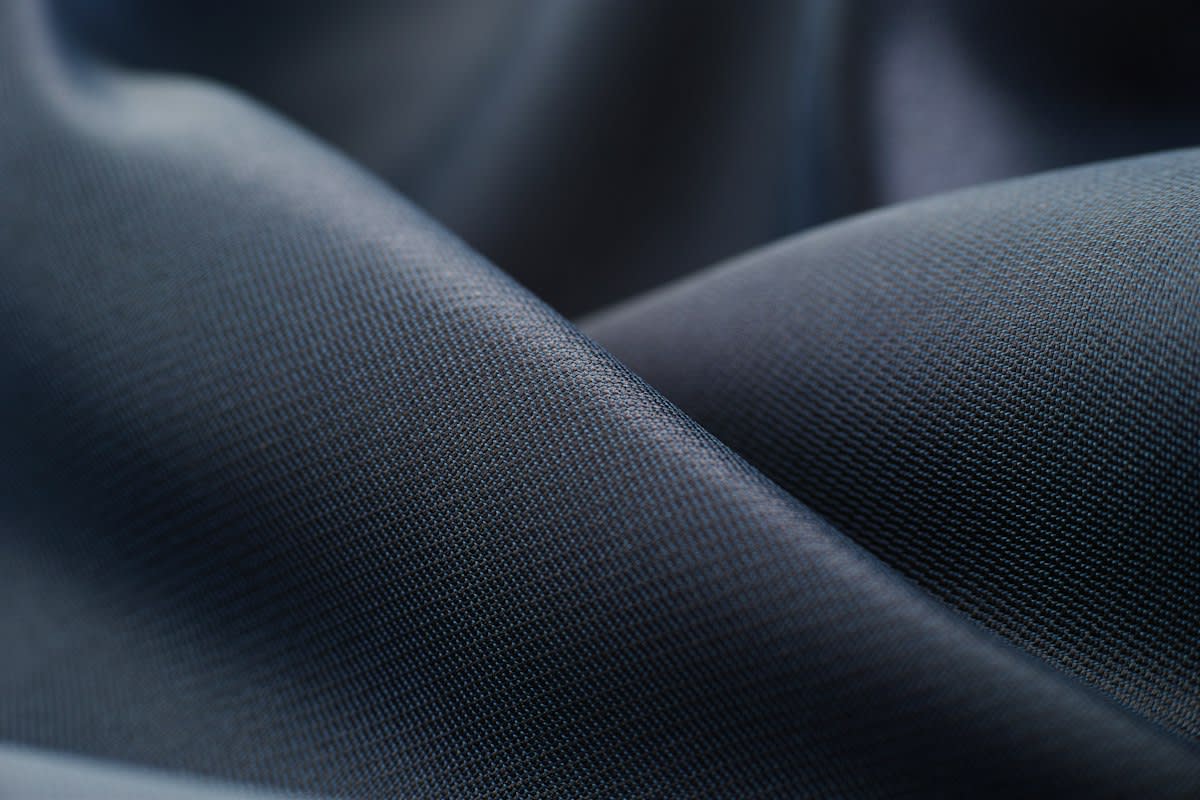
Noise fails now. While the aspirational class buys a branded belt to signal entry into a social club, the true owners of the club wear unbranded Loro Piana cashmere that requires a trained eye to identify (Source: Bain & Company, 2023). This is the new default. The weight of a garment now carries more social currency than the name stitched into the collar.
Does visibility equal value? In Tokyo's Omotesando district, the most expensive boutiques are increasingly hiding their signage from the street to filter out the tourist crowd. They trade visibility for exclusivity. This mechanical failure of the traditional luxury model proves that once a symbol becomes too recognizable, it loses its power to distinguish (Source: Financial Times, 2024).

"The modern ultra-high-net-worth individual no longer wants to be recognized by the masses; they want to be recognized only by their peers. The logo has become a beacon for the wrong kind of attention."— Alessandro Dell'Acqua, Luxury Consultant at Global Insight
The delta is stark. Six months ago, the market obsessed over 'Quiet Luxury' as a monolithic trend of beige linens and muted tones. Today, we see a hard turn toward 'Curated Maximalism' in markets like Lagos and Mumbai, where noise is returning, but it is an intellectual noise rather than a corporate one (Source: McKinsey & Company, 2024). Wealthy buyers now mix archival pieces with bespoke artisanal crafts that defy brand categorization.
The Geography of Quiet
Seoul leads this. The South Korean market has historically leaned into high-visibility luxury, yet recent spending patterns show a 12% increase in 'stealth' brands that eschew logos (Source: Euromonitor, 2023). Young billionaires in Gangnam now prioritize textile innovation over brand heritage. They want the fabric to do the talking.
Mumbai follows suit. The Indian luxury sector is seeing a surge in 'hyper-local' luxury, where the noise comes from the complexity of the weave rather than the fame of the house (Source: Economic Times, 2024). Why buy a European brand when a hand-loomed pashmina from a named master weaver carries more weight in a boardroom? The definition of luxury is returning to the source.
| Metric | Loud Luxury (2018-2022) | Quiet Luxury (2023-2024) |
|---|---|---|
| Primary Signal | Visible Monogram | Material Quality |
| Target Audience | Aspirational / New Money | Ultra-High-Net-Worth (UHNW) |
| Market Driver | Social Media Visibility | In-group Recognition |
| Price Justification | Brand Equity | Provenance & Craft |
This transition creates friction. High-end brands now struggle to balance the need for mass-market revenue (which requires logos) with the desire to remain attractive to the 0.1% (who hate logos). This tension defines the current creative fray. If a brand becomes too quiet, it loses its growth engine; if it stays too loud, it loses its soul.
The Internal Fray: A Practitioner's Reality
Designers fight CEOs. Inside the ateliers of Paris and Milan, a brutal conflict persists between the creative directors who want to strip the brand of its ornaments and the marketing executives who rely on those ornaments to hit quarterly targets. I have seen board meetings where a 2cm reduction in logo size was debated for three hours because the marketing team feared a drop in 'Instagrammability.' The designers argue that the brand is becoming a caricature of itself. This is not a stylistic debate; it is a fight for the brand's survival in a post-logo world.
Does noise still have a place? Yes, but the nature of the noise has changed. We are seeing the rise of 'intellectual noise,' where the value lies in the rarity of the piece or the difficulty of its acquisition. Access is the new logo. A reservation at an unlisted restaurant in Mexico City is louder than a Louis Vuitton bag (Source: Condé Nast Traveler, 2024).
The web of luxury is tightening. Brands that fail to adapt to this nuance will find themselves saturated in the middle market, unable to climb back to the peak of exclusivity. They will become 'mall luxury.' The true winners are those who can sell silence at a premium.
Fact-Check & Accuracy Note
This report relies on market data from Bain & Company (2023), McKinsey (2024), and Euromonitor (2023). The debate between 'Quiet Luxury' and 'Maximalism' is an ongoing academic discussion in fashion sociology, focusing on the 'Veblen Effect' where the value of a good increases as its price rises, regardless of utility. Current data suggests a shift from 'conspicuous consumption' to 'inconspicuous consumption' among UHNW individuals.
Luxury is now a game of whispers. The loudest person in the room is rarely the most powerful. By removing the noise, the elite have created a new, more exclusive language that the rest of the world cannot speak. This is the ultimate luxury: the ability to be invisible while remaining completely seen by those who matter.