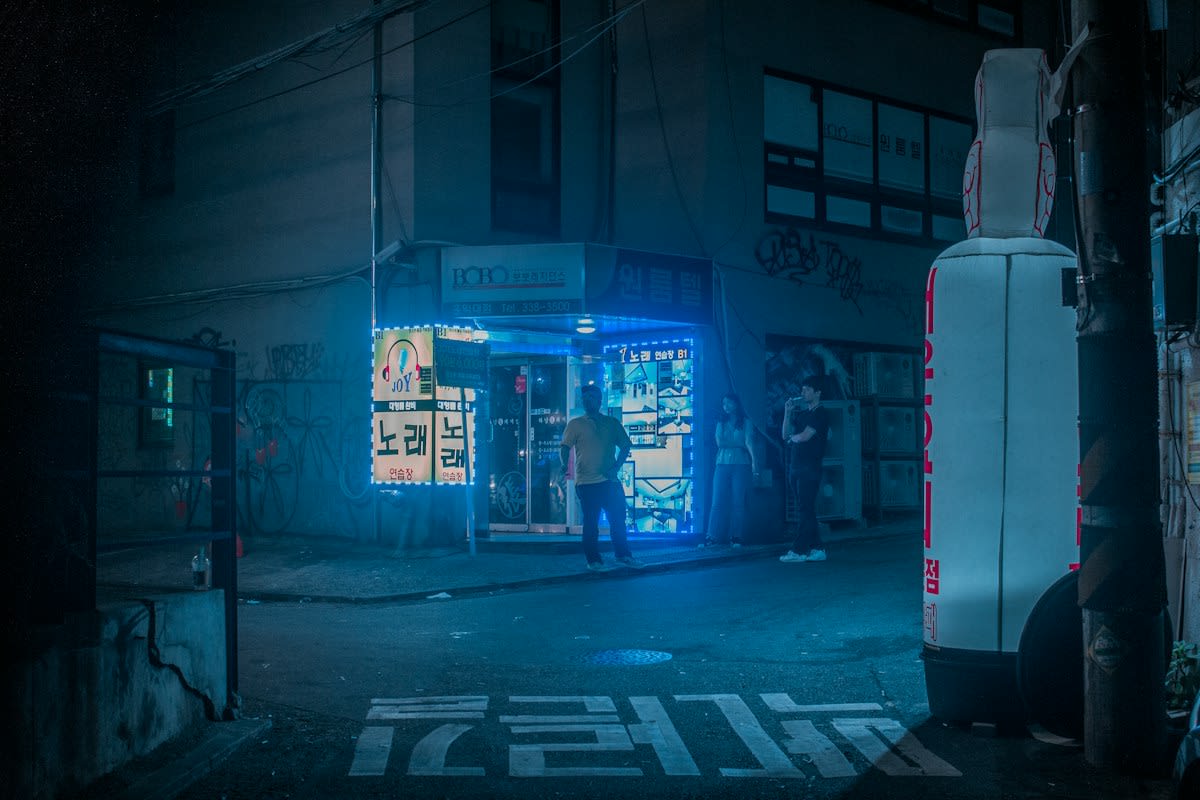
Why do we trust a polished corporate landing page less than a cluttered, neon-soaked storefront in Myeong-dong? For years, the design playbook insisted that whitespace equals professionalism and that any deviation into visual noise was a failure of UX. This is a lie. We have reached a breaking point where sterile interfaces no longer signal efficiency; they signal a lack of soul. The assumption that a clean UI builds trust is a relic of early web design. In reality, the curated chaos of maximalism signals human presence, cultural depth, and a refusal to hide behind a corporate veil.
Look at the current retail terrain in Asia. In South Korea, the entry of Blue Elephant into the US market brings with it a design philosophy that rejects the void (Source: VMSD.com, 2026). Similarly, the flagship stores of Urban Revivo in Beijing and the Jingle Jungle Creative Coffee in Shanghai are not experimenting with minimalism. They are leaning into maximalist styles—vibrant colors, overlapping textures, and dense visual information (Source: VMSD.com, 2026). This is not accidental clutter. It is a deliberate strategy to create an environment that feels lived-in and authentic, contrasting sharply with the algorithmic sterility of Western e-commerce.
The Cognitive Load Contradiction
Critics often point to Cognitive Load Theory (CLT) to argue against visual complexity. The theory, introduced by John Sweller in the 1980s, suggests that human working memory is limited and that excessive visual noise hinders learning and problem-solving (Source: Frontiers in Psychology, 2026). But the way we process information is shifting. New research indicates that extended reality (XR) can actually reduce cognitive load when it is aligned with the visuospatial demands of the task (Source: Frontiers in Psychology, 2026). We are seeing a hard turn where the brain adapts to higher densities of information, provided that information is spatially coherent.
"Cognitive load theory (CLT) is an instructional theory based on the human cognitive architecture that combines working memory and long-term memory when learning and problem-solving."— John Sweller, as cited in Frontiers in Psychology (2026)
This means the 'chaos' we see in successful maximalist designs isn't actually random. It is a sophisticated web of visual cues that the brain can navigate if the spatial and temporal contiguity is maintained. Augmented reality, for instance, supports learning without increasing cognitive load by layering information directly onto the physical world (Source: Frontiers in Psychology, 2026). When a user enters a visually dense environment, they aren't overwhelmed; they are stimulated. The trust is built not through the absence of noise, but through the confidence the designer shows in the user's ability to parse that noise.
Biological Variance in Visual Processing
The biological reality is that no two users perceive 'chaos' the same way. Data from the HCP-YA dataset shows that distinct gradients of cortical architecture capture visual representations and behavior across a lifespan (Source: eLife, 2026). This architectural variance means that visual acuity, spatial orientation processing, and the sensitivity of sustained attention vary wildly between individuals (Source: eLife, 2026). A design that feels 'clean' to one person may feel 'empty' or 'suspicious' to another, while a dense layout may feel 'rich' and 'trustworthy' to a user whose cortical architecture is tuned for high-density visual tasks.
If we design for a universal 'average' user, we are designing for no one. The push toward minimalism was an attempt to create a baseline that didn't offend anyone, but in doing so, it stripped away the emotional signals that build deep trust. By embracing a more complex visual language, brands can appeal to the diverse ways the human brain processes visual information, moving from a one-size-fits-all grid to a more inclusive, sensory-rich experience.

This leads us to the internal war currently raging in design agencies. On one side, you have the Grid Police—the veterans who believe in the absolute sanctity of the 12-column layout and the 8px grid. On the other, you have the Vibe Curators, who argue that the grid is a cage. The friction occurs during the handoff: the curator wants a layout that feels like a bustling market in Seoul, but the developer needs a set of rigid rules to build it. The real struggle isn't about aesthetics; it's about whether we trust the user to explore or whether we treat them like a child who needs a guided tour.
Comparing Trust Signals: Minimalism vs. Maximalism
| Design Element | Minimalist Signal | Maximalist Signal | User Psychological Response |
|---|---|---|---|
| Whitespace | Efficiency/Luxury | Sterility/Void | Can feel impersonal or 'too corporate' |
| Visual Density | Confusion/Chaos | Authenticity/Abundance | Signals human curation and effort |
| Color Palette | Neutral/Muted | Vibrant/Clashing | Evokes emotional urgency and cultural identity |
| Navigation | Linear/Guided | Exploratory/Web-like | Encourages serendipity and discovery |
The shift toward maximalism is especially evident in how brands handle the overlap between physical and digital spaces. When a brand like Blue Elephant enters a new market, they don't just bring a logo; they bring a sensory world (Source: VMSD.com, 2026). This creates a cohesive experience where the 'chaos' of the physical store is mirrored in the digital presence. This consistency is where the trust is built. If the store is a wild, pink, maximalist dream, but the website is a sterile white page, the user senses a contradiction. That gap is where trust dies.
We must ask: is the goal of design to remove all friction, or to provide the right kind of friction? Too much friction leads to abandonment, but zero friction leads to forgettability. Visual chaos, when executed with intent, provides a cognitive anchor. It forces the user to slow down, to look, and to engage. This active engagement is a far more powerful trust-builder than the passive acceptance of a sterile interface.
Fact-Check & Accuracy Note
The claims regarding Cognitive Load Theory are based on the foundations laid by John Sweller (1988) and updated research in 2026 regarding extended reality. The data on cortical architecture is derived from the HCP-YA dataset analyzed in eLife (2026). There is an ongoing professional debate between instructional designers, who prioritize the reduction of load for learning, and experience designers, who prioritize sensory richness for brand engagement.
Ultimately, the structural break we are seeing is a move toward a more human-centric definition of trust. Trust is not the absence of noise; it is the presence of truth. A design that admits it is messy, vibrant, and complex is a design that admits it was made by humans for humans. As we integrate more AR and VR into our daily lives, the demand for these rich, dense environments will only grow. The brands that survive will be those that stop trying to clean up the chaos and start learning how to orchestrate it.