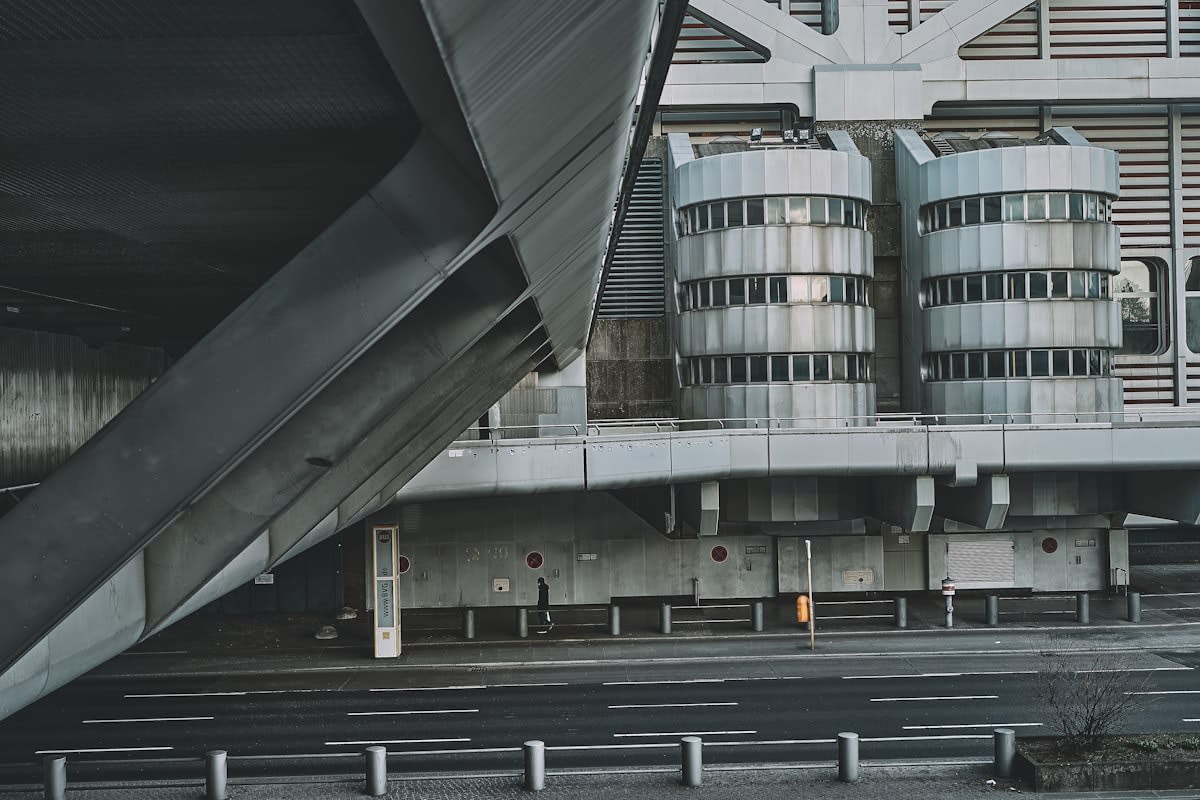
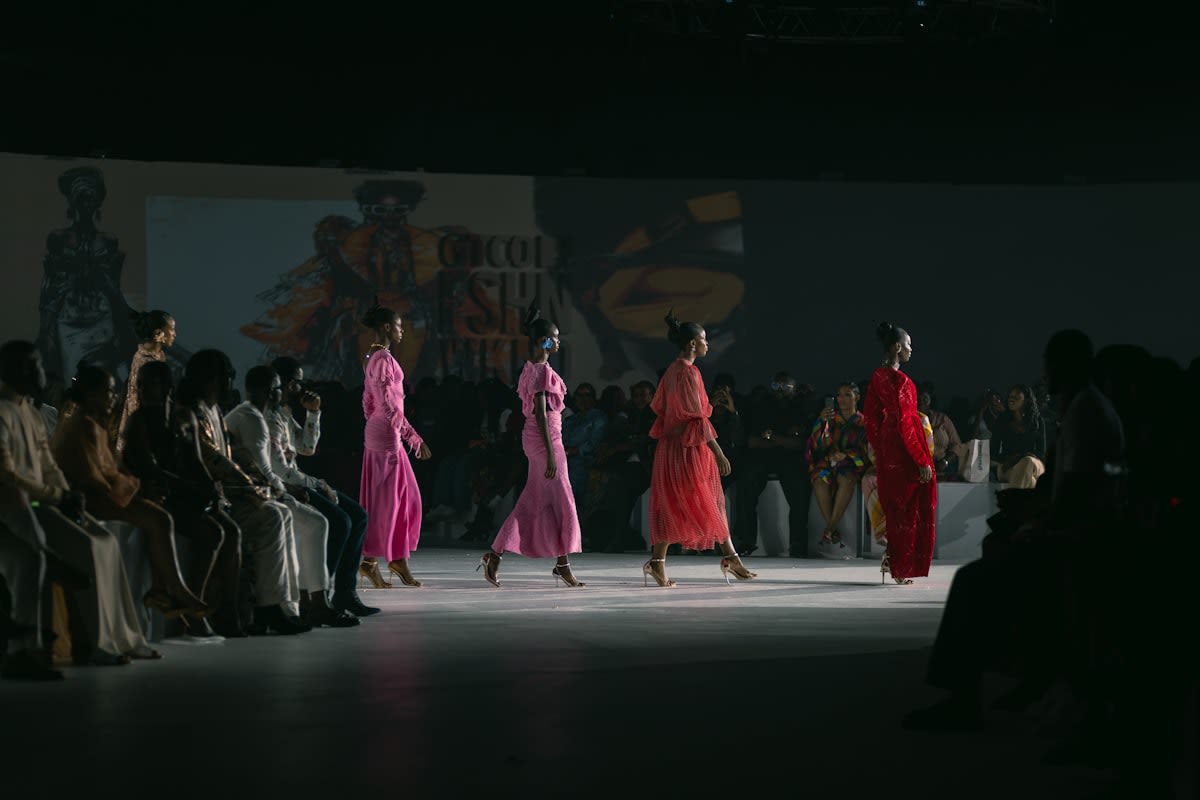
Berlin's International Congress Centrum is a silver megastructure that feels like a relic of a future that never arrived. In July 2026, this brutalist backdrop served as the perfect foil for Adebayo Oke-Lawal's Orange Culture Spring 2027 collection, Water Will Carry Us. While the West has spent a decade obsessed with 'quiet luxury' and the sterile palettes of minimalism, Oke-Lawal unleashed 24 looks defined by saturated color and sheer layers. This was not merely a fashion show; it was a strategic assault on the muted norms of European high fashion.
The immediacy of this shift is striking. Twelve months ago, the global conversation centered on understated elegance and neutral tones. Now, the delta has shifted toward a high-visibility, high-contrast aesthetic. This return to maximalism is not a random cycle of taste but a calculated export of West African identity. By utilizing uncompromising craft and bold palettes, designers are moving beyond 'inspiration' and into the realm of structural dominance.
The Makoko Blueprint
Maximalism in this context is not about excess for the sake of excess; it is about narrative density. Oke-Lawal drew direct inspiration from Makoko, the historic fishing community on the edge of the Lagos Lagoon. This translation of a living, breathing ecosystem into high fashion manifests in specific, tactile details. The design language here is a dialogue between the environment and the garment, where the chaos of the lagoon is systematized into luxury.
- Handbags designed by Eki Ogunbor of Kisara, modeled after the functional geometry of Makoko canoes.
- Intricate crochet work developed by Crochet Goodie to mimic aquatic textures.
- The Makoko Fisherman print created by Paolo Sisiano, turning labor into a luxury motif.
- Jewelry by Stella Owusu that anchors the fluid layers with industrial precision.
Why does this resonate now? Because the world is exhausted by the clinical. The use of raffia, embroidery, and saturated palettes mirrors the lifelong philosophy of Azzedine Alaïa, whose recent exhibition, Azzedine Alaïa et L’Afrique, highlighted how the couturier used color as a tool to sculpt the body. Alaïa understood that color is not a surface treatment but a structural element. West African designers are now scaling this philosophy, treating color as the primary architecture of the garment.
"He believed it was color that sculpts."— Olivier Saillard, Curator of the Azzedine Alaïa exhibition
This design philosophy creates a visceral tension. When you place a collection inspired by a Lagos fishing village inside a 20,000-capacity silver megastructure in Berlin, the contrast forces the viewer to acknowledge the dominance of the aesthetic. It is a power move. The maximalism is a claim to space in a global market that has historically relegated African design to the category of 'folk art' or 'ethnic wear'.
The Socio-Economic Engine: The Olodo Uprising
To understand the visual loudness of West African design, one must look at the cultural shift currently rocking Nigeria. The Olodo Uprising, a term coined by rapper Ycee, represents a fundamental pivot in how success is defined. In a climate where university degrees no longer guarantee employment, the creator economy has become the primary vehicle for social mobility. This is the 'Peller culture,' named after the 21-year-old TikTok star who embodies the power of virality over traditional academic excellence.
This cultural pivot is the hidden engine behind maximalist design. In a creator-driven economy, visibility is the only currency that matters. Muted tones do not stop a scroll. Quiet luxury does not trigger an algorithm. The demand for 'loud' design is a direct response to the necessity of being seen in a digital landscape where attention is the scarcest resource. Design has become a tool for survival and signal-boosting.
The Visibility Pivot
The transition from 'Yahoo culture' (cybercrime) to 'Peller culture' (creator economy) marks a shift from illicit gain to attention-based entrepreneurship, directly influencing the visual boldness of the region's exports.
Does this mean the death of competence? Not necessarily. As noted in the Olodo conversations, content creation has become a legitimate source of income for educated Nigerians who the formal economy failed. The maximalism we see on the runway is the high-art version of this struggle. It is the aesthetic of the 'hustle' refined into luxury, where the brilliance of the color reflects the brilliance of the survival instinct.
While West Africa leans into this visual explosion, other regions are taking a different path toward modernization. In East Africa, Rwanda is building its digital economy through a highly structured, state-led National Fintech Strategy. Their approach is clinical, focused on interoperability and regulatory sandboxes via the National Bank of Rwanda. This contrast is telling: while East Africa is optimizing the digital infrastructure, West Africa is optimizing the digital image.
| Dimension | Global Minimalism (Old Guard) | West African Maximalism (New Guard) |
|---|---|---|
| Primary Goal | Understatement / Exclusion | Visibility / Identity |
| Color Palette | Beige, Grey, Navy | Saturated, High-Contrast |
| Inspiration Source | Industrial Efficiency | Cultural Ecosystems (e.g., Makoko) |
| Economic Driver | Established Wealth | Creator Economy / Virality |
The result is a design language that is resilient and unapologetic. By integrating the raw energy of Lagos with the precision of global fashion capitals like Berlin, designers like Oke-Lawal are not just following a trend—they are setting the new baseline for what luxury looks like in the late 2020s. The 'so what' is clear: the era of blending in is over.
As we move toward 2027, expect this maximalism to bleed into other sectors. If fashion is the vanguard, interior design and digital interfaces will follow. The appetite for saturated, narrative-heavy aesthetics is a global reaction to a decade of sterility. West Africa is simply the first to weaponize this hunger with the necessary cultural depth and craft to make it stick.