For decades, the economic goal of production was the elimination of variance. We chased the Six Sigma ideal, where human error was a cost center to be engineered out of existence. But in late 2026, we are witnessing a violent reversal of this logic. As artificial intelligence moves beyond mere personalization into what is now termed 'individualization,' the cost of perfection has dropped to near zero. When a machine can generate a flawless output tailored to a specific user's psyche in milliseconds, the flawless becomes invisible. The market is now pricing in a premium for the opposite: the tangible, the erratic, and the demonstrably human.
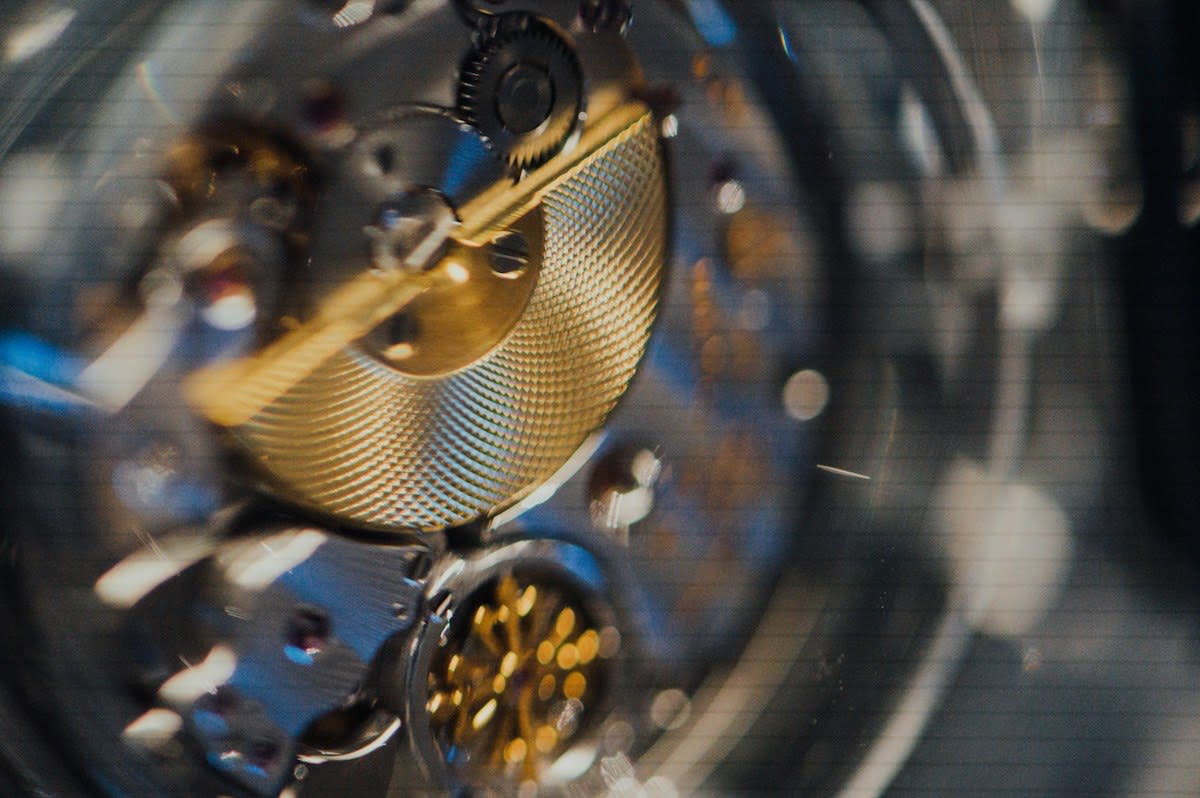
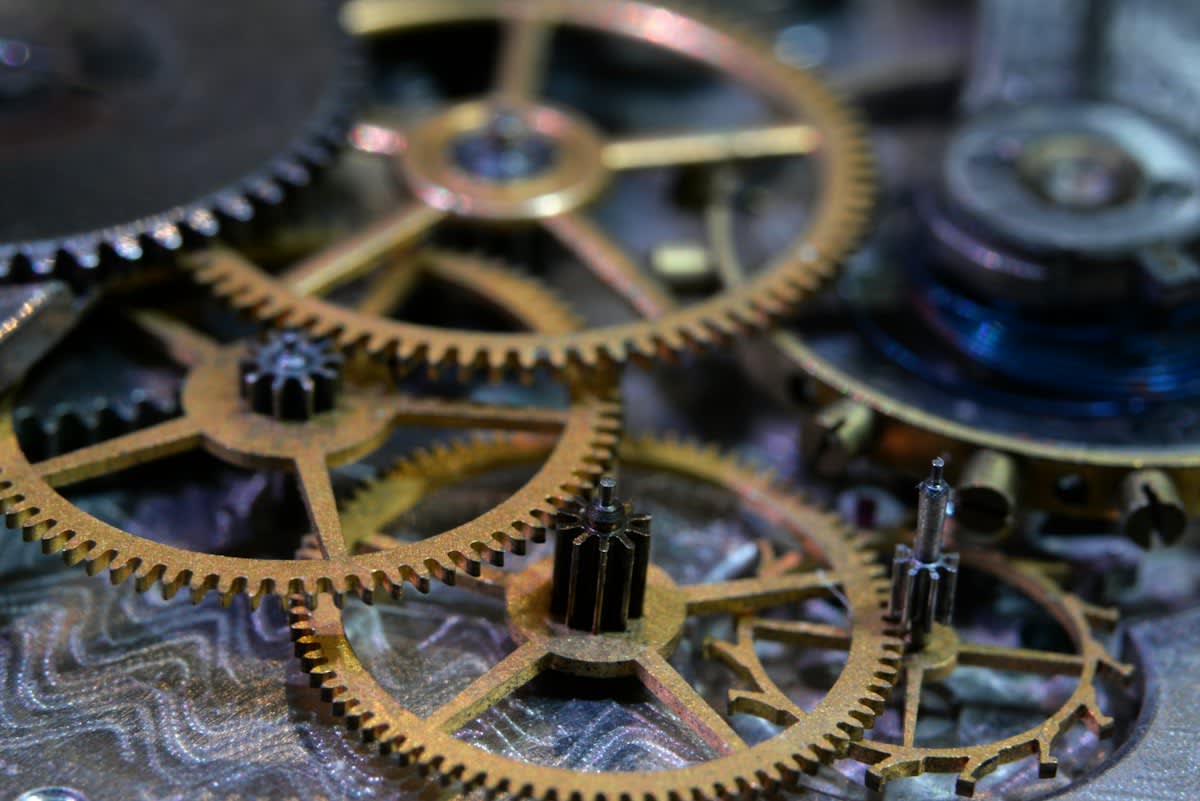
This is not a nostalgic whim; it is a hard economic pivot. We are seeing this most clearly in the high-end asset markets where the 'hand' of the creator is the primary value driver. According to Chrono24's Q3 report, Vacheron Constantin saw its secondary market prices rise 17.7% over the last twelve months, while Patek Philippe followed closely with a 17.0% increase (Source: Haute Time, 2026). These are not just watches; they are physical proofs of human labor and legacy. In a world where digital assets are infinite and perfect, the slight irregularity of a hand-finished bridge or a manually polished gear becomes a cryptographic signature of authenticity that no algorithm can spoof.
From Personalization to Individualization
The distinction between personalization and individualization is where the current economic tension resides. Personalization is an algorithmic exercise—it is a machine guessing what you want based on a cluster of similar users. Individualization, however, is the attempt to make a customer feel truly known and recognized on a human level. Fashion and beauty brands are currently leveraging automation to achieve this, attempting to stand out in a saturated market by creating experiences that feel bespoke (Source: Business of Fashion, 2026). Yet, the paradox is that the more 'perfectly' a brand individualizes an experience through AI, the more the consumer craves a rupture—a moment of genuine, unplanned human interaction.
Why does this happen? Because total optimization feels sterile. When every recommendation is correct and every interaction is seamless, the consumer loses the sense of discovery. The 'authenticity premium' emerges when there is a hint of friction. In the luxury sector, this manifests as a preference for the artisanal over the industrial. The value is no longer in the absence of error, but in the presence of a human who was capable of making an error but chose a specific, intentional path. This shift represents a move from valuing 'efficiency' to valuing 'intent'.
"As customers expect more from the shopping journey... brands are using automation to create more relevant, individualised experiences... to earn their share of wallet — and to stand out in an increasingly saturated market."— Industry Analysis, The Business of Fashion, 2026
This trend is mirroring the growth in the organic food sector, where consumers are consciously rejecting the 'perfect' produce of industrial farming. Research indicates that natural content, nutritional value, and sensory appeal are primary drivers of organic food purchase intentions, with these perception dimensions explaining 64.5% of the variance in consumer attitude (Source: Frontiers in Nutrition, 2026). The 'imperfections' of an organic apple—its irregular shape or varied color—are no longer seen as defects. They are perceived as sensory evidence of a natural process, creating a value proposition that industrial, 'perfect' produce cannot match.
The Infrastructure of the Invisible
While the consumer market pivots toward the human, the underlying infrastructure is becoming more automated than ever. India's telecom equipment market, for instance, is projected to grow from $25 billion in FY25 to $50 billion by FY32 (Source: KPMG, 2026). This expansion is driven by the convergence of AI, semiconductors, and cloud infrastructure. As this digital canopy expands, it creates a vacuum. The more our connectivity is managed by seamless, invisible AI, the more we value the visible, the tactile, and the flawed. The $25 billion delta in India's telecom growth is, in a strange way, the catalyst for the rising value of the non-digital.
From a practitioner's perspective, this creates a fascinating internal conflict within brand strategy teams. I have sat in rooms where designers argue over whether to leave a visible stitch 'off' or a paint drip 'wrong' to signal that a human actually touched the product. There is a genuine fear among luxury insiders that if a product looks too perfect, the customer will assume it was AI-generated or mass-produced by a high-precision robot. We are now debating the 'optimal level of error'—calculating exactly how much imperfection is needed to trigger the authenticity premium without compromising the perception of quality. It is a surreal inversion of 20th-century quality control.

Even in the realm of health and technology, the human element remains the ultimate trust anchor. Research into mHealth apps for elderly users shows that trust is positively correlated with behavioral intentions to use the technology (Source: PLOS One, 2026). While the app's code may be perfect, the user's willingness to engage depends on a feeling of trust—a psychological state that is rarely built through software alone, but through the human-centric design and the perceived empathy of the creators. The software is the tool, but the trust is the human asset.
| Asset Class | Value Driver (Old) | Value Driver (2026) | Recent Growth/Signal |
|---|---|---|---|
| Luxury Horology | Precision/Reliability | Human Heritage/Hand-finish | Vacheron Constantin +17.7% (Source: Chrono24, 2026) |
| Consumer Goods | Consistency/Uniformity | Natural/Organic Origin | 64.5% Attitude Variance (Source: Frontiers in Nutrition, 2026) |
| Digital Experience | Personalization | Individualization/Empathy | Shift toward 'feeling known' (Source: BoF, 2026) |
The economic implication is clear: we are moving toward a bifurcated economy. On one side, we have the 'Efficiency Economy,' where AI drives costs toward zero and precision toward 100%. On the other, we have the 'Authenticity Economy,' where the scarcity of human error creates a new class of high-value assets. In this new paradigm, the ability to prove that a human was involved—and that they were allowed to be imperfect—is the ultimate competitive advantage.
Fact-Check & Accuracy Note
The claims regarding luxury watch value increases are sourced from Chrono24's Q3 2026 data via Haute Time. The shift from personalization to individualization is based on current industry analysis from The Business of Fashion. The telecom market projections are based on the KPMG India report 'The Power Beneath Connectivity.' The organic food drivers are derived from empirical research published in Frontiers in Nutrition. There is ongoing debate among economists regarding whether this 'authenticity premium' is a permanent structural shift or a temporary reaction to the rapid deployment of generative AI.
As we look toward 2027, the winners will not be those who build the most perfect systems, but those who know exactly where to leave a gap for the human. The high-value asset of the future is not the algorithm that never fails, but the human who fails in a way that is beautiful, intentional, and authentic.