The Cost of Regulatory Fog
Investors hate ambiguity. DLA Piper reports that execution risks are choking battery energy storage systems (BESS) across Asia. This paralysis stems from a lack of clear revenue models and regulatory uncertainty.
BESS Market Attractiveness by Region
Executive Insight
+18.4%
YTD Growth
Capital follows the path of least resistance. While China remains a massive market, only 14% of respondents view it as the most attractive BESS destination. The US and UK command higher preference because their frameworks prioritize predictable returns over raw scale.
The Certainty Premium
Regulatory certainty is not a luxury; it is the primary filter through which global capital decides which borders to cross.
The Great Retreat
Wind is a liability when the math stops working. Duke Energy is terminating its Carolina Long Bay offshore wind lease under a settlement with the U.S. Interior Department. Nearly $129 million will be diverted back into general power generation capacity in the Carolinas.
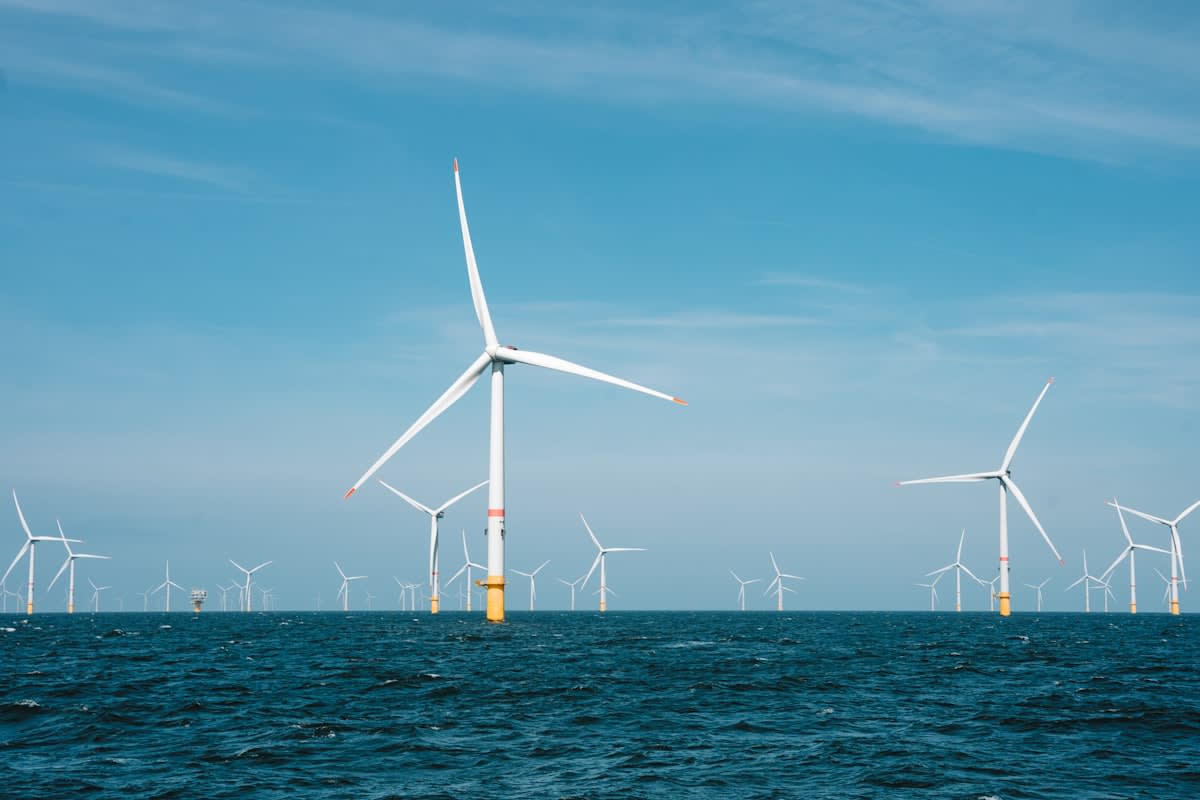
Such exits reveal the fragility of green commitments. Corporate balance sheets do not care about optics when lease agreements become anchors. This divestment highlights a preference for established generation over experimental frontiers.
Hard Assets as Hegemony
Machinery is the only truth. Ziehl-Abegg is expanding production capacity across Europe, Asia, and the United States to meet the demand for energy-efficient fans. Their US sites have already implemented round-the-clock three-shift production.
| Entity | Strategic Action | Underlying Incentive |
|---|---|---|
| Duke Energy | Lease Termination | Risk Mitigation ($129M salvaged) |
| Ziehl-Abegg | Capacity Expansion | Market Dominance (24/7 Production) |
| Asia BESS | Investment Delay | Regulatory Certainty (US/UK preference) |
Physical tooling provides a moat that software or leases cannot. By investing in machinery and tooling, Ziehl-Abegg secures its supply chain against the very volatility that is currently scaring off energy developers.
Institutional Equilibrium
State capacity is a convenient excuse for failure. The Daily Star argues that Bangladesh's industrial slowdown stems from an institutional equilibrium where economic power reinforces market privileges. Policy inconsistency is not a bug; it is a feature that protects entrenched interests.
"The challenge is that Bangladesh has not developed institutions capable of disciplining economic power in the service of industrial transformation."— The Daily Star
Conservation is often a catalyst for industrial churn. Nature's analysis of 6,638 Chinese protected areas from 2000 to 2020 shows that stricter policies correlate with higher firm turnover. Regulations do not simply protect nature; they force a dynamic equilibrium of openings and closures.

These patterns confirm a global trend. Whether in the forests of China or the ports of North Carolina, the reward goes to those who can navigate—or create—the rules of the game.