
The Myth of the Falling Dollar
The noise about de-dollarization is deafening, but the money is moving in the opposite direction. While pundits speculate on the decline of American hegemony, foreign investors poured more than $1.4 trillion into U.S. assets in the 12 months leading up to April 2026. It is a staggering contradiction. The world loves to complain about the greenback, yet they cannot stop buying it.
This is not just a fluke of liquidity. According to an analysis from Deutsche Bank, the U.S. equity market accounts for nearly half of global stock-market capitalization. When you control half the board, you set the rules. The dollar remains the undisputed global reserve currency because the alternatives simply lack the scale to compete.

| Reserve Status Metric | Strategic Significance | Current Status |
|---|---|---|
| Cross-border loans | Credit dominance | High Dollar Share |
| International debt securities | Funding stability | Dollar Denominated |
| FX trading volumes | Liquidity benchmark | Dominant |
| Currency-reserve allocation | Central bank trust | Primary Asset |
| Export invoicing | Trade standard | Widespread |
| Swift interbank payments | Infrastructure control | Systemic |
If we stop obsessing over the headlines, we see a pattern of strategic consolidation. The U.S. isn't just maintaining its position; it is absorbing the volatility of the rest of the world.
Resilience as a Competitive Moat
While the U.S. wins on capital, Europe is winning on stability. The Global Trade Resilience Index reveals a stark reality: Germany, France, and the Netherlands are the most resilient economies when it comes to absorbing trade and supply chain shocks. Germany, specifically, sits at the top of the list.
Beyond the Local Shock
The 2026 resilience index moved beyond local disruptions to measure systemic fragmentation. It tracks how a shock in one region cascades through logistics, insurance costs, and policy expectations.
This ability to adapt under pressure is the new currency of the industrial age. In a fragmented economy, the winner isn't the one with the fastest growth, but the one who doesn't break when the network fails.
But while Europe builds walls of resilience, Asia is building a new foundation for financial utility.
India's Utility-First AI
I am bored of hearing about AI as a chatbot for writing emails. In India, AI is being treated as a tool for massive financial inclusion. Dilip Asbe, CEO of the National Payments Corporation of India (NPCI), is targeting over a billion daily transactions via the Unified Payment Interface (UPI). He isn't chasing hype; he is chasing users.
"AI will be used very effectively when we look at the next wave of UPI... voice can become a critical component in the payment ecosystem."— Dilip Asbe, MD and CEO of NPCI
The goal is to onboard another half a billion users. The strategy? Multilingual interfaces and voice models that actually work for people who don't use a keyboard. This is AI as infrastructure, not AI as a toy. It simplifies lending for entrepreneurs with digital footprints and hardens security against fraud.
This focus on real-world utility mirrors the broader trend in the Asia-Pacific region. While global industrial deal volumes are expected to drop by 7% in 2026, APAC is the outlier, with a projected 2% increase.
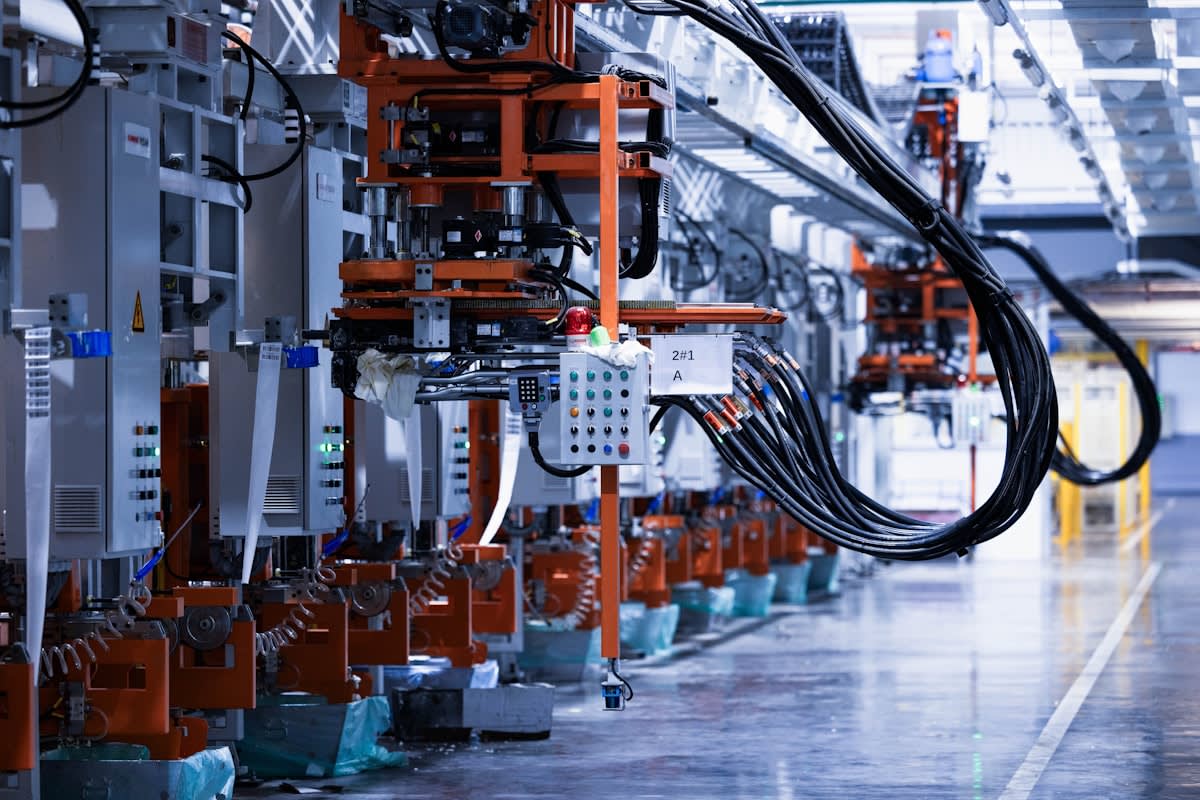
The PwC outlook confirms that manufacturing investment is flowing into India and Southeast Asia. More importantly, the median share of industrial manufacturers using highly automated processes is expected to climb from 18% to 50% by 2030. The region is automating its way to dominance.
The Stablecoin Illusion
Despite the enthusiasm for decentralized finance, the Bank for International Settlements (BIS) is issuing a cold reminder: stablecoins are not money. In its 2026 Annual Economic Report, the BIS argued that stablecoins fail on singleness, elasticity, interoperability, and integrity.
The BIS warns of stablecoin dollarization in emerging economies, which could strain bank funding and credit. Their solution? A tokenized unified ledger anchored in central bank money. The institutional world is not looking to be replaced by stablecoins; it is looking to absorb the technology and keep the control.
The conclusion is clear. The U.S. maintains the capital, Europe maintains the resilience, and Asia maintains the growth. The real winners are those who stop waiting for a systemic collapse and start exploiting these regional strengths.