
The Death of the Isolated Campus
For decades, the prevailing logic of venture capital dictated that innovation happens in a vacuum. You build a campus in a specific zip code, surround yourself with like-minded engineers, and iterate until a product is ready for the real world. This model is failing. The current movement of capital suggests that the distance between the laboratory and the application has become an unacceptable tax on growth. We are seeing a transition toward embedded investment, where the capital and the talent are placed directly inside the operational environments they intend to disrupt.
Consider the launch of UCSF Health Converge. Rather than funding a health-tech startup in a generic incubator, venture giants Kleiner Perkins and Doerr Capital have placed the accelerator directly inside a top-ranked academic health network. This inside-out approach rejects the isolated development models of traditional tech hubs. By placing startups alongside clinicians, IT infrastructure teams, and operational leaders, the capital is no longer speculating on a market; it is integrating into the workflow. This proximity allows for the immediate mitigation of clinical information overload and the streamlining of patient navigation, turning the hospital itself into the incubator.
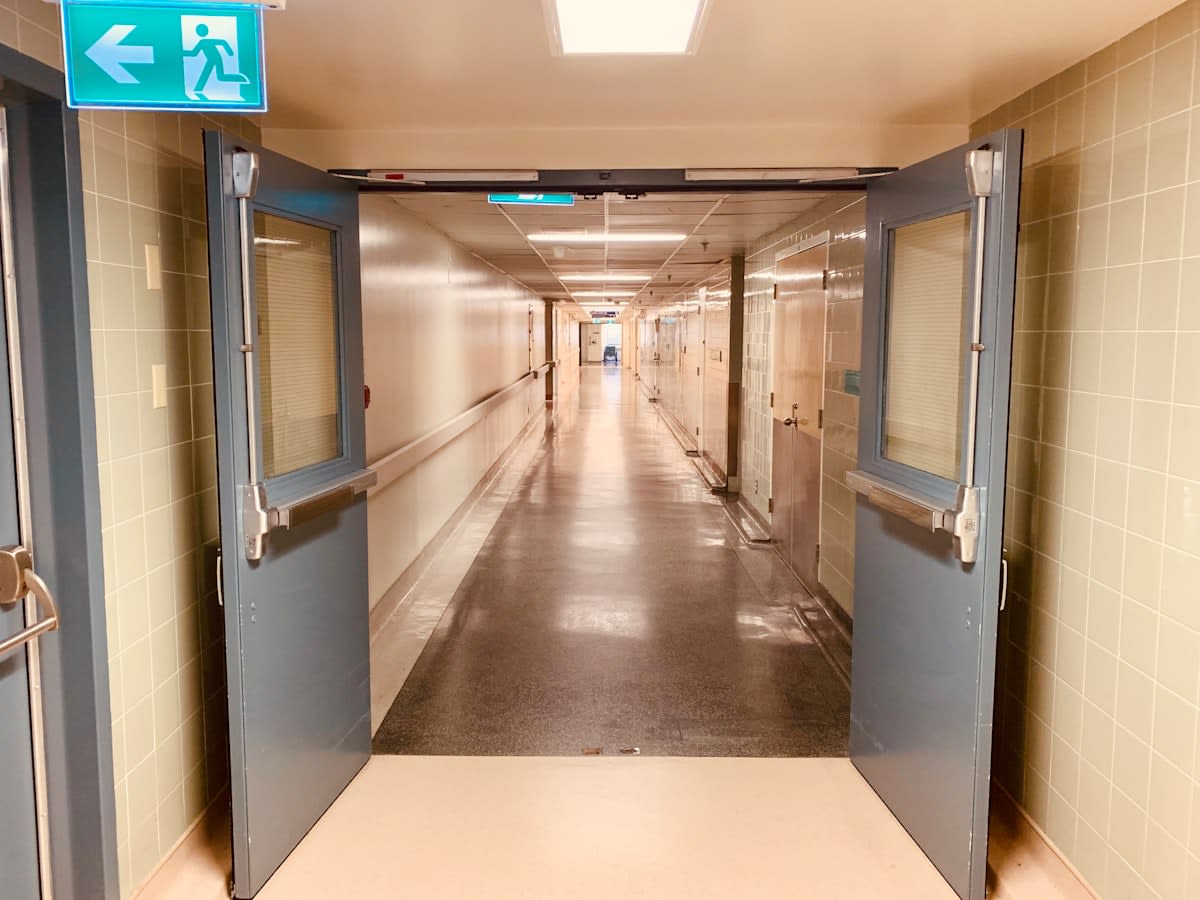
Why does this matter? Because the friction of deployment is where most AI initiatives die. When a startup operates in a vacuum, it builds for a theoretical user. When it operates inside UCSF Health, it builds for the clinician who is currently drowning in automated documentation and billing errors. The commercial advantage is no longer found in the brilliance of the code, but in the proximity to the pain point. Capital is quietly moving to where the friction is highest.
Infrastructure as the New Alpha
This trend extends beyond healthcare and into the very bones of national security and governance. Traditional procurement pathways are often too slow to keep pace with the degradation of physical assets. Since 2023, more than 430 requests to repair, replace, or upgrade systems have been submitted by over 50 military installations through IGSAs with Sourcewell. These are not mere maintenance requests; they are a signal that non-traditional pathways are becoming the primary vehicle for modernizing military infrastructure at scale.
"One of the most urgent challenges we’re hearing about from our military partners is aging infrastructure."— Dr. Chad Coauette, CEO of Sourcewell
The focus on core systems that support daily living conditions highlights a shift in priority. Capital is being diverted from flashy, speculative defense tech toward the fundamental stability of the installations. This is the same logic driving the U.S. Department of Transportation's move in 2025, where more than 60,000 employees transitioned from legacy providers to Google Workspace. The goal is not just a software update; it is the movement of AI use cases from the experimental phase to the operational phase. When the largest cabinet-level agencies move their entire workforce, they are not chasing a trend—they are restructuring their capacity for execution.
| Investment Model | Primary Location | Success Metric | Risk Profile |
|---|---|---|---|
| Traditional Hub | Isolated Tech Campus | User Growth/Valuation | Market Adoption |
| Embedded Capital | Point-of-Care/Operational Site | Integration Efficiency | Execution Speed |
| Infrastructure-Led | Non-Traditional Procurement | System Longevity | Budgetary Constraint |
The divergence is clear: traditional capital seeks a scalable product that can be sold to a market. Embedded capital seeks an integrated solution that solves a specific, high-cost operational failure. The latter is far more resilient because it is tethered to a necessity rather than a preference.
The Rotation of Creative Capital
Even in the most speculative sectors, such as gaming, the money is rotating. According to PitchBook, gaming VC in Q2 2026 shifted heavily toward AI tooling, specifically concentrating in world models and generative media. The numbers are stark: the development segment took 46.5% of H1 deal value, a massive jump from 35.1% in 2024. Meanwhile, traditional content studios—the old hubs of the gaming world—collapsed from 47.3% to a mere 12% over the same period.
The market is no longer betting on the next great game studio; it is betting on the tools that make game creation possible. The largest rounds reflect this appetite for infrastructure over content. Suno secured $400 million for music generation, while world-model startups like General Intuition ($320 million), Odyssey ($310 million), and Decart ($300 million) captured the bulk of the capital. This is a move up the value chain. Investors are buying the factory, not the product.
Does this mean content is dead? No. It means the economic value of content is being commoditized by the tools used to create it. When 46.5% of deal value flows into the development layer, the message to the industry is that the real alpha lies in the underlying generative media engine, not the intellectual property produced by it.
Singapore: The Laboratory State
Nowhere is this transition more evident than in Singapore. The city-state is consciously moving from being a fintech hub to becoming a laboratory for the future. While a hub simply attracts firms, a laboratory creates the infrastructure for their commercial use. The Monetary Authority of Singapore (MAS) now oversees more than 1,300 fintech firms and over 50 innovation laboratories. The focus in 2026 has shifted from merely experimenting with tokenized assets to building the actual commercial infrastructure required to move those assets at scale.
This institutionalization of innovation is mirrored in the ambitions of regional giants. DBS Group is targeting over S$1 trillion ($774 billion) in wealth assets by 2030. This is not just a growth target; it is a bet on the rising Asian wealth and the inflows into regional financial hubs that have evolved into operational laboratories. By integrating wealth management with the new tokenized infrastructure, DBS is ensuring that capital doesn't just pass through Singapore, but is anchored there.
The Structural Difference
The transition from 'Hub' to 'Laboratory' represents a move from passive attraction to active construction. A hub provides a place to meet; a laboratory provides the tools to execute.
The common thread across military bases in Minnesota, clinics in San Francisco, and the financial districts of Singapore is the elimination of the gap between the investor and the operator. The traditional financial hub was a middleman. The new model is a partnership of proximity.
We are witnessing a fundamental reorganization of how value is captured. When capital embeds itself into the point of care or the point of production, it reduces the risk of market mismatch and accelerates the timeline to revenue. The isolated campus was a luxury of a lower-speed economy. In an era of generative AI and rapid infrastructure decay, the only capital that survives is the capital that is actually in the room when the problem is being solved.