16th batch of over 4600 pilgrims leave for Amarnath cave from Jammu
Source Entity
India Latest News: Top National Headlines Today & Breaking News | The Hindu
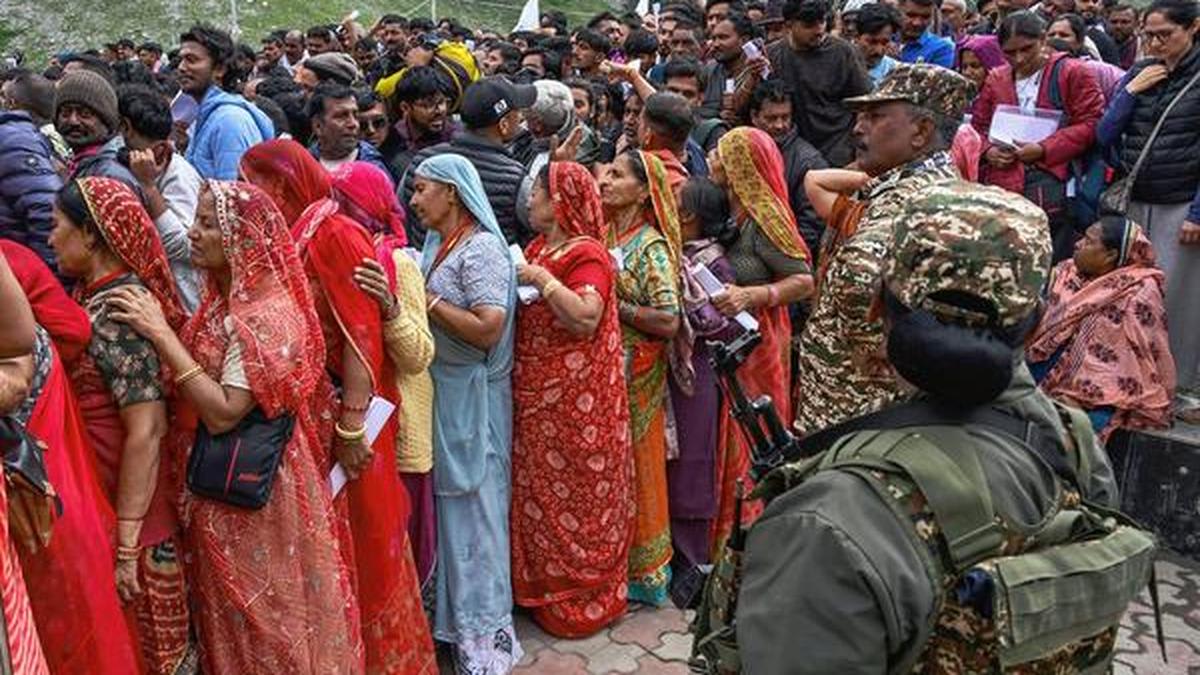
The 16th batch of 4,640 pilgrims has departed from Jammu for the Amarnath Yatra. Over 3.45 lakh devotees have visited the holy cave shrine so far under strict multi-tier security.
Logistics and Scale of the 2026 Amarnath Yatra
On Friday, July 17, 2026, the Amarnath Yatra continued its massive operational scale with the departure of the 16th batch of pilgrims. A total of 4,640 devotees left the Bhagwati Nagar Yatri Niwas in Jammu, marking a significant milestone in this year's pilgrimage. The operation was characterized by precision timing, with the Baltal-bound convoy departing at 2:42 a.m. and the Pahalgam-bound convoy following shortly after at 3:11 a.m. This coordinated movement reflects the complex logistical planning required to manage thousands of people moving through sensitive mountainous terrain.
Route Distribution and Strategic Planning
The 16th batch utilized a convoy of 171 vehicles, split between two primary paths to the 3,880-metre-high cave shrine. A total of 1,626 pilgrims opted for the shorter, more strenuous Baltal route in central Kashmir's Ganderbal district, while a larger group of 3,014 pilgrims chose the traditional and more scenic Pahalgam route in south Kashmir's Anantnag district. The preference for the Pahalgam route often suggests a desire for a more gradual ascent, whereas the Baltal route is typically favored by those seeking a faster journey, despite the steeper climb. This distribution of pilgrims is crucial for managing crowd density and ensuring that resources are allocated efficiently across both districts.
Cumulative Impact and Pilgrimage Volume
The sheer volume of the 2026 pilgrimage is evident in the cumulative data. To date, more than 3.45 lakh pilgrims have successfully paid their obeisance to Lord Shiva at the holy cave. Specifically, 1,09,128 pilgrims have departed from the Bhagwati Nagar base camp in Jammu alone. These figures underscore the immense spiritual draw of the shrine and the ability of the administration to handle massive influxes of people. The scale of these numbers indicates a robust demand for the pilgrimage, necessitating a highly organized system of registration and transport to prevent bottlenecks at the base camps.
Security Infrastructure and Risk Mitigation
Given the geographical and political sensitivities of the region, the yatra is being conducted under rigorous multi-tier security arrangements. Authorities have implemented an elaborate deployment strategy that spans the entire Jammu-Srinagar National Highway, which serves as the primary artery for the pilgrimage. Security is not limited to the highway but extends deep into the pilgrimage routes to ensure safe passage for the devotees. This multi-layered approach is designed to mitigate risks and provide a secure environment for the thousands of pilgrims traversing the challenging landscape of the Kashmir valley.
Environmental and Physical Challenges
The destination of the yatra—a cave shrine situated at an altitude of 3,880 metres—presents significant physiological challenges. Pilgrims must contend with thinning air, unpredictable weather, and rugged terrain. The management of the yatra involves not only security and transport but also health monitoring to prevent altitude sickness among the thousands of devotees. The strict scheduling of convoys from the Bhagwati Nagar Yatri Niwas ensures that pilgrims enter the high-altitude zones in manageable waves, reducing the pressure on medical facilities and emergency response teams stationed along the routes.
Socio-Economic and Regional Implications
The movement of over a lakh of people from Jammu and the visit of over 3.45 lakh devotees to the shrine create a temporary but intense economic surge in the Ganderbal and Anantnag districts. Local services, including pony owners, guides, and lodge operators, rely heavily on the annual influx of pilgrims. The organized nature of the convoys and the use of designated base camps like Bhagwati Nagar ensure that the flow of people is regulated, which helps local administrations maintain order while facilitating the spiritual journey of the devotees.
Conclusion and Future Outlook
As the Amarnath Yatra progresses, the successful movement of the 16th batch demonstrates the efficacy of the current administrative and security framework. With over 1.09 lakh pilgrims having departed from Jammu and total visitors exceeding 3.45 lakh, the 2026 season is proving to be one of significant scale. The continued reliance on multi-tier security and precise logistical coordination will remain paramount as the pilgrimage reaches its peak, ensuring that the spiritual experience of the devotees is balanced with safety and operational efficiency.
Verification Required?