Walk through the elite districts of Lagos or Jakarta, and you will still see the remnants of the 'Bling Era'—gold-plated SUVs, sprawling mansions with ornate gates, and a general appetite for visibility. But look closer at the actual movement of capital, and a different story emerges. A silent migration is underway. The newest generation of billionaires in the Global South is systematically scrubbing their public profiles, diversifying into invisible assets, and adopting a lifestyle of strategic anonymity. This isn't just about modesty; it is a calculated survival mechanism in an era of unprecedented financial surveillance and political instability.
The delta between wealth behavior in 2014 and 2024 is staggering. A decade ago, the goal for the emerging wealthy in these regions was validation through visibility. Today, the goal is resilience through invisibility. This shift coincides with the global rollout of the Common Reporting Standard (CRS), which has effectively ended the era of the secret Swiss bank account. As transparency becomes the default, the wealthy are not fighting the system—they are evolving around it. They are moving away from static, taxable assets and toward fluid, private structures that offer both growth and a low profile.
The Architecture of Invisibility
The primary tool for this transition is the proliferation of the single-family office (SFO). While once the exclusive domain of Western dynastic wealth, SFOs are exploding across Southeast Asia and Latin America. These entities allow billionaires to manage their investments, philanthropy, and legal affairs under a corporate veil, removing their names from the public ledger. By shifting ownership from an individual to a private entity, they decouple their personal identity from their net worth. This allows them to move capital across borders with far less friction and scrutiny than a high-profile individual could manage.
This structural pivot is driven by a pragmatic realization: visibility is a liability. In regions where the rule of law is fluid and political winds shift overnight, being a known billionaire can lead to sudden regulatory 'audits' or targeted expropriation. According to the UBS Global Wealth Report 2023, there has been a marked increase in the diversification of assets among HNWIs in emerging markets, moving away from domestic real estate toward global private equity and venture capital (Source: UBS, 2023). They are no longer buying the biggest house in the neighborhood; they are buying the venture fund that owns the neighborhood.
"The modern billionaire in the Global South views their public persona as a risk vector. The objective is no longer to be seen as powerful, but to possess power that is entirely unseen."— Analysis from the Knight Frank Wealth Report 2024
Is this a retreat? Hardly. It is an optimization. By operating in the shadows, these individuals can engage in strategic investments—such as critical infrastructure or tech startups—without triggering the public backlash or political jealousy that often follows conspicuous wealth. They are trading the social currency of 'status' for the operational currency of 'freedom.'
Regional Variations: From the Andes to the Mekong
In Latin America, particularly in Brazil and Mexico, the shift is heavily influenced by security concerns. The 'invisible' lifestyle is a safety requirement. Wealthy families are investing in highly secure, understated compounds rather than flashy estates, often utilizing complex trust structures in jurisdictions like the Cook Islands or Jersey to shield assets from local volatility. The focus has shifted toward 'portable wealth'—assets that can be liquidated or moved instantly if the domestic environment becomes untenable.
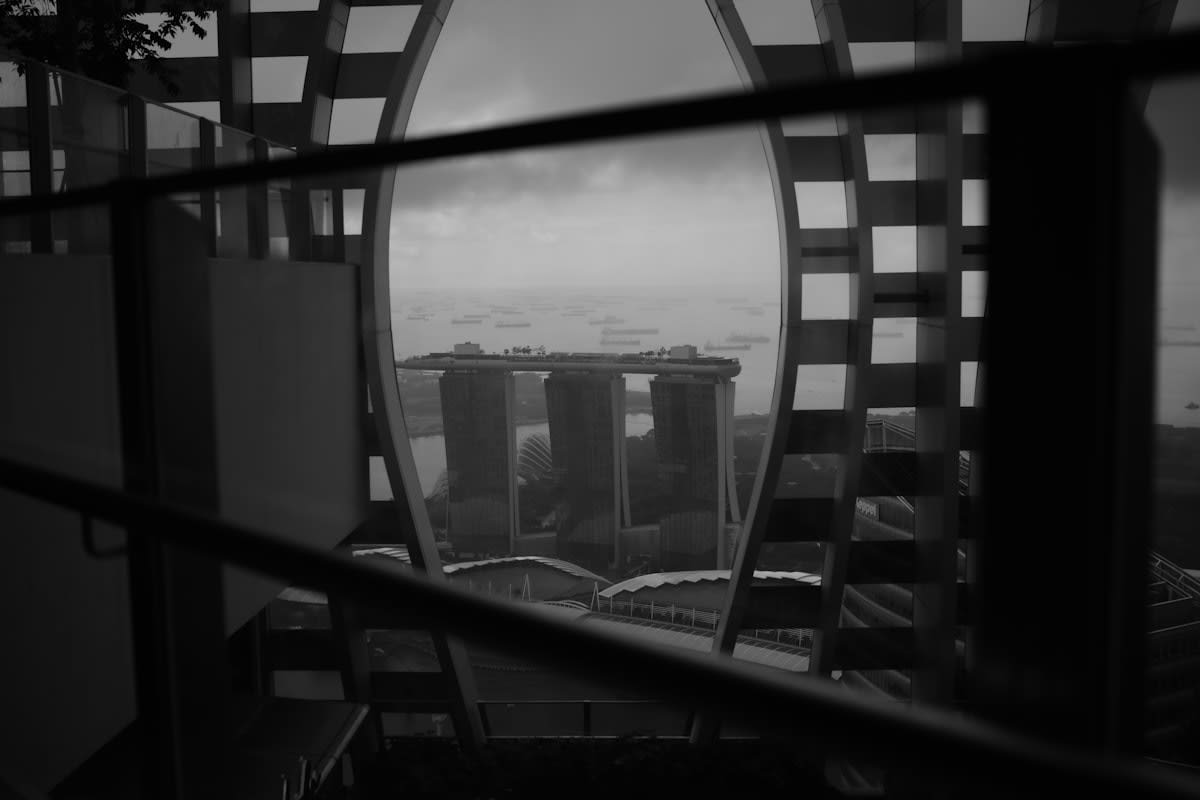
In Southeast Asia, the trend is more about institutionalization. In Vietnam and Indonesia, the new wealthy are aggressively moving into 'Quiet Luxury'—investing in art, rare collectibles, and niche agricultural land that doesn't appear on a standard balance sheet. They are utilizing Singapore as a 'wealth vault,' moving their headquarters there while maintaining their operational bases at home. This dual-track existence allows them to enjoy the growth of their home markets while securing the principal in a stable, transparent legal environment.
| Asset Class | Old Wealth (Conspicuous) | Stealth Wealth (Invisible) | Primary Objective |
|---|---|---|---|
| Real Estate | Mega-Mansions / Landmarks | Commercial REITs / Strategic Land | Capital Preservation |
| Transport | Gold-plated Supercars | Private Aviation via Leasing | Operational Privacy |
| Investment | Publicly Traded Stocks | Private Equity / Venture Capital | Low Public Profile |
| Status Symbol | Designer Logos / Jewelry | Rare Art / Digital Assets | Hedge against Inflation |
Across Sub-Saharan Africa, the trend manifests as a pivot toward 'Digital Sovereignty.' We are seeing a significant uptick in the use of stablecoins and decentralized finance (DeFi) among the elite in Nigeria and Kenya to bypass inefficient local banking systems and avoid the volatility of domestic currencies. This isn't just about speculation; it is about creating a parallel financial system that exists outside the reach of local bureaucratic interference.
This regional divergence proves that stealth wealth is not a monolith. It is a flexible strategy tailored to the specific risks of the geography. Whether it is security in Brazil or currency hedges in Nigeria, the common thread is the desire to disconnect the 'person' from the 'portfolio.'
The Practitioner's Perspective: Friction in the Vault
On the ground, this shift creates a fascinating tension for wealth managers and private bankers. In the boardrooms of Singapore and Dubai, the debate isn't about how to maximize returns, but how to maximize 'opacity' while remaining compliant. There is a constant friction between the client's demand for total anonymity and the bank's mandatory KYC (Know Your Customer) and AML (Anti-Money Laundering) requirements. Practitioners are now spending more time on 'reputational engineering'—helping clients build a public profile that looks successful but not 'too' successful—than they are on actual asset allocation.
The real friction occurs during the transition from the first generation (the wealth creators) to the second generation (the wealth inheritors). The first generation often fought their way to the top and enjoyed the visibility of their victory. The second generation, educated in the West and acutely aware of global transparency trends, often views their parents' flashiness as a liability. This creates internal family conflict: the patriarch wants the monument, but the heir wants the trust fund in a blind structure. This generational clash is currently redefining how family constitutions are written across the Global South.

From a practitioner's eye, the 'Stealth Shift' is most visible in the types of requests coming into private offices. We are seeing fewer requests for 'trophy assets' like beachfront villas in St. Tropez and more requests for 'strategic assets' like water rights, sustainable farmland, or minority stakes in critical AI infrastructure. The conversation has moved from 'What will make me look powerful?' to 'What will make me indispensable and invisible?'
The Economic Implications of the Invisible Class
What happens to a domestic economy when its wealthiest citizens stop investing in visible local markers and start hiding their capital in global, invisible structures? The immediate effect is a decline in 'conspicuous' local spending—luxury retail in capital cities may see a dip in 'flashy' purchases—but the long-term effect is a shift in how capital is deployed. Stealth wealth tends to flow into more productive, albeit less visible, sectors. Instead of a gold-plated hotel, the capital goes into a cold-storage logistics network or a fintech payment gateway.
- Reduced domestic political friction: Lower visibility leads to fewer populist attacks on the wealthy.
- Increased capital mobility: Wealth stored in 'invisible' global structures can be deployed faster during crises.
- Shift in luxury markets: Growth in 'ultra-niche' luxury (bespoke, unbranded) over 'logo-heavy' luxury.
- Professionalization of wealth: The rise of SFOs creates a new class of high-paying jobs for global analysts and lawyers.
However, this trend also complicates the efforts of governments to broaden their tax bases. When wealth becomes invisible, traditional tax collection methods fail. This is leading to a new arms race between Global South tax authorities and the architects of stealth wealth. The result is not a return to visibility, but a move toward even more sophisticated legal shells and digital obfuscation.
Ultimately, the Stealth Wealth Shift is a symptom of a world where information is the ultimate weapon. In an age of social media and global data leaks, the greatest luxury is no longer owning the most expensive thing in the room—it is being the only person in the room whose true net worth is a total mystery.
Fact-Check & Accuracy Note
The claims regarding the shift in asset allocation and the rise of family offices are sourced from the UBS Global Wealth Report 2023 and Knight Frank's Wealth Report 2024. The discussion regarding the Common Reporting Standard (CRS) refers to the OECD's global framework for the automatic exchange of financial account information. Areas of ongoing debate include the actual volume of wealth moving into DeFi in Africa, as these transactions are by nature difficult to quantify accurately.