
The Liquidity Illusion
Conventional wisdom suggests that the global trade finance gap is a simple matter of missing money. We hear the numbers—trillions of dollars in unmet demand—and assume the solution is more liquidity. This is a fundamental misunderstanding of the machinery. The world is awash in capital; the problem is that this capital is terrified to move. For a small-to-medium enterprise (SME) in Southeast Asia or Sub-Saharan Africa, the barrier isn't a lack of funds in the global banking system, but a systemic refusal to price risk accurately in non-traditional markets.
The scale of this friction is staggering. According to the Asian Development Bank (Source: ADB, 2023), the global trade finance gap has expanded significantly, with estimates suggesting that unmet demand for trade finance could reach as high as $2.5 trillion. This isn't just a balance sheet issue. It is a growth ceiling. When a producer cannot secure a letter of credit or a working capital loan to fulfill an order, the trade doesn't just slow down—it vanishes. This creates a vicious cycle where emerging market firms remain small because they cannot access the finance needed to scale, and banks refuse to finance them because they remain small and perceived as risky.
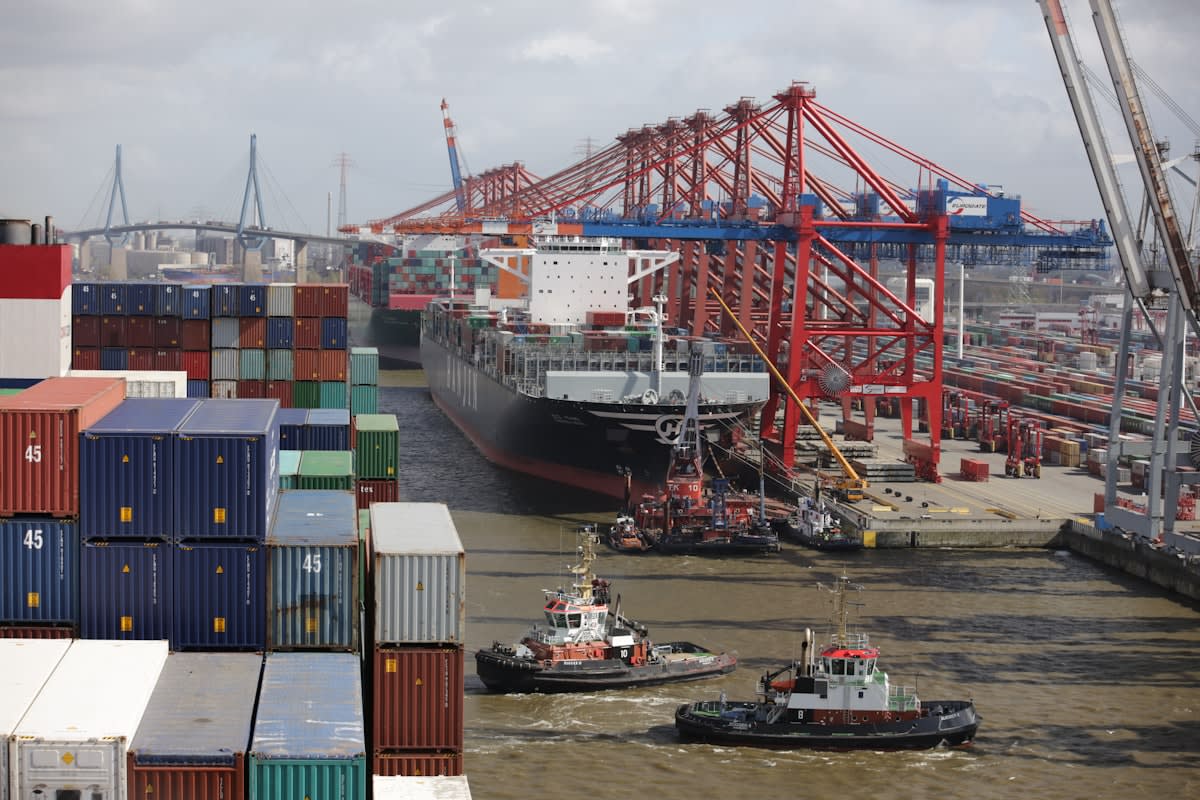
Why does this happen? Most global banks rely on risk models designed for the G7 economies of the 1990s. These models prioritize historical credit ratings and audited financial statements that many emerging market firms simply do not possess in a format recognized by a compliance officer in London or New York. The result is a binary outcome: you are either a blue-chip corporate with a global rating or you are an invisible risk. There is almost no middle ground for the high-growth, mid-sized firms that actually drive regional industrialization.
"The gap is not a failure of liquidity, but a failure of information. We are trying to manage 21st-century trade with 20th-century risk frameworks that penalize the unknown rather than analyzing it."— Institutional Analysis, International Chamber of Commerce (ICC), 2022
This disconnect leads to a phenomenon known as de-risking. To avoid the headache of complex compliance checks, global banks simply exit entire markets or sectors. It is easier to say no to an entire region than to invest in the granular due diligence required to say yes to a few hundred promising firms. This institutional cowardice effectively freezes the arteries of trade for the Global South, forcing firms to rely on predatory local lending or inefficient equity deals that dilute ownership prematurely.
Does this sound like a systemic failure? It is. We are witnessing a divergence where the physical capability to produce goods has outstripped the financial infrastructure's ability to support that production.
| Metric | Developed Markets (Avg) | Emerging Markets (Avg) | Impact on Growth |
|---|---|---|---|
| Credit Approval Rate | 75-85% | 30-45% | Severe bottleneck for SMEs |
| Avg. Cost of Trade Finance | 2-5% (LIBOR/SOFR + spread) | 8-15% (Risk-adjusted) | Margin erosion for producers |
| Documentation Lead Time | 2-5 Days | 15-30 Days | Increased working capital stress |
| Digital Adoption Rate | High (API-driven) | Low (Paper-heavy) | Operational inefficiency |
From the perspective of a credit officer sitting in a regional hub, the debate isn't about whether the trade is viable—it's about whether the paperwork is bulletproof. I have sat in those rooms. The conversation rarely centers on the quality of the coffee being shipped from Vietnam or the demand for textiles from Ethiopia. Instead, the friction lies in the KYC (Know Your Customer) requirements. If a client's beneficial ownership structure is opaque or their local bank doesn't have a correspondent relationship with a top-tier global entity, the file is closed. The practitioner's reality is a constant battle between the desire to grow the portfolio and the terror of a regulatory fine.
The Compliance Trap
Compliance has become a weapon of exclusion. Anti-Money Laundering (AML) and Counter-Terrorist Financing (CTF) regulations are essential, but their application has become blunt and indiscriminate. For a firm in a frontier market, proving the legitimacy of their supply chain to a foreign bank can be as costly as the trade finance itself. The administrative burden creates a regressive tax on the smallest players, ensuring that only the largest, most politically connected firms can navigate the bureaucracy.
This friction is compounded by the reliance on paper-based systems. In many parts of the world, the Bill of Lading—the golden ticket of trade—is still a physical piece of paper that must be couriered across oceans. One lost document can freeze millions of dollars in capital for weeks. This operational fragility increases the risk profile of the trade, which in turn raises the interest rate, which then lowers the profit margin for the producer. It is a spiral of inefficiency that benefits no one but the intermediaries.

But here is the contrarian take: this friction is actually an opportunity for a new class of financial architects. The failure of the traditional banking model has left a vacuum that is now being filled by fintechs and decentralized finance (DeFi) protocols. By replacing 'institutional trust' (the brand of a big bank) with 'algorithmic trust' (verifiable data), the industry is beginning to bypass the traditional bottlenecks.
We are moving from a world of static credit ratings to a world of dynamic data streams. Why rely on a balance sheet from six months ago when you can monitor real-time shipping data, IoT sensors in containers, and digital payment histories?
The Digital Pivot: Algorithmic Trust
The solution to the trillion-dollar friction is the digitalization of the trade asset. When a trade invoice is converted into a digital token, it becomes a programmable asset that can be fractionalized and sold to a global pool of investors. This removes the reliance on a single bank's willingness to take a risk on a specific region. Instead, the risk is distributed across thousands of participants who are pricing the asset based on the actual data of the shipment, not the geography of the sender.
- Deep Tier Financing: Allowing SMEs at the bottom of the supply chain to leverage the credit rating of the anchor buyer at the top.
- Smart Contracts: Automating payment release upon the digital verification of customs clearance, eliminating the 'trust gap'.
- Digital Identities: Creating portable, verified KYC profiles that allow firms to move between lenders without restarting the due diligence process.
- IoT Integration: Using real-time tracking to reduce insurance premiums and risk pricing for perishable goods.
This shift is already visible in corridors between Asia and Africa, where digital platforms are beginning to bridge the gap. By utilizing Distributed Ledger Technology (DLT), these platforms create a single source of truth that all parties—exporter, importer, bank, and customs—can access simultaneously. This eliminates the reconciliation errors that typically plague trade finance and slashes the time it takes to secure funding from weeks to hours.
However, the transition is not without its hurdles. The biggest obstacle isn't the technology; it's the legal framework. Most international trade law is still based on the assumption of physical documents. Until the legal validity of a digital Bill of Lading is universally recognized across jurisdictions, the 'digital pivot' will remain a series of isolated experiments rather than a systemic overhaul.
If we solve for the friction, we don't just help a few thousand SMEs; we unlock a massive amount of latent global GDP. The trade finance gap is the secret ceiling on emerging market growth. Breaking it requires more than just 'more money'—it requires a fundamental rewrite of how the world defines and trusts risk.
Fact-Check & Accuracy Note
Key claims regarding the $2.5 trillion trade finance gap are sourced from the Asian Development Bank's (ADB) recent trade finance reports. Data on the impact of digitalization and the 'trust gap' are derived from the International Chamber of Commerce (ICC) and World Trade Organization (WTO) frameworks. There is ongoing debate among economists regarding whether DeFi can truly replace traditional correspondent banking or if it will merely act as a supplementary layer.
Editorial Note
This article was written from the perspective of a Strategic Analyst. The analysis intentionally challenges the 'liquidity shortage' narrative, arguing instead that the problem is one of risk-pricing and institutional inertia. The practitioner's insights reflect the internal friction between growth targets and compliance mandates common in global trade banking.