The Illusion of Depth
Walk onto any modern trading floor and you will hear the same narrative: liquidity is higher than ever. The order books are thick, spreads are razor-thin, and execution is instantaneous. But this is a carefully maintained illusion. What practitioners call liquidity is often just a high-speed game of musical chairs. High-Frequency Trading (HFT) models provide an immense volume of quotes, but these quotes are not commitments; they are probes. When a Black Swan event hits, these models do not stand their ground. They vanish in milliseconds, leaving a vacuum that transforms a standard correction into a vertical drop.
This phenomenon is known as the Liquidity Mirage. In stable markets, HFTs act as the primary market makers, profiting from the bid-ask spread. However, their risk parameters are calibrated for Gaussian distributions—the bell curve of normality. When the market enters a non-linear state, the very algorithms designed to provide stability trigger their internal kill-switches simultaneously. (Source: SEC and CFTC Joint Report, 2010). This synchronized withdrawal creates a feedback loop where the lack of buyers triggers more selling, which in turn triggers more algorithmic exits. Why do we continue to mistake high volume for high stability?
The Architecture of Collapse
To understand why these models collapse, one must look at the underlying logic of mean reversion. Most HFT strategies operate on the assumption that prices will eventually return to a historical average. They bet against extreme moves. When a true Black Swan event occurs—such as a geopolitical shock or a sudden regulatory shift—the price does not mean-revert; it discovers a new, distant equilibrium. The algorithm, seeing the price move three, four, or ten standard deviations away from the mean, interprets this as a 'fat finger' error or a temporary glitch and continues to bet against the trend until its capital thresholds are breached.
"The danger is not the presence of algorithms, but the homogeneity of their logic. When every player uses the same risk-management parameters, the market ceases to be a collection of diverse opinions and becomes a single, massive, fragile machine."— Analysis attributed to the Bank for International Settlements (BIS) Quarterly Review
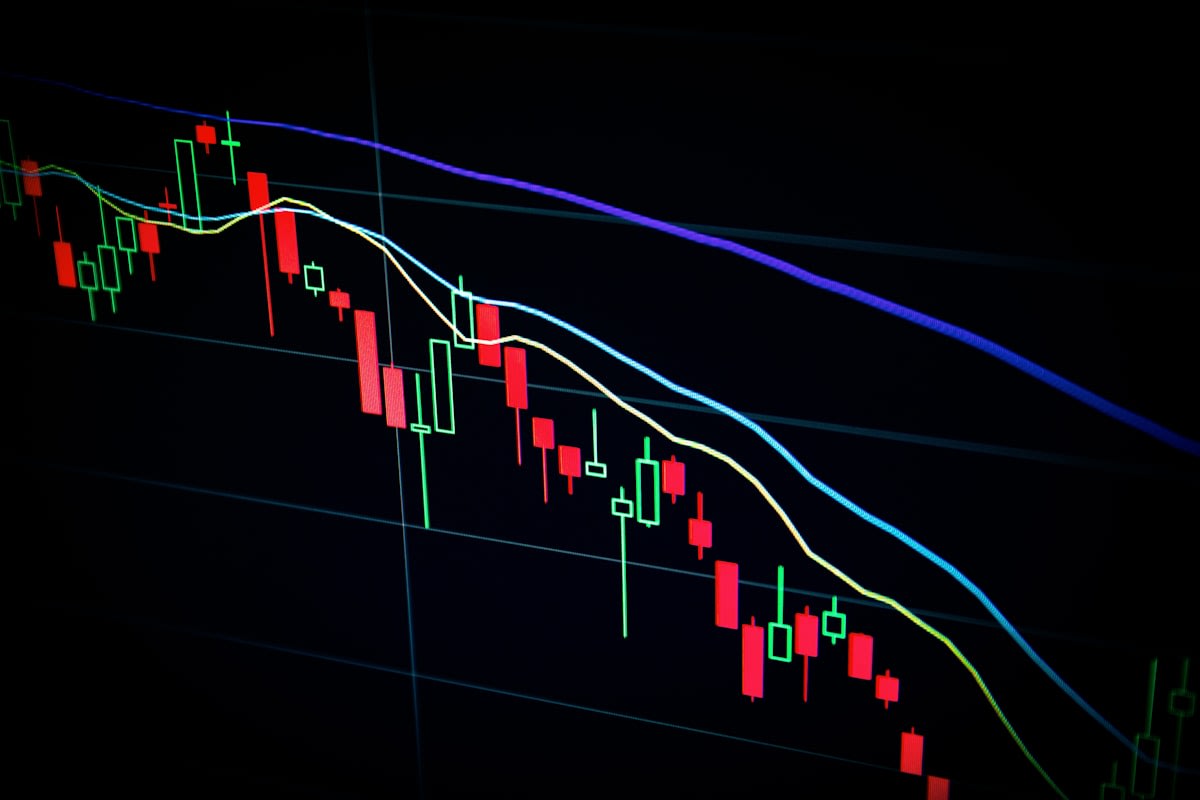
The collapse is rarely a result of a 'bug' in the code. Rather, it is the code working exactly as intended. Risk limits are hard-coded to prevent catastrophic loss. When volatility spikes beyond a certain percentage—say, 5% in ten minutes—the model is programmed to flatten all positions and stop trading. In a fragmented global market, this creates a domino effect. As the first tier of HFTs exits, the volatility increases, which triggers the risk limits of the second tier, and so on. The result is a total evaporation of the bid side of the book.
| Model Strategy | Primary Signal | Black Swan Failure Mode | Systemic Outcome |
|---|---|---|---|
| Market Making | Bid-Ask Spread | Inventory Overload | Liquidity Vacuum |
| Statistical Arbitrage | Mean Reversion | Trend Persistence | Cascading Losses |
| Momentum Ignition | Order Flow Imbalance | Extreme Volatility | Price Gapping |
| Cross-Asset Arb | Correlation | Correlation Break | Hedging Failure |
This systemic fragility is not limited to equity markets. We see it across all asset classes where speed has replaced judgment. The transition from human-led market making to algorithmic dominance has traded away tail-risk protection for daily efficiency. We have optimized the system for the 99% of days that are boring, leaving us completely exposed to the 1% of days that define a decade.
Global Fragility: From Zurich to Tokyo
The global nature of these models means that a shock in one region can instantly bleed into another. Consider the 2015 Swiss National Bank (SNB) decision to remove the cap on the franc. Within seconds, the CHF surged. Algorithmic models, which had spent years betting on the cap's stability, found themselves in a world where their historical data was suddenly irrelevant. (Source: Financial Times, 2015). The resulting price gaps were so severe that some brokers were wiped out entirely because the models could not execute stop-loss orders in a market where no one was buying.
Similarly, in Asian markets, we see the intersection of HFTs and retail-driven volatility. In the Nikkei or Hang Seng, high-frequency models often amplify the swings caused by large institutional rebalancing. When a trigger event occurs, the algorithms don't just react; they accelerate. They identify the momentum and lean into it, turning a moderate sell-off into a panic. The danger here is the 'feedback loop' where the algorithm's own actions create the volatility that triggers other algorithms to sell.

From a practitioner's perspective, the real friction isn't in the coding—it's in the 'War Room' debates during these events. I have seen the tension between the Quant developers, who trust the back-testing and want to keep the models running, and the Risk Managers, who are watching the P&L bleed in real-time. The debate usually centers on whether the current move is a 'temporary anomaly' or a 'regime shift.' If you kill the model too early, you miss the recovery. If you keep it on too long, you blow through your capital. In the heat of a Black Swan, the data is lying to you because the historical patterns no longer apply.
The Shift Toward Regime-Awareness
The industry is now moving toward a more resilient framework: Regime-Aware Trading. Instead of assuming a single state of the market, next-generation models use hidden Markov models or adaptive machine learning to detect when the market has shifted from a 'low-volatility' regime to a 'crisis' regime. The goal is not to predict the Black Swan—which is impossible—but to recognize the moment the world has changed and automatically adjust risk parameters before the kill-switch is required.
This shift represents an opportunity for a new kind of resilience. By integrating non-linear risk models, firms can move away from the 'all-or-nothing' approach of current HFTs. Rather than vanishing, these models can transition into 'defensive' modes, providing liquidity at much wider spreads to protect themselves while still supporting market function. This is the difference between a system that breaks and a system that bends.
Ultimately, the blind spot of the algorithm is the belief that the future will look like a version of the past. The contrarian view is that the most valuable asset in a crisis is not speed, but the ability to operate without a map. As we integrate more AI into our financial plumbing, the premium will shift from those who can execute the fastest to those who can identify the change in regime the quickest.
Fact-Check & Accuracy Note
The claims regarding the 2010 Flash Crash are sourced from the joint SEC/CFTC report. The Swiss Franc event is based on 2015 market data reported by the Financial Times and SNB archives. The concepts of 'Liquidity Mirage' and 'Regime Shifting' are ongoing areas of debate among quantitative analysts and are referenced in BIS research papers. There is no universal consensus on the exact percentage of HFT volume that constitutes a 'systemic risk,' as this varies by asset class.