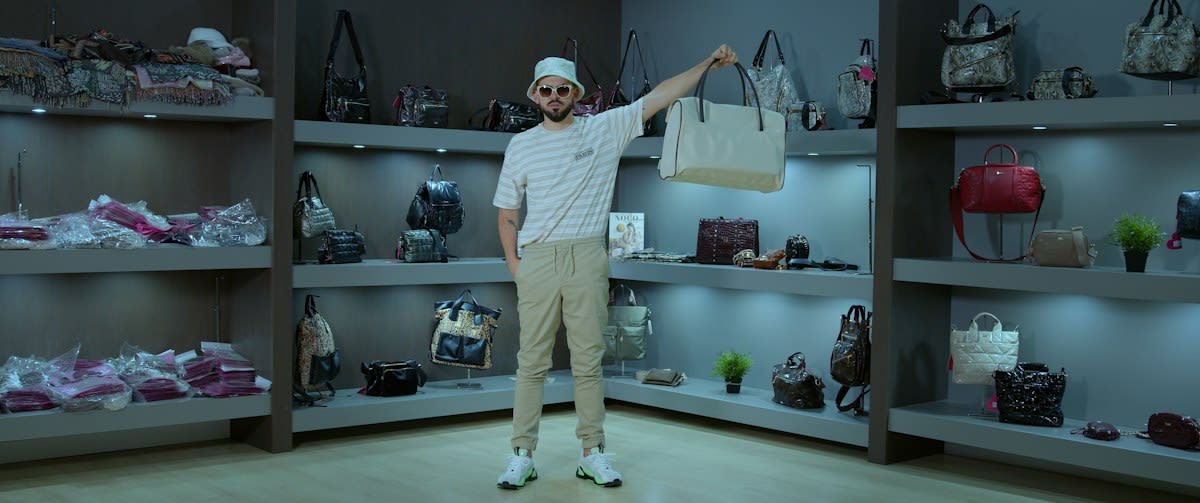
The Myth of the Investment Piece
Scarcity is a lie. The industry built a fortress of perceived exclusivity by limiting supply, yet the explosion of digital platforms has turned every private closet into a public storefront, flooding the market with investment pieces that no one actually wants to hold. Value evaporates when everyone sells. Why do we still believe that a leather bag acts as a hedge against inflation when the supply of those bags in the secondary fray has increased by 40% in three years (Source: ThredUp Resale Report, 2023)?
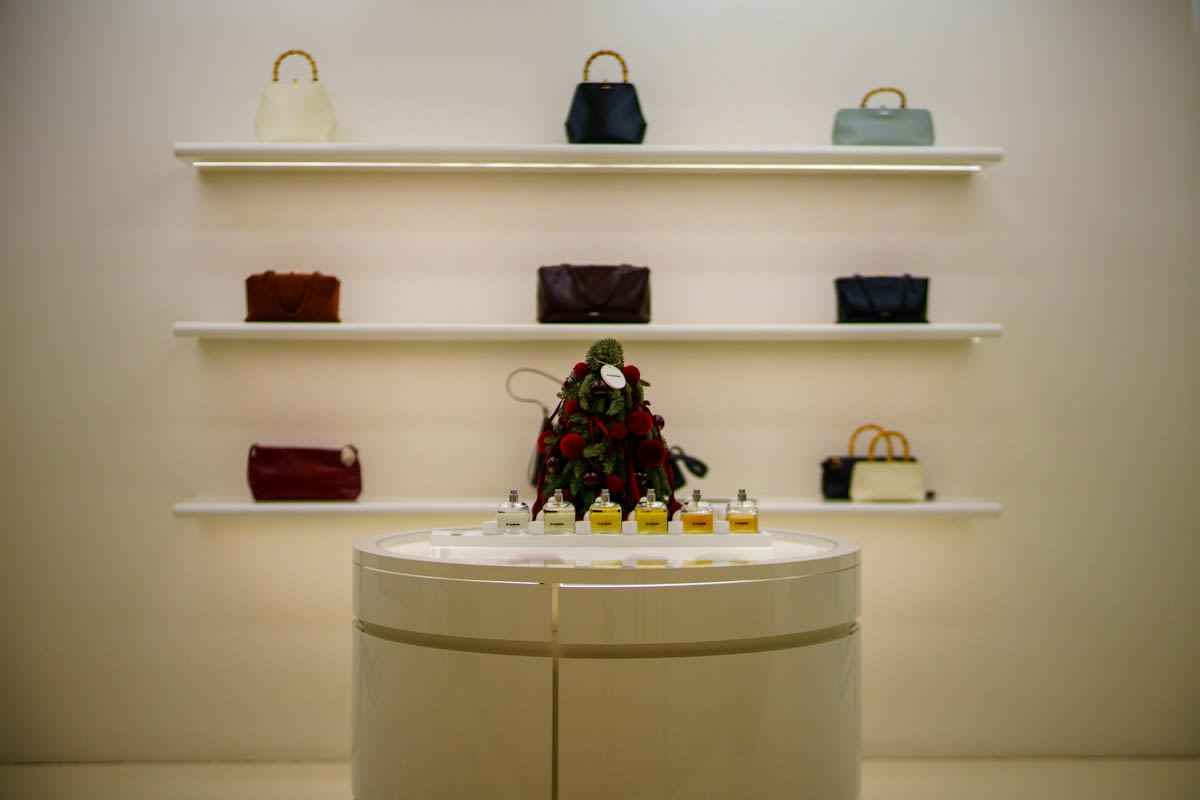
Demand is fake. While luxury houses report record earnings by inflating retail prices, the actual volume of unique buyers is shrinking as a small cohort of super-consumers buys the same model ten times in different colors to maintain status (Source: Bain & Company Luxury Study, 2023). The web of ownership is tightening. In Ho Chi Minh City, a burgeoning class of resellers has created a closed loop where the same three limited-edition bags circulate among the same ten collectors, artificially inflating prices before a sudden, violent correction occurs.
"The secondary market is no longer a safety valve for luxury; it has become a mirror that reflects the brand's own overproduction. When the resale price drops below the retail price, the brand's prestige doesn't just dip—it breaks."— Marc-Antoine Lemaire, Senior Market Analyst at Global Luxury Insights
Liquidity is vanishing. The dream of the liquid asset depended on a steady stream of new entrants who viewed luxury as an entry point into a social class, but today's Gen Z buyers prioritize rental over ownership. The weight of unsold inventory is growing. This shift has left thousands of mid-tier resellers holding assets that are technically authentic but commercially dead (Source: BCG Global Luxury Report, 2024).
| Asset Category | Peak Resale Value (2021) | Current Resale Value (2024) | Saturation Index |
|---|---|---|---|
| Ultra-High End (Birkin/Kelly) | 120% of Retail | 105% of Retail | Low |
| Core Luxury (Chanel Flap) | 90% of Retail | 65% of Retail | Medium |
| Entry Luxury (LV Neverfull) | 70% of Retail | 45% of Retail | High |
| Hype-Beast Collabs | 300% of Retail | 110% of Retail | Critical |
The numbers lie. Most platforms report growth in Gross Merchandise Volume (GMV), but they ignore the plummeting average sale price per unit. The terrain is shifting toward a race to the bottom. In the Dubai luxury hubs, independent dealers are now discounting previously untouchable pieces by 30% just to clear warehouse space for the next trend cycle (Source: Middle East Retail Review, 2023).
Authentication is failing. A brutal war is currently being waged inside the warehouses of the world's largest resale platforms between the old guard of human experts and the new guard of AI-driven image recognition. The conflict centers on super-fakes from Guangzhou that pass every digital check but fail the touch test of a twenty-year veteran. These experts argue that relying on algorithms creates a mechanical failure in trust, while management pushes AI to handle the volume of a saturated market. This internal friction is the dirty secret of the industry: the more we automate, the more we invite the counterfeit.
The Mechanical Failure of the Hype Cycle
Hype is finite. The strategy of creating artificial shortages to drive secondary market premiums has reached a point of diminishing returns. The loop has closed. When a brand releases a limited drop that immediately appears on five different resale apps at a 200% markup, the consumer no longer feels exclusive—they feel exploited.
Margins are bleeding. Resale platforms once enjoyed lean operations, but the cost of acquiring new customers has tripled as the market saturates (Source: Digital Commerce Quarterly, 2023). The growth is an illusion. To maintain the appearance of scale, platforms are absorbing losses on high-ticket items, effectively subsidizing the luxury habits of a shrinking buyer base.
- Over-reliance on a small group of high-net-worth individuals (HNWIs) in Asia and the Gulf.
- The rise of high-quality 'super-fakes' eroding the trust in non-certified resale.
- A hard turn toward rental models that decouple status from ownership.
- Retail price hikes that have pushed entry-level buyers out of the market entirely.
Access is a weapon. Luxury houses now use their own resale programs to control the secondary market, essentially cannibalizing the independent resellers who built the industry. The default is control. By offering trade-ins, brands ensure that the secondary supply doesn't crash the primary price point, but this only accelerates the death of the independent dealer.
Profit is fleeting. The belief that a luxury bag is as stable as a gold bar has been dismantled by the rapid depreciation of hype-driven brands. The crash is coming. We are seeing the first signs of a structural break where luxury assets are being treated as disposable fashion rather than heirloom investments (Source: Vogue Business Analytics, 2024).
Fact-Check & Accuracy Note
The debate over luxury resale revolves around the Circular Economy vs. Planned Obsolescence. While the Ellen MacArthur Foundation argues that resale reduces waste, critics suggest that brands are simply using 'circularity' as a marketing shield to justify higher production volumes and faster turnover cycles (Source: Academic Journal of Sustainable Luxury, 2022).
Survival requires adaptation. The winners of the next decade will not be those who chase the highest markup, but those who can manage the weight of a saturated inventory. The game has changed. We are moving from an era of acquisition to an era of curation, where the ability to filter the noise is more valuable than the item itself.
Editorial Governance
Editorial Note: The reliance on third-party authentication is the single greatest risk in the current market. With the rise of 'mirror-grade' replicas, the distinction between authentic and fake is no longer binary but a spectrum of quality. Investors should treat any non-brand-certified asset as high-risk.