
The Digital Credit Explosion
The traditional bank loan, with its stifling paperwork and rigid collateral requirements, is becoming a relic of a slower era. Across Sub-Saharan Africa, a new architecture of credit is emerging, built not on brick-and-mortar branches but on payment rails and smartphone data. We are witnessing a pivot where the ability to borrow is no longer tied to a physical asset, but to a digital footprint. Why does this matter? Because it unlocks capital for the millions of micro, small, and medium enterprises (MSMEs) that have historically been invisible to the formal financial sector.
The delta between where we stood a year ago and the current landscape is staggering. While digital payments were once the primary focus, the shift has moved aggressively toward lending. In the last few months, we have seen a surge in massive capital injections and disbursement milestones that would have been unthinkable in the previous credit cycle. The speed of adoption is no longer linear; it is exponential. This is not just about convenience; it is about the wholesale redesign of risk assessment in emerging markets.
The Gender Dividend: Nigeria's New Risk Model
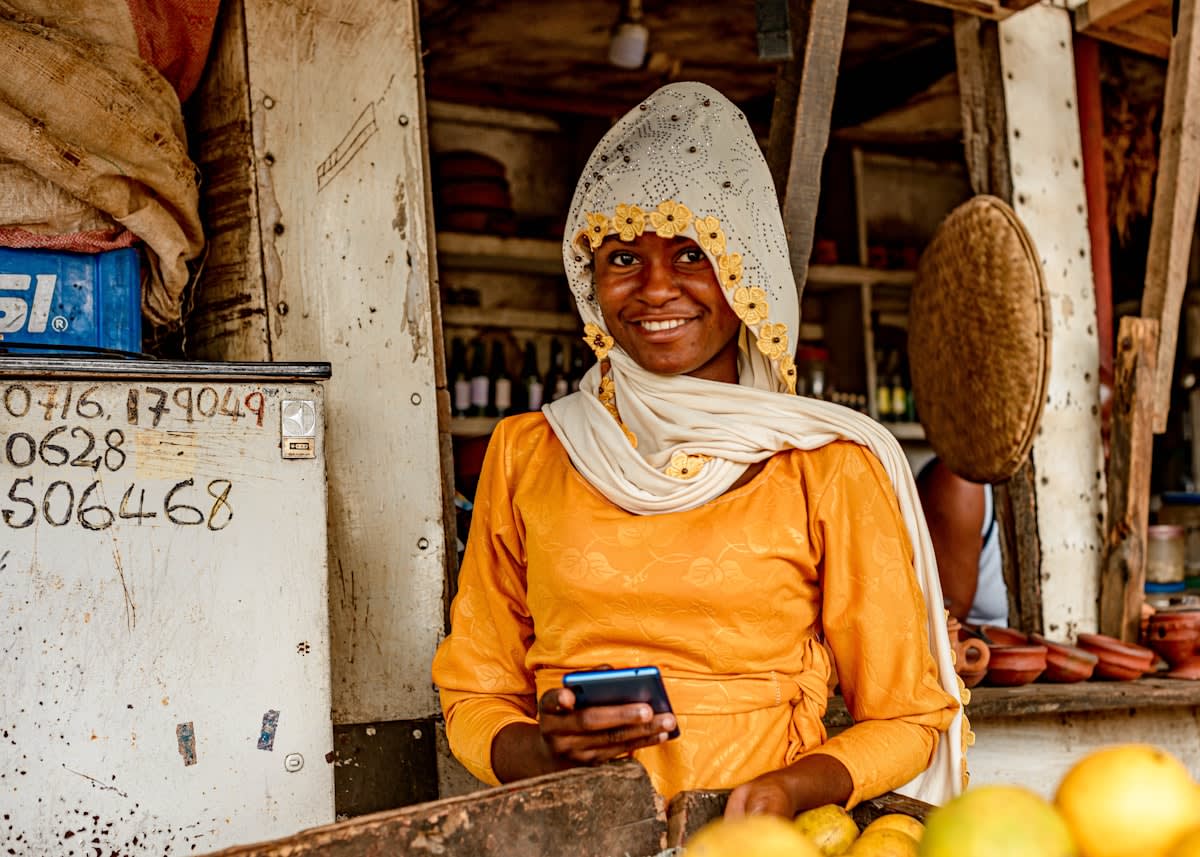
Nigeria is currently the epicenter of this credit experiment. Moniepoint has recently hit a landmark milestone, disbursing $700 million in loans to MSMEs. But the real story isn't the dollar amount; it is the data underlying the disbursements. The fintech discovered a critical pattern: women borrowers recorded a default rate 2.5 times lower than their male counterparts. This revelation is flipping the script on traditional credit scoring, proving that gender-specific data can be a powerful predictor of reliability.
This shift toward evidence-based lending is dismantling old biases. By leveraging actual transaction data rather than arbitrary credit scores, fintechs are strengthening the business case for increasing credit allocation to female-owned enterprises. This creates a virtuous cycle: more capital flows to the most reliable borrowers, who then grow their businesses, further proving the viability of the model. It is a masterclass in using data to find alpha in overlooked markets.
"The expansion to $700M in loans was driven by data showing that women borrowers recorded a default rate 2.5 times lower than male borrowers."— Moniepoint Analysis
But this isn't happening in a vacuum. While some consumer credit sectors in Nigeria have seen dips—dropping 20% to N3.8tn—the targeted MSME lending segment is thriving. This divergence suggests that the market is maturing. Investors are moving away from blind consumer lending and toward productive, business-oriented credit. The focus has shifted from simply giving money to empowering the engines of economic growth.
Institutional Pivot: The Kenyan Engine
Kenya continues to lead the charge, but the players are changing. KCB Group is no longer just a traditional bank; it is operating with the agility of a fintech giant. The numbers are jarring. In its 2024 Q1 financial results, KCB reclaimed its position as East Africa's most profitable bank, posting a Profit After Tax of Kshs 16.5 Billion—a massive 69% increase. This profit surge is a direct reflection of a more aggressive and efficient approach to lending.
The bank isn't stopping at internal growth. In a strategic move to deepen its impact, KCB secured KSh 12.9 billion to boost loans for Kenyan SMEs. This wasn't just a local loan; it involved a partnership with the EBRD. Dr. Heike Harmgart, Managing Director for Sub-Saharan Africa at EBRD, noted that this marks the institution's first investment in Kenya's financial sector. By channeling these funds into MSMEs, KCB is positioning itself as the primary bridge between global institutional capital and local entrepreneurs.
| Metric | KCB Group (Q1 2024) | Recent Strategic Injection |
|---|---|---|
| Profit After Tax | KSh 16.5 Billion | N/A |
| Profit Growth | 69% | N/A |
| SME Loan Boost | N/A | KSh 12.9 Billion |
This institutional pivot demonstrates that the 'fintech vs. bank' narrative is dead. The winners are those who can merge the trust and capital of a bank with the data-driven precision of a fintech. KCB's ability to attract EBRD funding proves that global investors are betting on this hybrid model. They aren't just betting on the bank; they are betting on the MSMEs that drive job creation and economic resilience.

Breaking the Data Monopoly: Open Banking
The most profound shift, however, is happening in the plumbing of the financial system. For decades, banks held a monopoly on customer data. If you didn't have a formal account history, you didn't exist in the eyes of the credit market. Open banking is shattering this monopoly. By allowing customers to share their financial data securely with third-party providers, the control is shifting from the institution to the individual.
This is where AI enters the fray. As highlighted by industry experts like Nwamaghinna, the future of fintech will be built on payment rails, AI, and trust. Open banking allows lenders to assess customers based on broader financial behavior—how they spend, how they save, and how they interact with digital services—rather than a limited and often misleading account history. It is a move from static snapshots to real-time cinematic views of a borrower's financial health.
The New Collateral
The transition to Open Banking means that a vendor's consistent digital sales records can now serve as a 'virtual collateral,' replacing the need for land titles or physical assets.
Can we imagine a world where your creditworthiness is determined by your business's cash flow patterns rather than your social standing or the size of your house? That world is already here. By utilizing AI to analyze these payment rails, lenders can offer loans that are precisely calibrated to a business's needs, reducing the risk of over-indebtedness while maximizing growth potential.
Beyond Borders: The Stablecoin Leap
As local lending matures, the frontier is expanding cross-border. The friction of moving money between African nations has long been a bottleneck for trade. Enter the era of stablecoins. Onafriq has recently partnered with Privy to accelerate stablecoin cross-border payments across the continent. This is the logical next step in the mobile money evolution: removing the reliance on volatile local currencies and slow correspondent banking networks.
By integrating stablecoins, businesses can settle trades instantly and with predictable costs. This doesn't just benefit the large corporations; it empowers the small-scale trader who sources goods from a neighboring country. When you combine instant cross-border payments with the data-driven credit models we've discussed, you get a seamless ecosystem where a merchant in Lagos can secure a loan to buy goods from Nairobi, and settle the transaction in seconds.
This integration of blockchain technology with mobile money rails is the final piece of the puzzle. It transforms the smartphone from a simple wallet into a global financial passport. The resilience of the African economy is being forged in these digital interactions, as entrepreneurs bypass outdated infrastructure to build a more efficient, inclusive financial system.
The Verdict on the New Frontier
The rise of mobile money lending is not a trend; it is a systemic reconfiguration of power. We are moving away from a world where credit was a privilege granted by a few gatekeepers to a world where credit is a utility driven by data. From Moniepoint's gender-aware lending in Nigeria to KCB's institutional dominance in Kenya, the evidence is clear: the future of finance in Sub-Saharan Africa is digital, decentralized, and deeply data-driven.
As open banking and stablecoins continue to permeate the market, the gap between the formal and informal economies will vanish. The 'unbanked' are not being brought into the old system; they are building a new one. This is the new credit frontier, and it is being won by those who understand that in the digital age, data is the only collateral that truly matters.