
The industrial identity of Eastern Europe is undergoing a rapid, calculated transformation. For decades, the region was viewed as the back-office or the assembly line for Western European giants, prized for lower labor costs and proximity to the core. That narrative is dead. The current movement is not about cheaper widgets but about high-complexity, security-critical assets. Poland is leading this charge, recently securing a commitment to host the first European Space Agency (ESA) center located in an eastern flank member state. This facility is not a mere research outpost; it is specifically designed to focus on civil security and resilience, signaling a move toward the localized production of high-technology assets that can withstand geopolitical volatility.
The financial commitment behind this move is staggering when viewed through a temporal lens. Between 2023 and 2025, the Polish government committed 51 million euros to the ESA. Fast forward to the 2026-2028 period, and that figure has exploded to 550 million euros. This is not a marginal increase; it is a ten-fold leap in investment. Such a drastic acceleration in spending suggests that Warsaw is no longer content with participation in the European space ecosystem. Instead, it is positioning itself as a primary hub for the development of the next generation of aerospace and security hardware.
| Funding Period | Total ESA Contribution | Investment Multiplier |
|---|---|---|
| 2023-2025 | 51 Million Euros | 1x (Baseline) |
| 2026-2028 | 550 Million Euros | 10.7x |
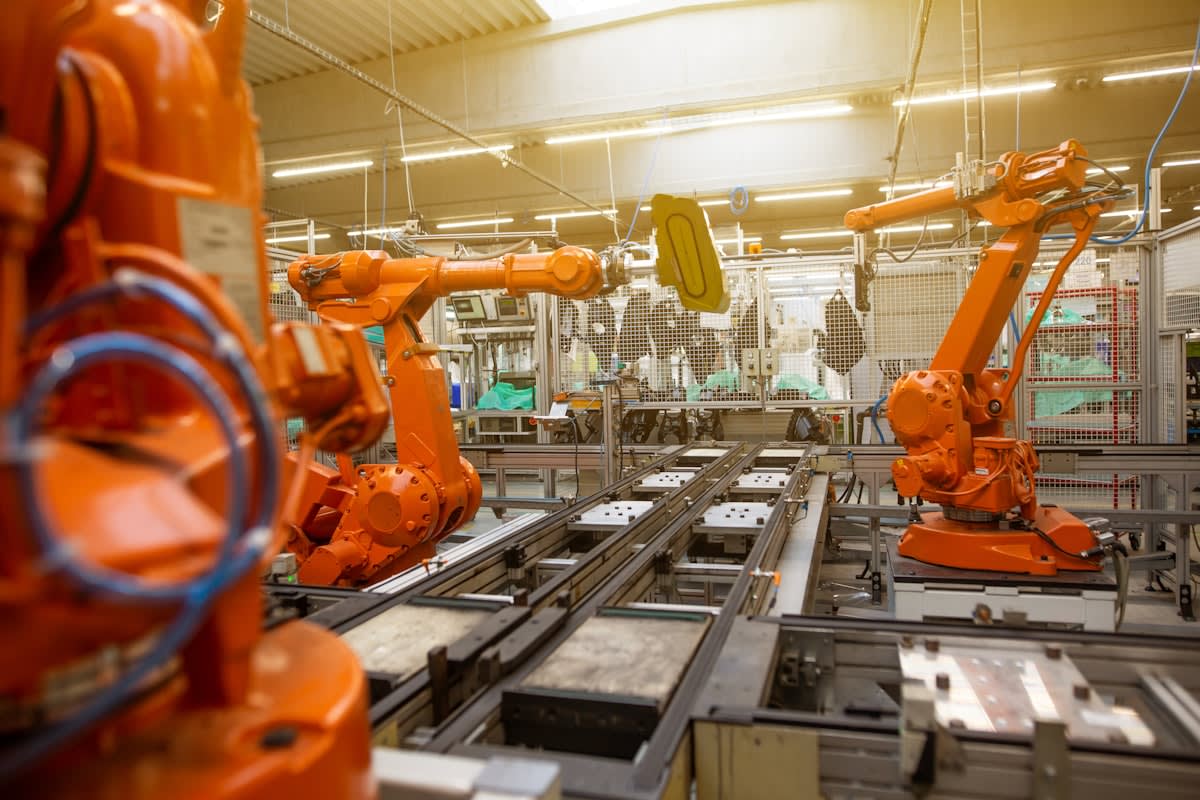
Where is this money actually going? The Polish government is doubling its allocation for optional programs, specifically targeting satellite data-based services and robotics, bringing that specific allocation to 550 million euros. This focus on robotics is the linchpin of the manufacturing shift. By investing in the automation and precision engineering required for space-grade hardware, Poland is effectively upgrading its entire industrial workforce. The skills required to build satellite components are the same skills needed for high-end semiconductor packaging and advanced medical devices. This is a calculated move to move up the value chain, replacing manual assembly with intellectual property and high-precision fabrication.
This industrial acceleration does not happen in a vacuum. It is a direct response to the deteriorating security environment on NATO's eastern flank. In Lithuania, Latvia, and Estonia, the urgency is palpable. Intelligence assessments have recently warned that Russia may launch limited military or hybrid provocations against critical infrastructure. This atmosphere of threat has transformed security from a government concern into an industrial driver. When the risk of attacks on transport and energy infrastructure becomes a baseline reality, the demand for resilient, locally-produced monitoring and defense technology skyrockets.
"The new ESA Centre will mark a new chapter for ESA and a major step for Poland which has rapidly become one of the driving forces in Europe’s space sector."— Josef Aschbacher, ESA Director General
Why does the location of the ESA center matter so much? By placing a center focused on civil security in Poland, the ESA is acknowledging that the 'front line' of European resilience is now in the East. This creates a powerful cluster effect. Companies specializing in cybersecurity, satellite telemetry, and hardened infrastructure are now incentivized to relocate or expand their operations within Poland and the Baltics. We are seeing the emergence of a 'security-industrial complex' that integrates military readiness with commercial manufacturing. This is a far cry from the textile and basic automotive parts factories that defined the region twenty years ago.
Poland's ESA Investment Trajectory (2023-2028)
Executive Insight
+18.4%
YTD Growth
The Baltic states are mirroring this trend through the fortification of their energy and transport networks. Lithuania's president has highlighted that the objective of Russian rhetoric is often to erode public trust in state institutions and the military. In response, the Baltic governments are not just buying equipment; they are strengthening the physical and digital architecture of their nations. This creates a massive domestic market for specialized construction, energy storage, and secure communications hardware. The 'manufacturing shift' here is characterized by a move toward sovereignty—the ability to maintain and repair critical systems without relying on long, vulnerable supply chains from outside the NATO umbrella.
Does this mean the region is simply becoming a military garrison? Not at all. The genius of the Polish strategy lies in the dual-use nature of these investments. A robotics lab designed for satellite deployment is also a lab that can innovate in automated logistics or precision surgery. A satellite data network built for civil security can be used for precision agriculture or urban planning. By framing these investments under the banner of 'resilience,' Poland and the Baltics are building a high-tech economy that is funded by security needs but sustained by commercial application.
Comparing the current state to the landscape of 2024 reveals a sharp divergence. A few years ago, the conversation around Eastern European manufacturing was dominated by the 'near-shoring' trend—companies moving production from Asia to Europe to reduce shipping times. While that is still happening, the current driver is different. It is no longer about logistics; it is about survival and strategic autonomy. The jump from a 51 million euro investment to 550 million euros in the space sector is a signal that Poland is no longer just 'near-shoring' for others; it is 'core-shoring' for itself.
This shift is also reflected in the types of talent being cultivated. The focus on robotics and satellite services requires a workforce skilled in advanced mathematics, software engineering, and materials science. This is creating a brain-gain effect, where highly skilled engineers who might have previously migrated to London or Berlin are finding high-paying, high-impact roles in Warsaw, Vilnius, or Tallinn. The economic gravity of Europe is shifting eastward, not because of cheap land or labor, but because of a concentrated effort to build the most resilient industrial base on the continent.
The ultimate 'so what' for global investors and industry leaders is clear: Eastern Europe is no longer a low-cost alternative. It is becoming a center of excellence for resilience technology. The combination of massive state funding, a pressing security imperative, and a strategic partnership with agencies like the ESA has created a unique industrial incubator. Those who continue to view the region through the lens of 2010s outsourcing are missing the most significant industrial realignment in the region's modern history.