Gold prices today, Thursday, July 16, 2026: Prices struggle to remain just over $4,000
Source Entity
Yahoo Finance
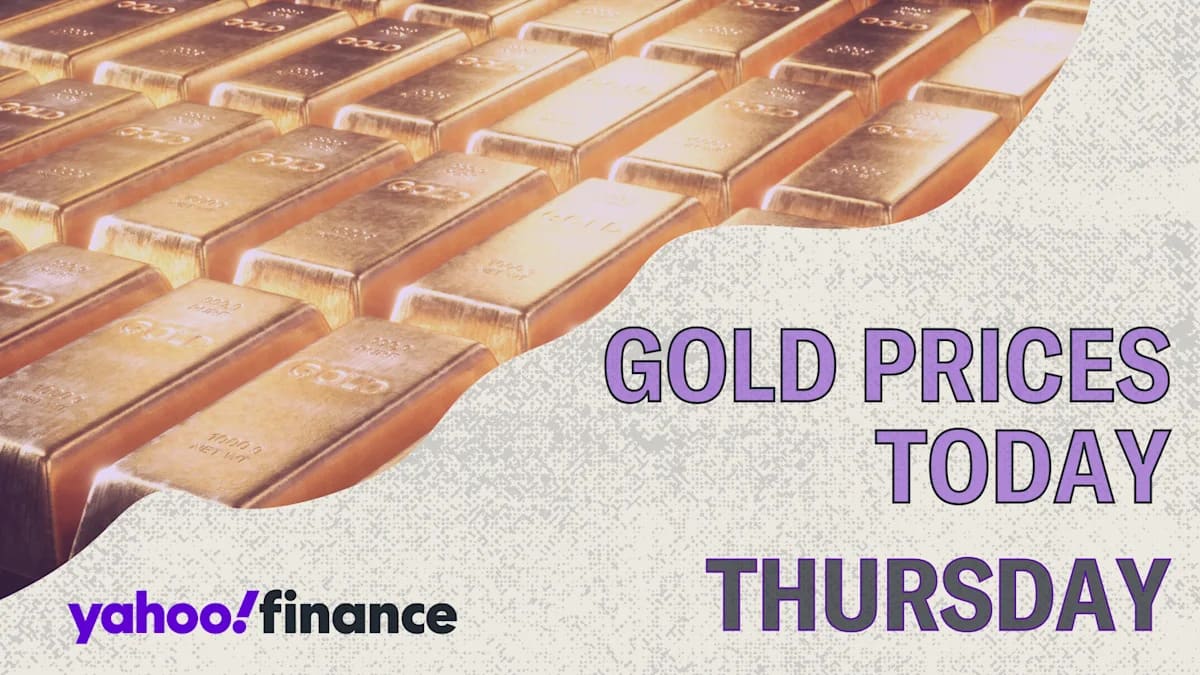
Gold prices are experiencing significant volatility as they struggle to maintain a position above the critical $4,000 per troy ounce threshold, with August futures dipping to $4,041.10 after an initial opening gain on July 16, 2026.
Gold's Battle for the $4,000 Threshold: A Deep Market Analysis
On July 16, 2026, the precious metals market reached a pivotal psychological and financial juncture. Gold August futures opened with a modest gain of 0.4%, reaching $4,068.90 per troy ounce, only to face immediate downward pressure that saw prices slip to $4,041.10. This price action suggests a market caught in a tug-of-war between long-term bullish momentum and short-term profit-taking, as the asset struggles to establish a firm floor above the $4,000 mark.
The Psychology of Round-Number Resistance
In commodity trading, round numbers often act as significant psychological barriers. The $4,000 level represents more than just a price point; it is a milestone that signals a new era of valuation for gold. When a price "struggles" to remain above such a threshold, it indicates that a large volume of traders are viewing this level as a peak for selling (resistance) rather than a base for further growth (support). The dip from $4,068.90 to $4,041.10 reflects a hesitation among investors to commit to higher prices without a catalyst that guarantees the $4,000 level is sustainable.
Macroeconomic Drivers and Safe-Haven Demand
Historically, gold surges of this magnitude are rarely isolated events; they are typically driven by systemic macroeconomic instability. While the provided data focuses on the immediate price movement, the fact that gold is trading in the $4,000 range suggests a broader environment of high inflation or significant currency devaluation. Gold serves as the ultimate hedge against the erosion of purchasing power. The current volatility indicates that while the underlying demand for a safe-haven asset remains strong, the market is currently attempting to find a fair equilibrium in a high-price environment.
Analysis of Intraday Volatility
The opening jump of 0.4% followed by a slide suggests a "bull trap" or a period of intense intraday volatility. The initial rise to $4,068.90 likely attracted short-term speculators, but the subsequent drop to $4,041.10 shows that institutional sellers are likely offloading positions to lock in gains. This pattern of "opening high and trading lower" often signals a lack of conviction among buyers at these record-breaking levels, suggesting that the market may require a fresh fundamental trigger to push prices decisively and permanently above $4,000.
Broader Implications for Global Reserves and Industry
When gold sustains prices at this level, the implications extend beyond the futures market. Central banks, which hold gold as a reserve asset, see their balance sheets strengthened, potentially altering their approach to foreign exchange reserves. Conversely, for the industrial and jewelry sectors, prices exceeding $4,000 per ounce can lead to a decrease in demand or a shift toward alternative materials. The current struggle to hold this price point creates uncertainty for manufacturers who must hedge their raw material costs in an increasingly expensive environment.
Future Outlook and Technical Trends
Looking forward, the critical question is whether $4,000 will transition from a resistance level to a support level. If the price stabilizes and begins to bounce off the $4,000 mark, it will confirm a long-term bullish trend, potentially paving the way for even higher valuations. However, if the current downward trend continues and the price falls significantly below $4,000, it may trigger a wave of stop-loss orders, leading to a sharper correction. Traders will be closely watching the August futures to see if the market can reclaim the $4,060 range.
Conclusion
The events of July 16, 2026, highlight a gold market in a state of precarious transition. While the asset has successfully climbed to unprecedented heights, the inability to decisively hold the $4,000 level reveals an underlying tension between bullish sentiment and market exhaustion. Whether gold maintains this historic valuation will depend on the balance between safe-haven demand and the willingness of investors to accept a new, higher price floor.