CPI has no plan to join TVK-led Tamil Nadu government: Veerapandian
Source Entity
India Latest News: Top National Headlines Today & Breaking News | The Hindu
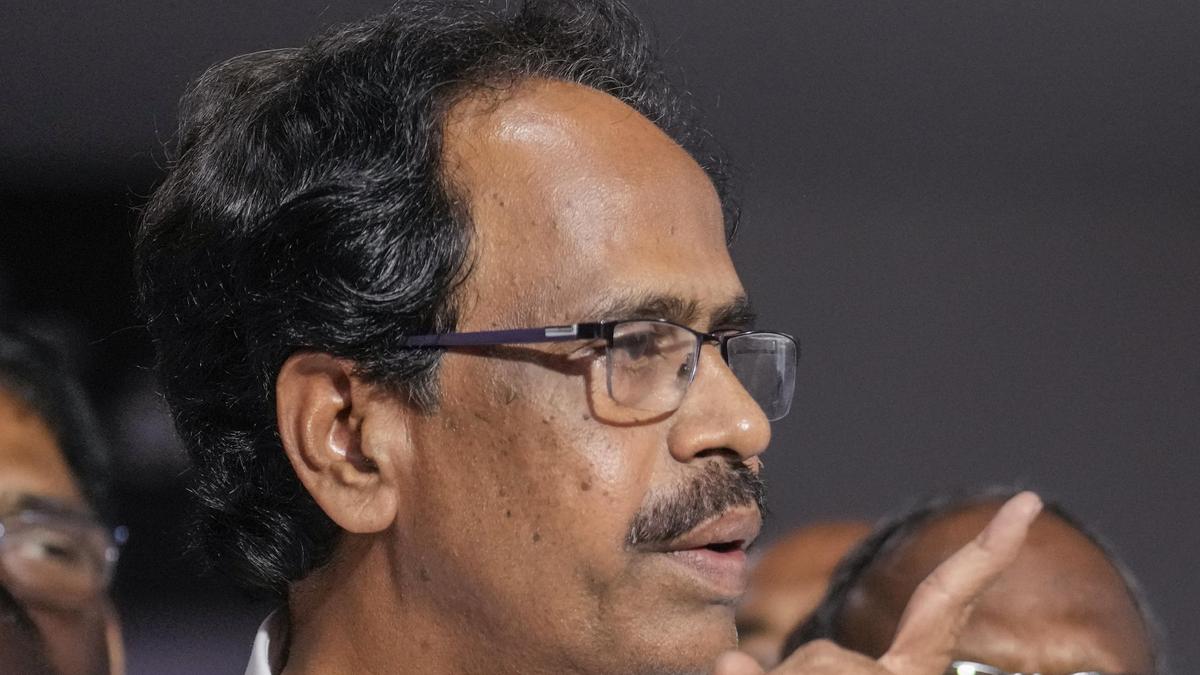
CPI leader Veerapandian has dismissed reports suggesting the party intends to join a potential Tamilaga Vettri Kazhagam (TVK) led government in Tamil Nadu, clarifying that the Left's goal is the broader assumption of power in Indian politics.
CPI Clarifies Stance on Potential TVK-Led Government in Tamil Nadu
The political landscape of Tamil Nadu is currently navigating a period of significant realignment, characterized by the emergence of new political entities and the strategic repositioning of established ideological parties. The recent clarification provided by Mr. Veerapandian regarding the Communist Party of India's (CPI) relationship with the Tamilaga Vettri Kazhagam (TVK) serves as a pivotal moment in understanding the current coalition dynamics of the state. By explicitly denying reports that the CPI intends to join a TVK-led government, Veerapandian has signaled a cautious and ideologically driven approach to future power-sharing agreements.
Addressing the Rumors: Veerapandian's Clarification
The core of the current discourse stems from reports suggesting that the Left was preparing to align itself with the TVK for a potential governing role. However, in a statement to The Hindu, Mr. Veerapandian corrected the narrative, asserting that there is no such plan in place. He emphasized that his previous comments were misinterpreted; rather than targeting a specific regional alliance with TVK, his focus was on the broader, long-term objective of the Left assuming power within the overarching framework of Indian politics. This distinction is crucial, as it moves the conversation from tactical regional opportunistic alliances to a strategic national ideological goal.
The TVK Factor and the Quest for Legitimacy
The Tamilaga Vettri Kazhagam (TVK), led by actor-turned-politician Vijay, represents a new variable in Tamil Nadu's historically bipolar political structure dominated by the DMK and AIADMK. For a new party like TVK, securing the support or potential partnership of established parties like the CPI provides a layer of political legitimacy and organizational depth. The rumors of a CPI-TVK alliance likely reflected the TVK's desire to be seen as a viable alternative capable of attracting ideological partners. Veerapandian's denial effectively tempers these expectations, suggesting that TVK has yet to establish the ideological alignment necessary to attract the Left's formal support for governance.
Ideological Rigor vs. Political Pragmatism
Veerapandian's remark that the party would join a government only when the "time came for the Left to assume power" highlights a commitment to ideological rigor. In the context of Communist politics, joining a government is often viewed not merely as a means to hold office, but as a vehicle for implementing specific class-based and socialist policies. By framing the possibility of joining a government around the global or national ascent of the Left, the CPI is signaling that it will not enter into a partnership simply for the sake of power, but only when such a partnership aligns with the broader goals of the workers' and peasants' movements.
The Strategic Role of the Left in Dravidian Politics
Historically, the Left parties in Tamil Nadu have operated as strategic partners to larger Dravidian parties, often providing the intellectual and grassroots organizational support necessary to maintain a progressive agenda. The CPI's current hesitation to commit to a TVK-led government reflects the complexity of this role. The Left must balance its need for electoral viability with its need to remain a distinct ideological voice. By distancing itself from a premature commitment to TVK, the CPI maintains its flexibility to negotiate with other potential allies or remain a critical external force in the state's political evolution.
Future Implications for Coalition Dynamics
Looking ahead, this development suggests that the road to a consolidated "Third Front" in Tamil Nadu remains fraught with ideological hurdles. For the TVK to attract partners like the CPI, it will likely need to move beyond celebrity appeal and articulate a concrete, programmatic platform that resonates with the Left's core values. Simultaneously, the CPI's stance indicates that it will continue to prioritize national-level Leftist cohesion over fragmented regional arrangements. This could lead to a more fragmented electoral field in the coming cycles, where small but ideologically firm parties act as the ultimate arbiters of stability.
Conclusion
In summary, the denial by Mr. Veerapandian is more than a simple correction of a news report; it is a statement of political intent. By anchoring the CPI's future government participation to the broader success of the Left in Indian politics, the party has reaffirmed its ideological priorities over immediate political expediency. For the TVK, this serves as a reminder that political legitimacy in Tamil Nadu requires more than just a strong public following—it requires the ability to build bridges with the state's deeply entrenched ideological structures.
Verification Required?