Kharge calls Madhya Pradesh ‘epicentre of corruption’, cites alleged ₹1,200-crore rice scamt
Source Entity
India Latest News: Top National Headlines Today & Breaking News | The Hindu
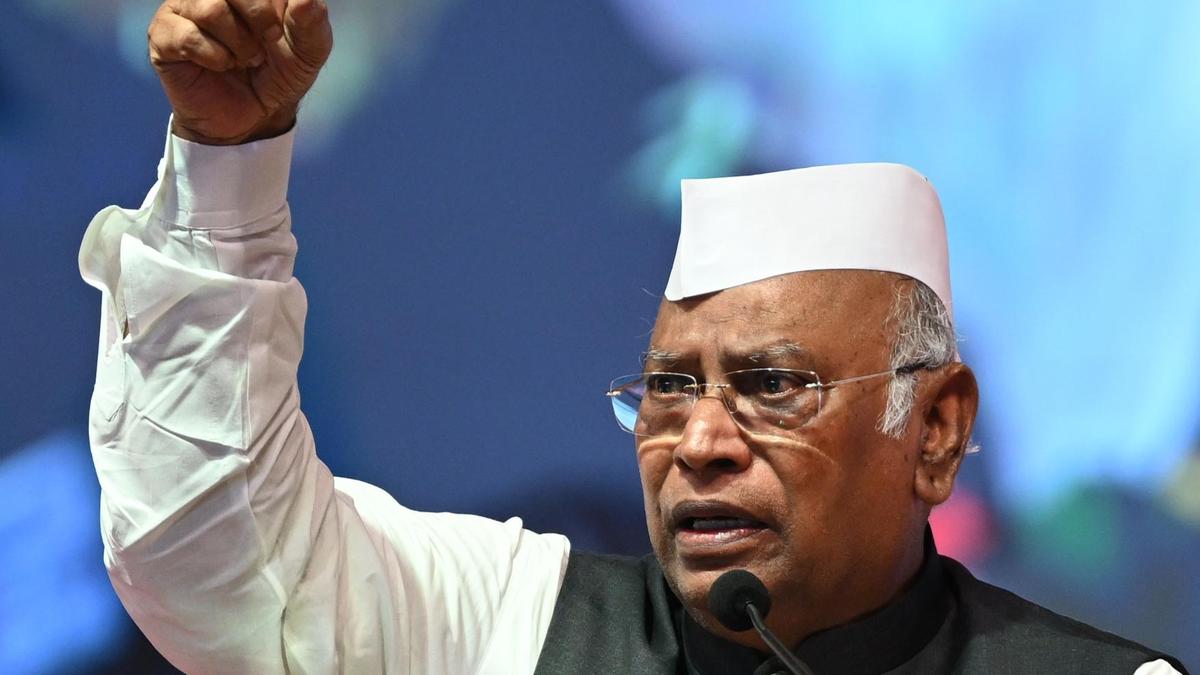
Congress President Mallikarjun Kharge has labeled Madhya Pradesh the 'epicentre of corruption,' alleging a massive ₹1,200-crore rice scam where approximately five lakh metric tonnes of rice were siphoned off with the alleged complicity of government machinery.
Political Firestorm: Allegations of Massive Rice Scam in Madhya Pradesh
In a scathing critique of the current administration in Madhya Pradesh, Congress President Mallikarjun Kharge has leveled serious accusations of systemic corruption, labeling the state the "epicentre of corruption." At the heart of this controversy is an alleged rice scam valued at approximately ₹1,200 crore. The Congress party claims that nearly five lakh metric tonnes of rice—intended for public distribution and food security—were siphoned off in what they describe as a calculated "game of profit." This allegation places the state government under intense scrutiny, suggesting that the diversion of essential commodities occurred not through mere negligence, but through the active connivance of government machinery.
The Mechanics of the Alleged Diversion
The scale of the alleged scam is staggering, involving the disappearance of five lakh metric tonnes of rice. In the context of India's Public Distribution System (PDS), such a volume suggests a massive breach in the supply chain. Typically, these scams occur when grain intended for fair-price shops is diverted to the open market where it can be sold at higher commercial rates. By alleging that the "government machinery" was involved, the Congress party is suggesting that the leakages were sanctioned or ignored at higher administrative levels, turning a social welfare mechanism into a profit-making enterprise for a select few.
Broader Political Implications
This attack by Mallikarjun Kharge is not merely about the loss of grain but is a strategic political move to paint the ruling administration as corrupt and indifferent to the poor. By using the term "epicentre of corruption," the Congress is attempting to build a narrative of institutional decay in Madhya Pradesh. This rhetoric is designed to resonate with the rural electorate and the marginalized sections of society who rely most heavily on subsidized rice. The accusation shifts the political discourse from development to governance and integrity, forcing the state government to defend its administrative transparency.
Historical Context of Food Grain Leakages
Food grain scams have historically been a recurring theme in Indian politics due to the sheer volume of the PDS operations. From the 'leakage' of wheat and rice in various states over the decades, the struggle to ensure that benefits reach the end consumer has been a constant challenge. However, the specific allegation of a ₹1,200-crore loss in a single state highlights the vulnerability of the procurement and distribution process. This case reflects a broader historical tension between state-led distribution and the opportunistic intermediaries who exploit these systems for financial gain.
Administrative Accountability and Governance
The claim that the siphoning took place with the "connivance of government machinery" is the most damaging aspect of the allegation. It implies a collapse of oversight and the potential involvement of bureaucrats and political appointees. If proven, such a scam would indicate a failure of the state's auditing mechanisms and a lack of stringent checks on warehouse management. The demand for accountability now extends beyond the immediate culprits to the officials who were responsible for monitoring the stock and ensuring its delivery to the rightful beneficiaries.
Future Trends and Potential Fallout
Moving forward, this allegation is likely to trigger a series of political escalations. The Congress is expected to demand a high-level independent probe or a Central Bureau of Investigation (CBI) inquiry to uncover the trail of the diverted rice. We can anticipate increased protests and grassroots campaigns focusing on food security. For the state government, the challenge will be to provide a transparent audit of the rice stocks to dispel these claims. This event may also lead to a push for further digitalization of the PDS to reduce human intervention and minimize the possibility of such large-scale siphoning in the future.
Summary
The allegation by Mallikarjun Kharge regarding a ₹1,200-crore rice scam in Madhya Pradesh represents a significant political clash over governance and corruption. By highlighting the siphoning of five lakh metric tonnes of rice, the Congress party is targeting the state's administrative integrity. The outcome of this controversy will likely depend on the government's ability to prove the transparency of its distribution network and may accelerate the transition toward more secure, tech-driven food distribution systems.
Verification Required?