‘You want me to have heart attack, I’ll live to see your end': Mamata to BJP amid TMC rebellion
Source Entity
Latest News: Today's Latest News Headlines from India & World | Hindustan Times | Hindustan Times
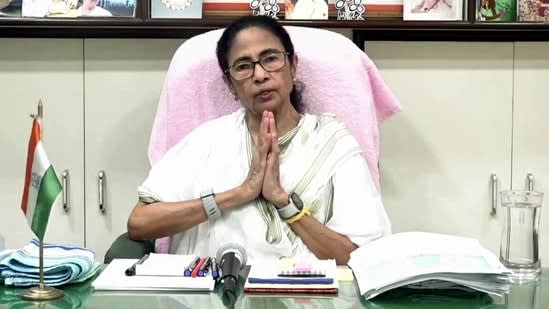
West Bengal CM Mamata Banerjee has lashed out at the BJP following a rebellion within the TMC, claiming that member Mitra's departure was triggered by ED summons to his family rather than internal party friction or Abhishek Banerjee's influence.
Political Defiance: Mamata Banerjee's Response to TMC Rebellion
In a characteristic display of fierce political rhetoric, West Bengal Chief Minister Mamata Banerjee has responded to recent turbulence within the Trinamool Congress (TMC). The central point of contention revolves around the departure of a party member, referred to as Mitra, amidst a broader climate of rebellion and pressure from the Bharatiya Janata Party (BJP). Banerjee's statement, "You want me to have heart attack, I’ll live to see your end," underscores the high-stakes emotional and political battle currently playing out in West Bengal, where the struggle for power is often fought with aggressive language and accusations of state-sponsored coercion.
The Role of Central Agencies in Political Defections
A critical element of this specific event is the involvement of the Enforcement Directorate (ED). Mamata Banerjee explicitly attributed Mitra's decision to leave the party to the fact that the ED had summoned his wife and two sons. This narrative is a recurring theme in West Bengal politics, where the ruling TMC frequently alleges that the central government utilizes federal agencies like the ED and CBI as political tools to intimidate opposition leaders and force them to switch allegiances to the BJP. By framing the defection as a result of family pressure rather than ideological disagreement, Banerjee is attempting to delegitimize the rebellion and paint it as a forced exit orchestrated by the center.
Shielding the Leadership: The Abhishek Banerjee Factor
Beyond the external pressure from the BJP, Banerjee took care to address internal party dynamics by stating that Abhishek Banerjee had nothing to do with Mitra's decision. This is a strategic move to quell rumors of internal strife or a "palace coup" within the TMC. As the nephew of the Chief Minister and a rising power center within the party, Abhishek Banerjee is often the target of accusations regarding nepotism or internal friction. By explicitly clearing him of any role in the rebellion, Mamata is presenting a united front to the public and the party rank-and-file, signaling that the leadership remains cohesive despite the departures.
Rhetorical Strategy and Survivalist Politics
The provocative nature of Banerjee's language—specifically the reference to a "heart attack" and "seeing the end" of her opponents—reflects her long-standing political identity as a street fighter and a survivor. This rhetoric serves a dual purpose: it galvanizes her core support base by portraying her as a resilient leader fighting against overwhelming odds, and it serves as a psychological deterrent to other potential defectors. In the context of West Bengal's polarized political landscape, such strong language is often used to maintain morale within the party and to project strength in the face of perceived aggression from the central government.
Broader Implications for West Bengal's Political Stability
This event is indicative of a larger trend of political volatility in the region. The cycle of agency raids, summons, and subsequent defections has become a standard operational procedure in the clash between the TMC and the BJP. As the state prepares for future electoral cycles, the ability of the TMC to stem the tide of rebellion will depend heavily on whether the leadership can protect its members from central agency pressure or if the BJP can successfully leverage these investigations to erode the TMC's grassroots support. The current tension suggests that the conflict is moving beyond mere policy differences into a deeply personal and systemic war of attrition.
Conclusion
Ultimately, Mamata Banerjee's reaction to the TMC rebellion is a blend of defensive shielding and offensive rhetoric. By attributing the loss of a member to the coercive tactics of the ED and simultaneously protecting Abhishek Banerjee's image, she is attempting to control the narrative of the rebellion. While the departures may signal vulnerability, her defiant stance aims to transform a political setback into a rallying cry against central interference, ensuring that the narrative remains focused on the BJP's alleged overreach rather than the TMC's internal instability.
Verification Required?