Man arrested over threatening to shoot Farage in social media post
Source Entity
BBC News
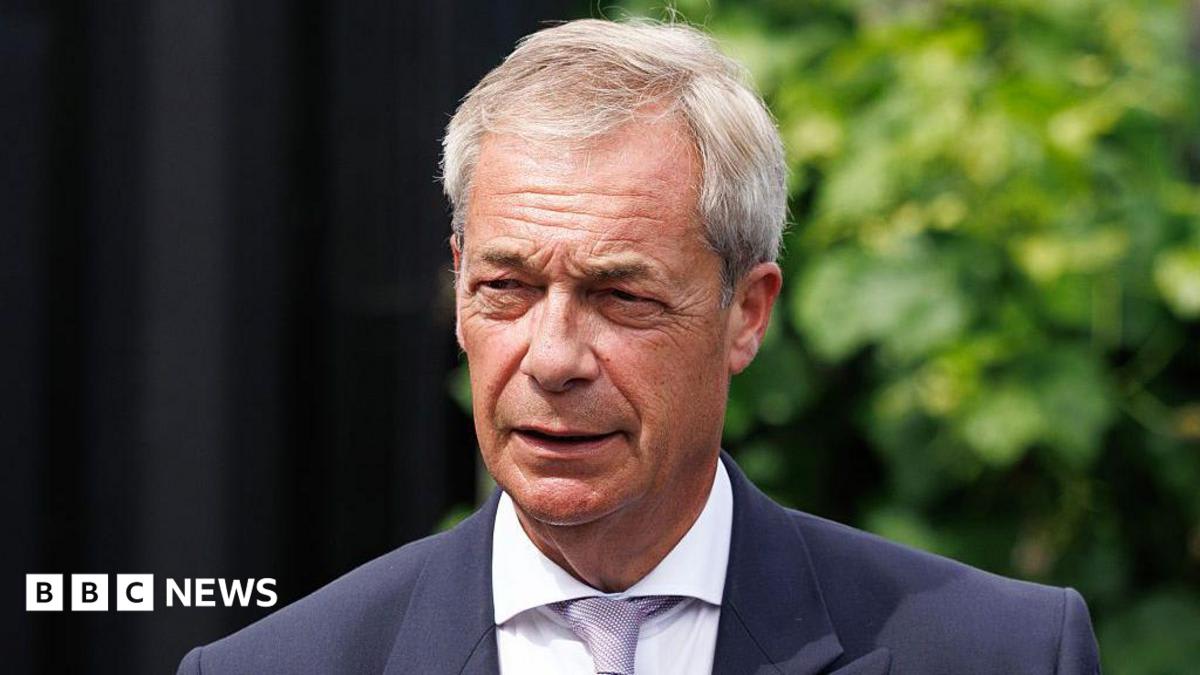
A man in his 20s was arrested in south London by the Metropolitan Police on suspicion of sending threatening communications to MP Nigel Farage via a social media post.
Analysis of the Arrest Regarding Threats Against Nigel Farage
Incident Overview and Immediate Police Response
The Metropolitan Police have arrested a man in his 20s in south London following a social media post in which the individual allegedly threatened to shoot Member of Parliament Nigel Farage. The swift action by the Met Police underscores a critical law enforcement priority: the prevention of targeted violence against public officials. By intervening at the stage of "threatening communications," the authorities aim to disrupt potential escalations from digital rhetoric to real-world physical harm, demonstrating a proactive approach to policing online hate and threats.
The Digital Landscape and the Nature of Modern Threats
This incident highlights a growing trend where social media platforms serve as conduits for extreme political hostility. The perceived anonymity and physical distance provided by the internet often lower the psychological barrier for individuals to engage in behavior they would likely avoid in face-to-face interactions. In this case, the transition from political disagreement to a specific threat of lethal violence marks a clear breach of legal boundaries, shifting the event from a matter of free speech to a criminal investigation under statutes governing malicious communications.
The Polarizing Context of Nigel Farage
To understand why Nigel Farage is frequently the target of such intensity, one must look at his role as a catalyst for some of the most divisive movements in modern British history. From his instrumental role in the Brexit campaign to his leadership of Reform UK, Farage has built a career on challenging the political establishment and provoking strong reactions. While this strategy has garnered him a loyal following, it has also made him a lightning rod for intense animosity. This specific threat is a symptom of a broader climate of political polarization where the "other side" is increasingly viewed not just as an opponent, but as an enemy.
Legal Implications of Threatening Communications
The suspect was held on suspicion of "sending threatening communications," a charge that typically falls under the Malicious Communications Act 1988 or the Communications Act 2003. These laws are designed to protect individuals from harassment and intimidation. For the prosecution to succeed, the police must generally prove that the message was sent with the intent to cause distress or anxiety. The mention of a firearm significantly elevates the severity of the threat, moving it beyond mere harassment into the realm of potential terrorism or serious criminal intent, which necessitates a rigorous forensic analysis of the suspect's digital footprint.
Broader Trends in Political Violence
This event does not occur in a vacuum but is part of a worrying global and domestic trend of increasing threats against elected representatives. Across various democracies, MPs and legislators have reported a rise in death threats and targeted harassment. This environment creates a "chilling effect" on democratic discourse, where the fear of violence may deter individuals from entering public service or influence the way politicians engage with their constituents. The arrest in south London is a necessary signal that the state will protect the safety of its representatives regardless of their political standing.
Future Outlook and Preventative Measures
Looking forward, it is likely that law enforcement agencies will further integrate AI-driven monitoring and keyword alerts to identify high-risk threats in real-time. As political tensions continue to simmer, the boundary between "venting" on social media and "planning" an attack becomes thinner. We can expect to see a continued tightening of the intersection between digital surveillance and public safety to ensure that political disagreements remain within the realm of debate and do not manifest as physical assaults.
Conclusion
The arrest of the man in south London serves as a stark reminder of the volatility of the current political climate. While the democratic process thrives on conflict and debate, the transition to threats of violence is an attack on the democratic system itself. The Metropolitan Police's decisive action ensures that the legal consequences of such threats are made clear, reinforcing the principle that political disagreement does not grant license for criminal intimidation.