Mamata’s Trinamool gets nod for Martyrs’ day rally, but with change in venue
Source Entity
Tanusree Bose
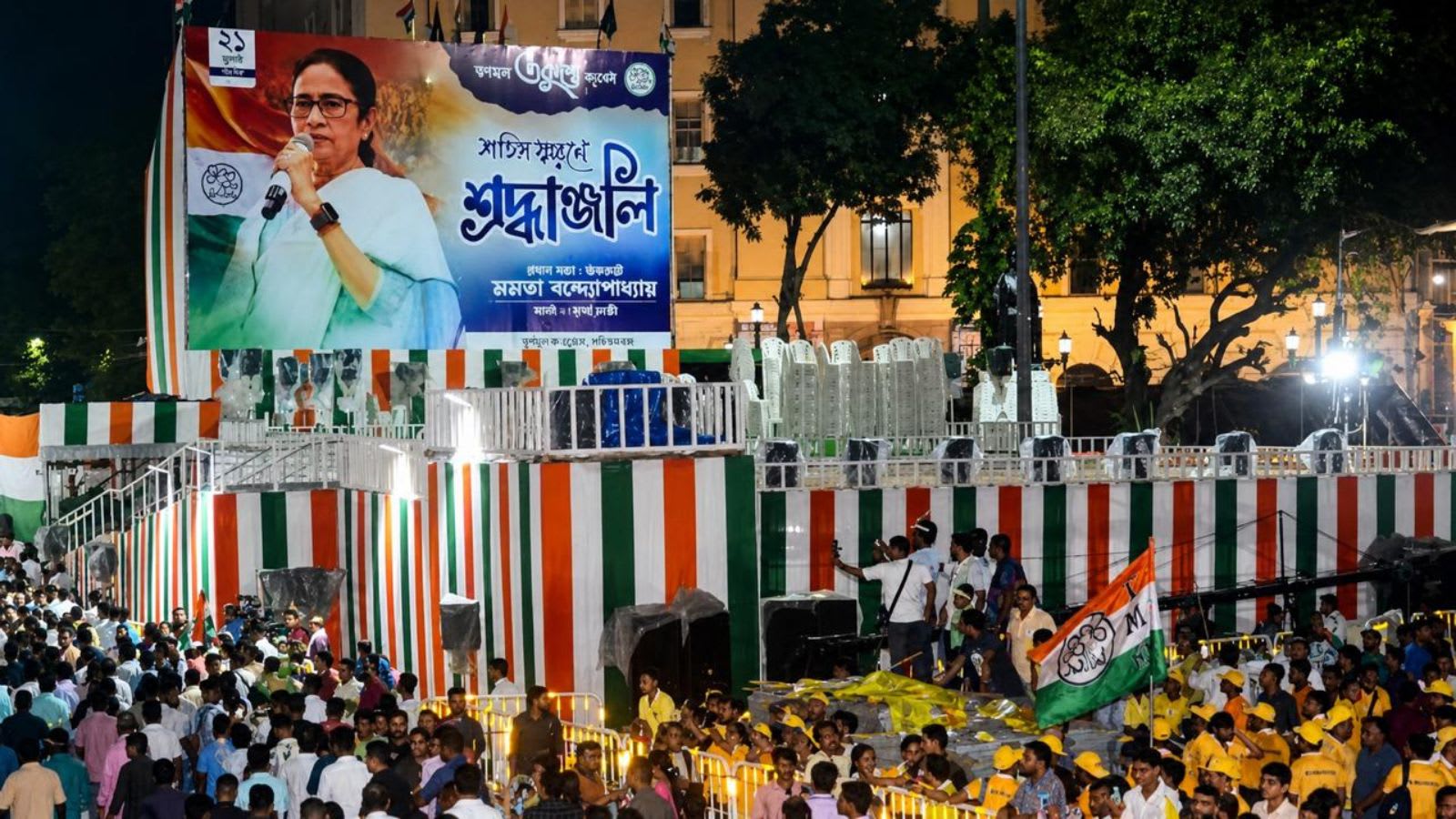
For the first time in 15 years, the Trinamool Congress (TMC), led by Mamata Banerjee, will move its annual July 21 Martyrs' Day rally away from its traditional venue at the Victoria House at Esplanade.
A Strategic Shift: Analyzing the TMC's Martyrs' Day Venue Change
For over a decade and a half, the July 21 Martyrs' Day rally has served as the definitive annual showcase of strength for Mamata Banerjee and the Trinamool Congress (TMC). The announcement that the rally will no longer be held in front of the Victoria House at Esplanade marks a significant departure from a long-standing political tradition. This shift is not merely a logistical adjustment but a symbolic break from a 15-year pattern of mobilization in the heart of Kolkata.
The Symbolic Weight of Esplanade
The Esplanade area, and specifically the vicinity of the Victoria House, has historically been the epicenter of political demonstrations in West Bengal. By occupying this space for 15 consecutive years, the TMC effectively claimed the urban core of the state's capital as its own stronghold. The Martyrs' Day rally commemorates the 1993 police action that led to the deaths of 13 youth activists, and the venue served as a physical reminder of the party's struggle against the previous regime. Moving the event suggests a transition in how the party wishes to project its power and interact with the city's infrastructure.
Logistical and Administrative Implications
Changing a venue after 15 years often stems from a combination of administrative pressures and evolving crowd dynamics. As the TMC has grown from an opposition party to the dominant ruling force in West Bengal, the scale of the July 21 gathering has expanded exponentially. The congestion and security challenges associated with the Esplanade area may have become unsustainable. By relocating, the party may be seeking a space that allows for better crowd management, enhanced security protocols, and a more controlled environment for Mamata Banerjee's keynote address, which typically sets the party's agenda for the coming year.
Political Strategy and Public Perception
From a strategic standpoint, this move could be interpreted as an attempt to refresh the party's image or to avoid the predictable bottlenecks of the city center that often lead to public inconvenience and negative press. In the current political climate, where the TMC faces stiff competition and intense scrutiny, optimizing the efficiency of its largest annual event is crucial. A new venue provides an opportunity to reorganize the rally's layout, potentially incorporating more modern technological aids for broadcasting the event to a wider audience across the state.
Historical Context and Party Identity
The July 21 rally is more than just a political meeting; it is a ritual of identity for the TMC cadre. The consistency of the venue for 15 years helped cement the rally as a landmark event in the Kolkata calendar. Breaking this streak indicates that the party is entering a new phase of its organizational lifecycle. While the core message of 'martyrdom' and 'struggle' remains, the physical manifestation of that struggle is being adapted to fit the needs of a party that is now the established authority rather than the insurgent challenger.
Future Trends in Political Mobilization
This venue change may signal a broader trend in how political parties in India manage mega-rallies. There is an increasing shift toward purpose-built grounds or outskirts locations that can accommodate millions without paralyzing city traffic. We can expect the TMC to use this new location to experiment with different forms of engagement, possibly integrating more digital outreach to complement the physical gathering. The success of this transition will depend on whether the party can maintain the same emotional intensity and attendance levels away from the traditional hub of Esplanade.
Conclusion
The decision to move the Martyrs' Day rally is a tactical pivot by the Trinamool Congress. While the location changes, the political purpose—demonstrating unity and strength under Mamata Banerjee's leadership—remains constant. This move reflects the party's evolution from a street-fighting opposition to a sophisticated governing entity managing the complexities of a massive political machinery.