Several Jan Suraaj leaders join BJP ahead of Bihar’s Bankipur byelection
Source Entity
India Latest News: Top National Headlines Today & Breaking News | The Hindu
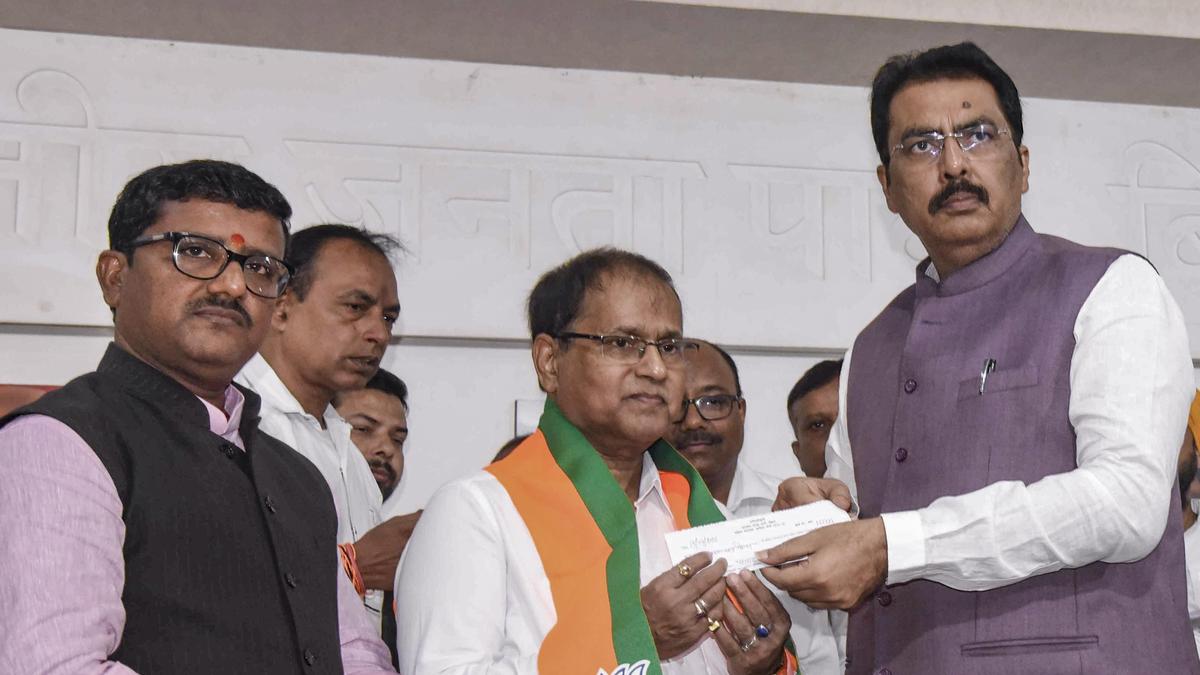
In a strategic move ahead of the Bankipur byelection in Bihar, several prominent leaders from the Jan Suraaj movement, including mathematician K.C. Sinha and former candidate Ritesh Ranjan (Bittu Singh), have officially joined the Bharatiya Janata Party (BJP).
Political Realignment in Bihar: Jan Suraaj Leaders Shift to BJP
In a significant development ahead of the Bankipur byelection, the political landscape of Bihar has witnessed a strategic shift as several leaders from Prashant Kishor's Jan Suraaj movement have formally joined the Bharatiya Janata Party (BJP). The induction of figures such as the renowned mathematician K.C. Sinha and Ritesh Ranjan, popularly known as Bittu Singh—both of whom had previously contested or aligned with Jan Suraaj—indicates a consolidation of power by the BJP in a critical electoral window.
The Strategic Significance of Bankipur
Bankipur, located in the heart of Patna, serves as a high-profile constituency where political victories often signal broader trends in urban Bihar. By absorbing leaders who were already active in the Jan Suraaj campaign, the BJP is not merely adding names to its roster but is effectively neutralizing potential challengers. The byelection serves as a litmus test for the current political climate in the state, and the BJP's move to integrate former Jan Suraaj candidates suggests a desire to minimize vote fragmentation and maximize its own reach among the intellectual and grassroots demographics.
Analysis of the Inductees: Intellectual and Grassroots Appeal
The profile of the leaders joining the BJP reveals a two-pronged strategy. The induction of K.C. Sinha, a respected mathematician, allows the BJP to project an image of intellectual depth and academic credibility, appealing to the educated urban middle class of Patna. Conversely, the addition of Ritesh Ranjan (Bittu Singh), who has direct experience contesting elections under the Jan Suraaj banner, provides the BJP with immediate ground-level intelligence and a ready-made network of supporters. This combination of 'brain' and 'brawn' is a classic tactical maneuver to secure a stronghold in competitive urban seats.
The Challenge for Jan Suraaj
For Prashant Kishor's Jan Suraaj, these defections highlight the inherent difficulty of transitioning a social movement into a formal political entity. While Jan Suraaj has garnered significant attention for its focus on systemic change and grassroots mobilization, the lure of an established political machinery like the BJP remains strong. The loss of candidates who have already faced the electorate suggests a vulnerability in the movement's ability to retain its leadership when faced with the immediate opportunities offered by national powerhouses.
Broader Implications for Bihar's Political Ecosystem
Historically, Bihar's politics have been dominated by a few major coalitions. The emergence of Jan Suraaj was seen as a potential disruptor to this duopoly. However, the migration of its leaders to the BJP suggests that the established parties are adept at co-opting disruptive elements to maintain their hegemony. This trend indicates that while new movements can create discourse, the actual path to electoral victory in Bihar still heavily relies on the organizational strength and resources of parties like the BJP.
Future Outlook and Predictions
Looking forward, this trend of defections may accelerate as the state moves closer to general elections. If Jan Suraaj cannot stem the tide of its leaders joining established parties, it may struggle to establish itself as a viable third alternative. Meanwhile, the BJP is likely to continue its strategy of 'selective absorption,' picking off key influencers from emerging movements to ensure that any potential opposition remains fragmented. The outcome of the Bankipur byelection will likely determine whether this strategy of consolidation pays off in terms of seat retention and voter sentiment.
Summary
The transition of K.C. Sinha and Ritesh Ranjan from Jan Suraaj to the BJP is a calculated move that strengthens the BJP's position in the Bankipur byelection. By blending intellectual prestige with electoral experience, the BJP aims to solidify its urban base while simultaneously weakening a nascent political challenger in Bihar.
Verification Required?