DJ remark case: Abhishek Banerjee gives voice sample after Calcutta High Court order
Source Entity
Tanusree Bose
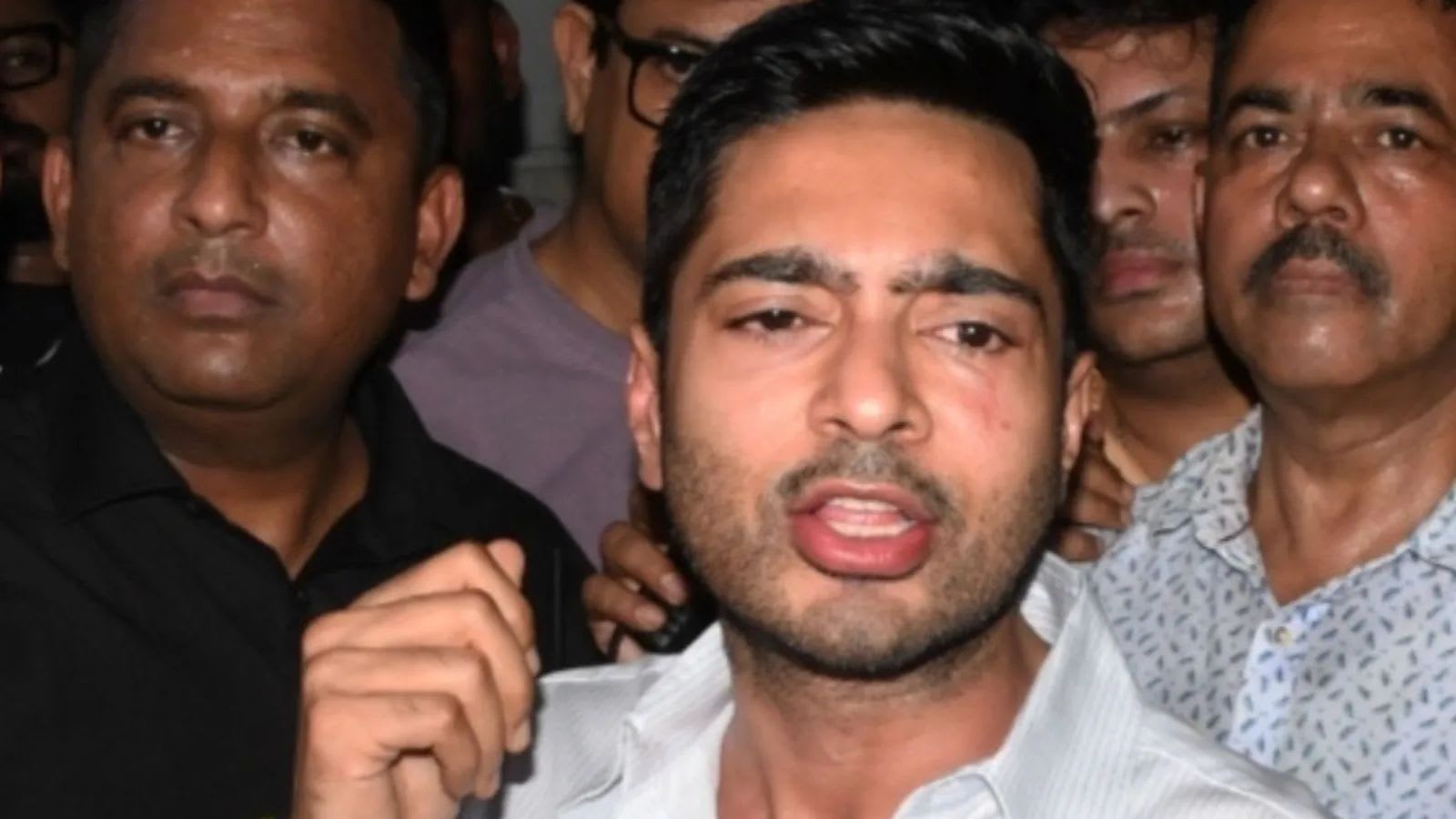
Trinamool Congress MP Abhishek Banerjee appeared before the Bidhannagar court to provide a voice sample following an order from the Calcutta High Court, after previously missing two scheduled appearances in a case concerning alleged remarks.
Legal Compliance and Political Accountability: The Case of Abhishek Banerjee
In a significant legal development, Trinamool Congress (TMC) MP Abhishek Banerjee appeared before the Chief Judicial Magistrate's court in Bidhannagar, Kolkata, to provide a voice sample. This action follows a direct order from the Calcutta High Court, marking a critical juncture in a legal battle surrounding a "DJ remark" case. The appearance is particularly noteworthy as it comes after Banerjee had skipped two previous court dates, raising questions about the intersection of political stature and judicial compliance.
The Role of Forensic Evidence in Political Litigations
The court's insistence on a voice sample highlights the increasing reliance on forensic technology to resolve disputes involving public discourse. In cases involving alleged inflammatory or defamatory remarks, voice analysis serves as a primary tool for the prosecution and the judiciary to verify the authenticity of audio recordings. By mandating this sample, the court is seeking an empirical link between the MP's voice and the contested remarks, moving the case from a battle of testimonies to one of scientific verification. This process is essential in maintaining the integrity of the judicial record, ensuring that legal penalties are based on verified evidence rather than political hearsay.
Judicial Pressure and the Calcutta High Court
The intervention of the Calcutta High Court was the catalyst for Banerjee's appearance. When high-profile political figures miss multiple summons, it often creates a perception of evasion, which the judiciary typically counters with more stringent orders. The shift from the lower court's summons to a High Court mandate underscores the legal pressure being applied to ensure that the rule of law is applied uniformly, regardless of the individual's political rank. This dynamic reflects a broader trend in Indian jurisprudence where the courts are increasingly assertive in ensuring that elected representatives adhere to judicial timelines.
Political Context and Public Rhetoric in West Bengal
The "DJ remark" case is emblematic of the highly charged political atmosphere in West Bengal, where public rallies and spontaneous remarks often become the center of legal disputes. In the state's polarized political landscape, statements made by leaders are scrutinized with extreme intensity by opposing parties, often leading to First Information Reports (FIRs) and subsequent court cases. This specific case illustrates how a single remark can snowball into a protracted legal battle, requiring high-level judicial intervention to resolve a factual dispute about who said what and in what context.
Implications for the Trinamool Congress
For the Trinamool Congress, the legal scrutiny of a prominent leader like Abhishek Banerjee—who is seen as a key strategist and a potential future face of the party—carries significant political weight. While the act of providing a voice sample is a procedural requirement, the narrative of "skipping appearances" can be leveraged by political opponents to paint the leadership as being above the law. Consequently, the decision to finally comply with the court's order is as much a strategic political move to mitigate negative optics as it is a legal necessity.
Future Trends in Political Legal Battles
Looking forward, this case sets a precedent for how forensic evidence will be handled in political disputes in India. As audio and video recordings become ubiquitous, the courts will likely see a surge in requests for biometric and voice verification. We can expect a trend where the judiciary becomes more rigorous in demanding physical presence and biological samples from political figures to prevent the misuse of manipulated media (such as deepfakes) and to ensure that genuine accountability is established.
Summary
Abhishek Banerjee's compliance with the Bidhannagar court's order to provide a voice sample closes a chapter of evasion but opens a critical phase of forensic analysis. This event underscores the tension between political power and judicial authority in West Bengal, highlighting the essential role of the Calcutta High Court in enforcing legal accountability. The outcome of the voice analysis will likely determine the trajectory of the case, potentially leading to further legal ramifications or a definitive clearance for the TMC MP.