When the Janata Party government fell: Short term, long shadow
Source Entity
Nikita Mohta
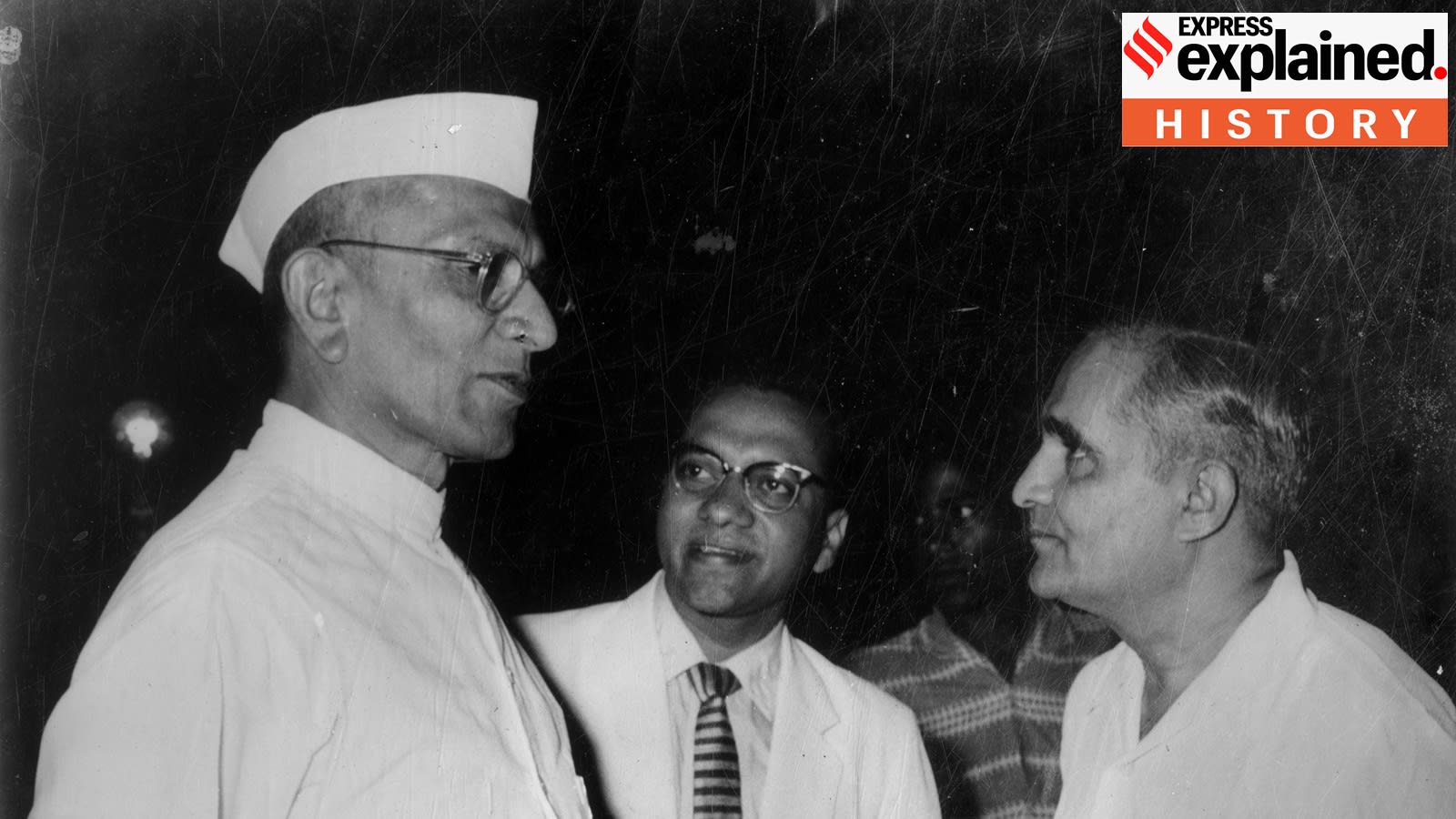
An analysis of the collapse of the Janata Party government on July 15, 1979, detailing the internal conflicts that ended India's first non-Congress administration and the subsequent return of Indira Gandhi.
The Collapse of the Janata Party: An Analysis of a Political Watershed
On July 15, 1979, India witnessed a pivotal moment in its democratic history with the resignation of Morarji Desai, the first non-Congress Prime Minister of the country. This event marked the collapse of the Janata Party government, an experiment in coalition politics that had attempted to dismantle the long-standing hegemony of the Indian National Congress. While the government failed to complete its full term, the fallout from its demise cast a long shadow over the Indian political landscape, redefining how alliances were formed and maintained in the decades that followed.
The Genesis of an Unlikely Alliance
To understand the collapse, one must first examine the unique circumstances of the Janata Party's rise. The party was not a cohesive ideological unit but rather a 'big tent' coalition formed in the wake of the Emergency (1975-1977). It brought together disparate political forces—including socialists, the right-wing Bharatiya Jana Sangh, and various agrarian leaders—who were united by a single, powerful objective: the removal of Indira Gandhi and the restoration of democratic norms. The 1977 general election victory was a mandate for liberty and anti-authoritarianism, but once the common enemy was defeated, the internal contradictions of the coalition began to surface.
Ideological Friction and Power Struggles
The downfall of the government was primarily driven by intense internal friction and personal rivalries. The leadership was plagued by a clash of egos and visions, most notably between Prime Minister Morarji Desai and Deputy Prime Minister Charan Singh. While Desai represented a more conservative, disciplined approach to governance, Singh commanded a strong base among the rural peasantry and agrarian classes. These ideological divides were exacerbated by a struggle for the premiership, as various factions within the party fought for control, rendering the administration paralyzed and unable to implement a coherent policy agenda.
The Final Fracture and Resignation
By July 1979, the instability reached a breaking point. The internal strife escalated into an open rebellion, with factions actively working to undermine the Prime Minister. The collapse was not merely a result of policy failure, but a failure of political management. When Morarji Desai finally resigned on July 15, it signaled the end of the 'Janata experiment.' The subsequent attempt by Charan Singh to form a government with the support of the Congress party further illustrated the chaotic nature of the era, ultimately leading to a period of extreme political volatility.
Broader Implications for Indian Democracy
The failure of the Janata government had profound implications for the trajectory of Indian politics. Most immediately, the chaos and instability created a vacuum that allowed Indira Gandhi to make a stunning political comeback in 1980. The electorate, exhausted by the constant bickering of the Janata factions, pivoted back toward the perceived stability of the Congress. This cycle demonstrated a critical lesson: that a coalition built solely on negative reinforcement (opposition to a single leader) is inherently fragile unless it can synthesize a shared positive vision for governance.
Historical Legacy and Future Trends
In the long term, the Janata experiment served as a blueprint—and a cautionary tale—for the coalition eras of the 1990s and 2000s. It proved that non-Congress alternatives were possible, but it also highlighted the necessity of formal coalition agreements and ideological alignment. The 'long shadow' mentioned in the historical record refers to how this period shifted the center of gravity in Indian politics, paving the way for the rise of regional parties and the eventual emergence of a more structured bipolarity in the national political scene.
Conclusion
The fall of the Janata Party government on July 15, 1979, was more than just a change in leadership; it was the collapse of a hopeful but flawed attempt to diversify India's political power. While the government was short-lived, its failure provided the essential lessons in coalition management that would later define Indian parliamentary democracy. The event remains a stark reminder that in the realm of governance, unity of purpose is far more sustainable than a mere unity of opposition.