The Jakarta Bottleneck
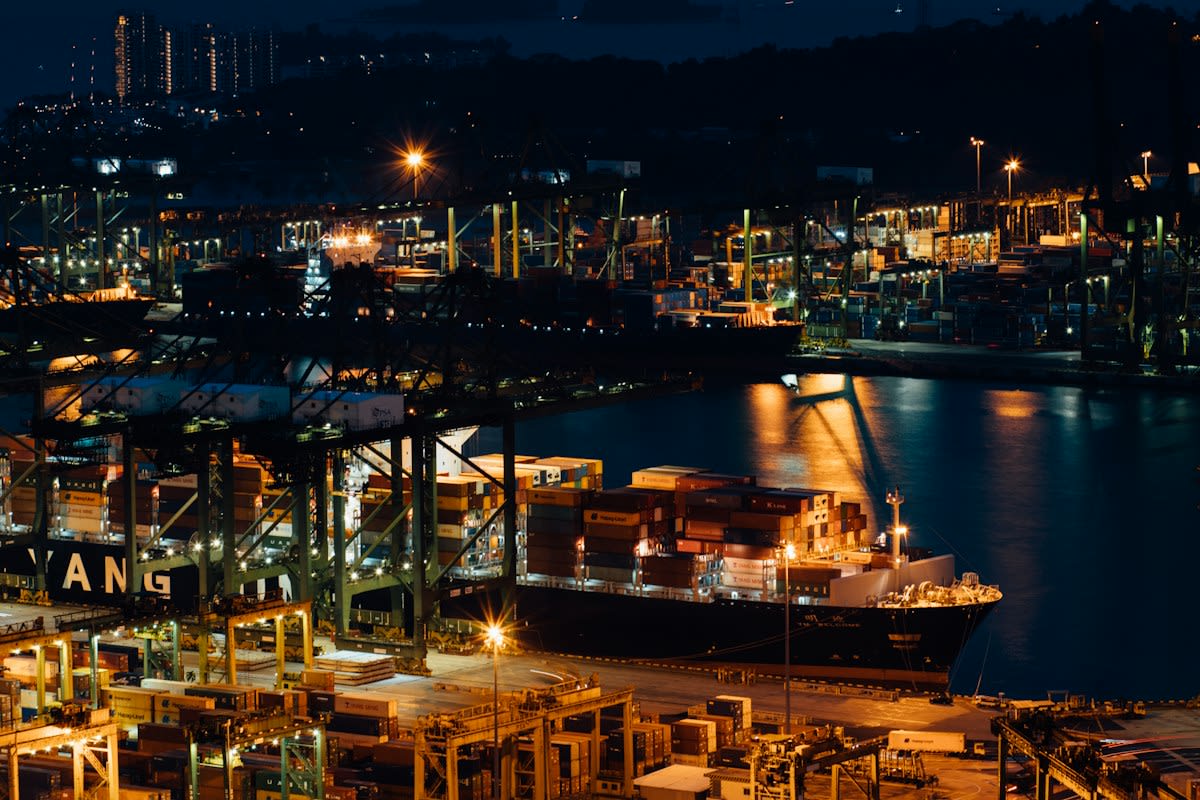
Walk through the Port of Tanjung Priok in Jakarta and you will see the trade finance gap in physical form. It looks like thousands of containers of palm oil and rubber sitting idle because a mid-sized exporter cannot secure a letter of credit. The bank in the glass tower doesn't care that the goods are high-quality or that the buyer in Rotterdam is solvent. They care about the risk-weighted assets on their balance sheet. The exporter has the resource, but the bank refuses to see the resource as the value. They only see the exporter's credit score, which is a curated fiction based on outdated accounting standards.
The industry narrative tells you that we need more inclusive banking. That is a lie. The reality is that the global trade finance gap, currently estimated at 2.5 trillion USD (Source: Asian Development Bank, 2023), is a systemic feature of the current regulatory regime. Basel III didn't make banking safer; it made it allergic to the Global South. By increasing capital requirements for unsecured lending and tightening risk parameters, regulators effectively told banks to stop lending to anyone who doesn't have a AAA rating or a massive pile of cash. This created a vacuum where trade simply stops, not for lack of money, but for lack of acceptable collateral.
The Boardroom Secret: Risk-Weighting as a Weapon
In the boardroom, the conversation isn't about helping SMEs grow. It is about the Risk-Weighted Asset (RWA) ratio. When a bank lends against a corporate guarantee in a frontier market, the capital charge is punishing. They are forced to hold more capital against that loan, which kills their Return on Equity. This is the industry whisper: banks would love to lend, but the regulatory cost of doing so in Lagos or Ho Chi Minh City is too high. They have outsourced their risk appetite to a set of spreadsheets designed in Switzerland, ignoring the actual value of the commodities moving through the ports.
This is where Resource-Backed Assets (RBA) enter the frame. The shift is simple but violent: stop lending to the company and start lending to the asset. Instead of relying on a balance sheet that can be manipulated or a credit rating that is lagging, RBA structures use the underlying commodity—cobalt, copper, lithium, or agricultural yields—as the primary collateral. By ring-fencing the asset through special purpose vehicles (SPVs) or digital warehouses, the risk is shifted from the borrower's creditworthiness to the asset's market value. This bypasses the traditional credit-score trap that keeps 40% of SME trade requests rejected (Source: WTO, 2022).
"The obsession with corporate credit ratings in trade finance is a relic of the 1990s. In a volatile geopolitical climate, the only thing that actually holds value is the physical resource. If you can verify the asset, the borrower's balance sheet becomes irrelevant."— Marcus Thorne, Senior Strategist at Global Commodity Insights
The transition to RBA is not a gradual evolution; it is a necessity for survival. As we move toward a green economy, the demand for critical minerals is skyrocketing, but the financing mechanisms remain stuck in the era of paper bills of lading. The gap is widest where the resources are most abundant. In the Democratic Republic of Congo or Indonesia, the disconnect between the value of the minerals in the ground and the ability to finance their extraction is a systemic failure that RBA is designed to exploit.
| Feature | Traditional Trade Finance | Resource-Backed Assets (RBA) |
|---|---|---|
| Primary Collateral | Corporate Credit/Balance Sheet | Physical Commodity/Reserve |
| Risk Assessment | Credit Rating (S&P, Moody's) | Asset Valuation & Market Price |
| Regulatory Burden | High (Basel III RWA) | Lower (Asset-Based Securitization) |
| Approval Speed | Weeks/Months (Due Diligence) | Days (Asset Verification) |
| Access Point | Tier 1 Banks | Private Credit/Specialized Funds |
The real friction, however, isn't the math—it is the plumbing. Moving to an RBA model requires a level of transparency that the current system hates. You cannot have a resource-backed loan if you cannot prove the resource exists and is unencumbered. This is why we are seeing a surge in digital warehouse receipts and IoT-enabled tracking in hubs like Dubai and Singapore. If a sensor in a silo in Brazil can prove to a lender in London that 10,000 tons of soy are present and Grade A, the credit risk evaporates. The asset becomes the currency.
Ground-Level Friction: The Ugly Reality
Let's be clear: this isn't a seamless digital utopia. On the ground, RBA is a bloodsport of legal jurisdictions and political infighting. In Lagos, for example, the concept of 'legal title' can be a suggestion rather than a rule. You might have a digital certificate for a shipment of cocoa, but if a local official decides to divert that cargo to a political ally, your 'resource-backed' asset is suddenly a ghost. The friction isn't in the technology; it is in the gap between a smart contract and a corrupt port authority.
Then there is the problem of 'Double Pledging.' This is the industry's dirty secret. An unscrupulous operator will pledge the same stockpile of copper to three different lenders in three different time zones. Without a global, synchronized registry of assets, RBA is vulnerable to the same fraud that plagued the 2008 mortgage crisis, just with minerals instead of subprime loans. The fight now is over who controls the 'Golden Record' of asset ownership. Is it a consortium of banks, or a decentralized ledger that no single entity can manipulate?
Furthermore, the valuation of these assets is a constant tug-of-war. Commodity prices are volatile. A loan backed by lithium might be over-collateralized on Monday and underwater by Friday. This requires dynamic margin calls and real-time pricing feeds, which most traditional trade finance desks are not equipped to handle. They are used to static letters of credit, not the high-frequency volatility of the LME (London Metal Exchange).
The Second-Order Collapse
The shift toward RBA is triggering a second-order consequence: the erosion of the US Dollar's hegemony in trade finance. When you lend against a physical asset, the currency of the loan becomes secondary to the value of the resource. We are seeing the rise of 'commodity-denominated' credits in the BRICS+ bloc. If a Chinese lender provides financing to a Gulf state backed by oil reserves, the transaction doesn't need to touch the SWIFT system or the New York Federal Reserve. The asset is the anchor, not the dollar.
This creates a bifurcated global economy. On one side, you have the legacy system—slow, regulatory-heavy, and obsessed with credit scores. On the other, you have the RBA ecosystem—fast, asset-centric, and increasingly decoupled from Western financial centers. The trade finance gap isn't being closed by 'better banking'; it is being bypassed by a new architecture of value. Those who continue to rely on traditional bank guarantees will find themselves priced out of the most lucrative resource plays of the next decade.
Fact-Check & Accuracy Note
The claim that the trade finance gap is a result of 'lack of liquidity' is widely debated. While the ADB (2023) emphasizes the 2.5 trillion USD gap, many analysts argue the issue is structural (regulatory) rather than monetary. The effectiveness of RBA in completely eliminating this gap is still theoretical and depends heavily on the adoption of global asset registries to prevent double-pledging.