In 2018, Salesforce CEO called Facebook ‘new cigarette’, he has a similar warning
Source Entity
TOI TECH DESK
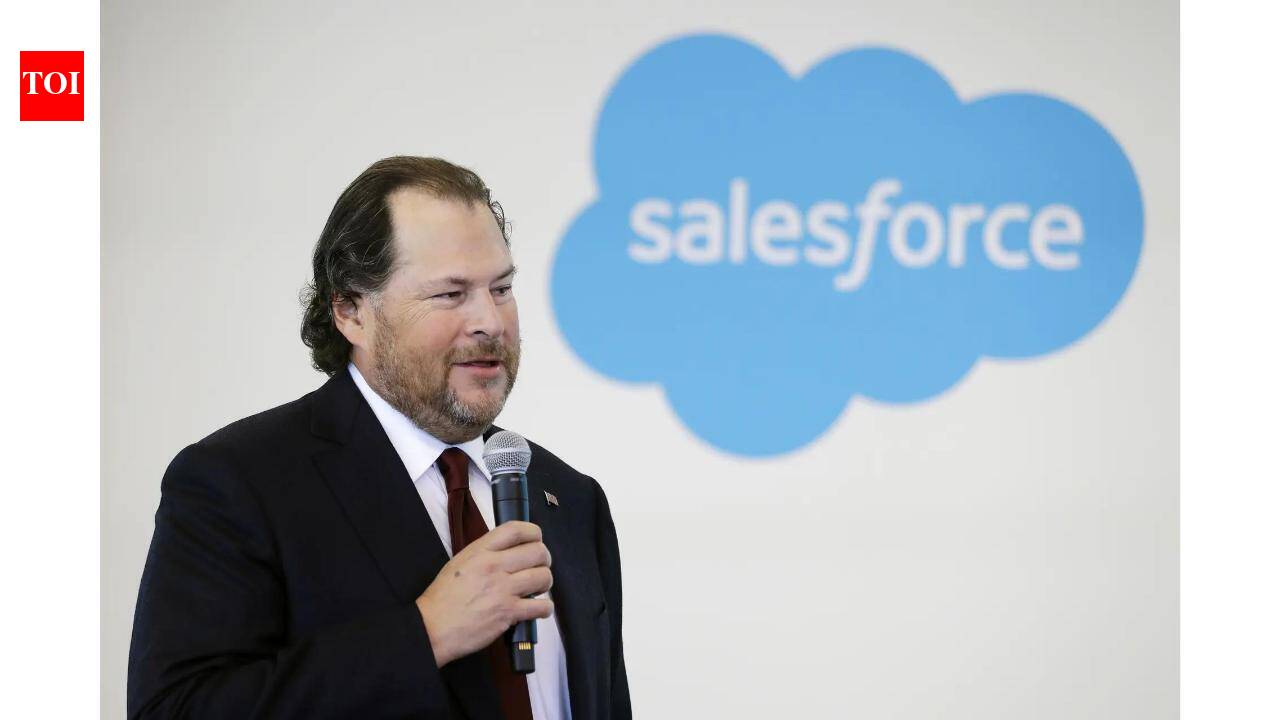
Major AI industry leaders are clashing over whether to slow development to ensure safety. While Anthropic, OpenAI, and Google favor a paced approach, Meta's Mark Zuckerberg argues that safety is inherently linked to competitive performance.
The Great AI Safety Divide: Industry Leaders at a Crossroads
The artificial intelligence landscape is currently fractured by a profound debate regarding the speed of technological advancement and the existential risks it may pose. The conversation was ignited by Anthropic researchers, who issued stark warnings suggesting that unchecked AI development could potentially threaten humanity by 2030. In response, Anthropic CEO Dario Amodei proposed a strategic slowdown, titled “We Must Pace the Frontier,” aimed at prioritizing public safety over rapid deployment.
A Rare Moment of Industry Consensus
In an unusual show of solidarity, top executives from several major AI firms initially aligned with Amodei’s call for caution. OpenAI’s Sam Altman, Google DeepMind’s Demis Hassabis, and xAI’s Elon Musk publicly supported the proposal. Altman specifically committed to integrating independent, third-party evaluators within OpenAI to verify safety protocols, signaling a potential shift toward a more transparent, externally audited development process for frontier models.
The Meta Perspective: Alignment as a Competitive Advantage
However, this consensus was quickly disrupted by Meta CEO Mark Zuckerberg. Distancing himself from the "slowdown" rhetoric of Anthropic, Zuckerberg aligned his stance with Nvidia CEO Jensen Huang. Rather than viewing safety as a hurdle to progress, Zuckerberg argued that AI labs failing to prioritize "alignment”—the process of ensuring AI adheres to human values—will inevitably fall behind. This suggests that for Meta, safety is not a reason to pause development, but rather a functional requirement for achieving superior product performance.
Strategic Positioning and Industry Responsibility
Zuckerberg’s public commentary is widely viewed as a strategic effort to position Meta as a responsible, industry-leading actor in the AI space. By framing safety as a driver of competitive success rather than a regulatory constraint, Meta is attempting to change the narrative around AI governance. This approach contrasts sharply with the "existential risk" framing adopted by Anthropic, which posits that the technology itself is dangerous enough to require a collective deceleration.
Broader Implications and Future Trends
The tension between these two philosophies—proactive, industry-wide slowdowns versus market-driven, alignment-based development—will likely define the next decade of tech policy. If the industry chooses to follow the "paced frontier" model, we may see the rise of standardized, external safety certifications. Conversely, if the "alignment as competitive advantage" model prevails, we could see an acceleration in safety research as companies compete to build the most reliable and "human-aligned" systems.
Conclusion: The Path Forward
Ultimately, the disagreement highlights the lack of a unified global framework for AI safety. While the public outcry surrounding the 2030 deadline has forced these leaders to the table, the divide between those who fear the technology's speed and those who fear losing the competitive race remains deep. The coming months will be critical in determining whether these companies can bridge these philosophical differences to establish a cohesive safety standard that satisfies both regulators and the public.
Multiple Citing Sources