The Erasure of Entry-Level Industrialism
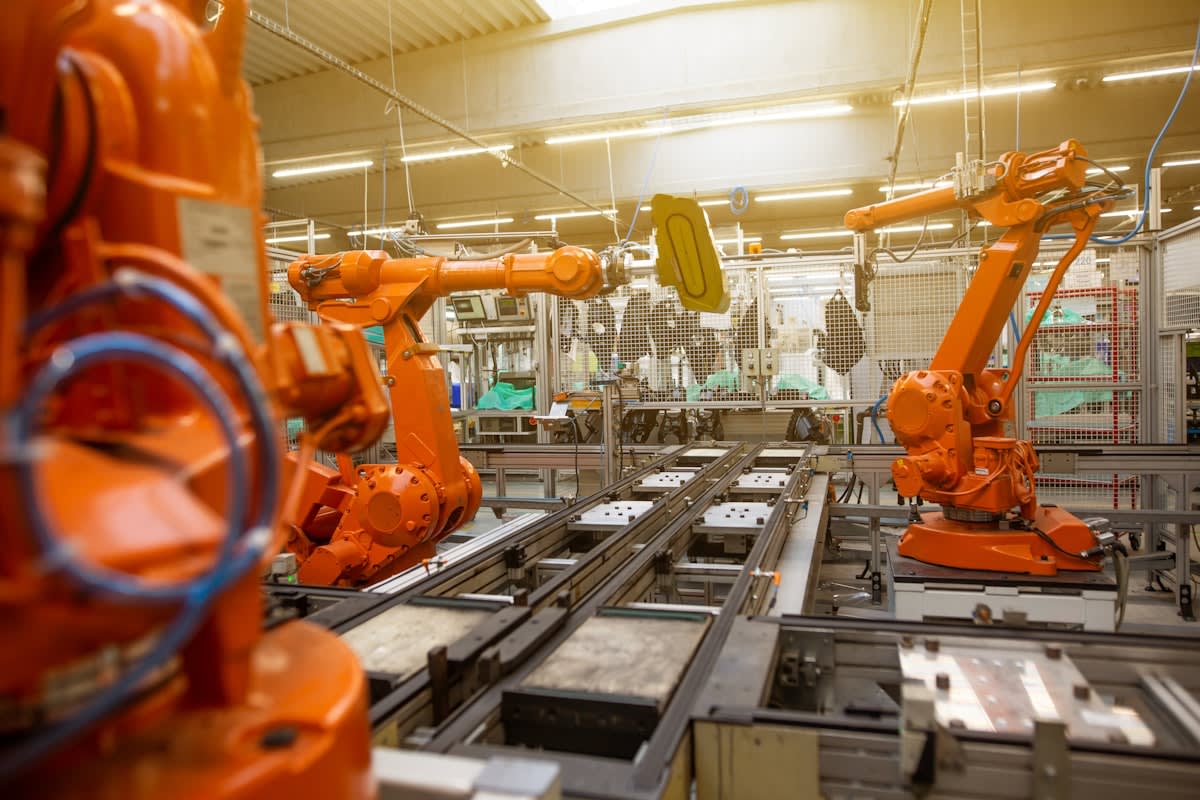
Industrial entry points are vanishing. Modern automation removes the low-skill threshold that previously allowed unskilled workers to enter the formal economy. This process is visible in the aggressive deployment of robotic welding equipment, which is seeing a 9-12% compound annual growth rate through 2035. Such growth ensures that manual tasks are no longer a viable starting point for the labor force.
Bangladesh reports a 40% workforce risk from AI and automation. These figures highlight a trend where labor-intensive manufacturing loses its competitive edge to machine precision. Women and youth bear the brunt of this displacement. Local economies in hubs like Nairobi face a similar trajectory when capital-heavy automation replaces human hands.
Goldman Sachs economist Joseph Briggs suggests that AI will displace 9% of the U.S. workforce, roughly 15 million jobs. While the U.S. market possesses a buffer of high-skill service roles, emerging markets lack this safety net. Displacement in a developed economy is a statistical adjustment. In a developing industrial hub, it is the removal of the only accessible path to middle-class stability.
"AI will reshape the labor market and displace 9% of the workforce."— Joseph Briggs, Goldman Sachs Economist
Rockwell Automation and Cisco are currently promoting software-defined manufacturing in India. Their strategy focuses on closing the digital skills gap through specific training programs. Only those with high-level networking and cybersecurity skills survive this transition. The unskilled worker is not reskilled; they are simply deleted from the production line.
| Region | Risk/Growth Metric | Primary Driver |
|---|---|---|
| Bangladesh | 40% Workforce Risk | AI and Automation |
| United States | 9% Workforce Risk | AI Displacement |
| Global Market | 9-12% CAGR | Robotic Welding Demand |
| South Africa | Capital Upgrade | Machinery Modernization |
The structural replacement of humans by machines is not a theoretical risk but an active investment strategy.
Capital Substitution in Emerging Markets
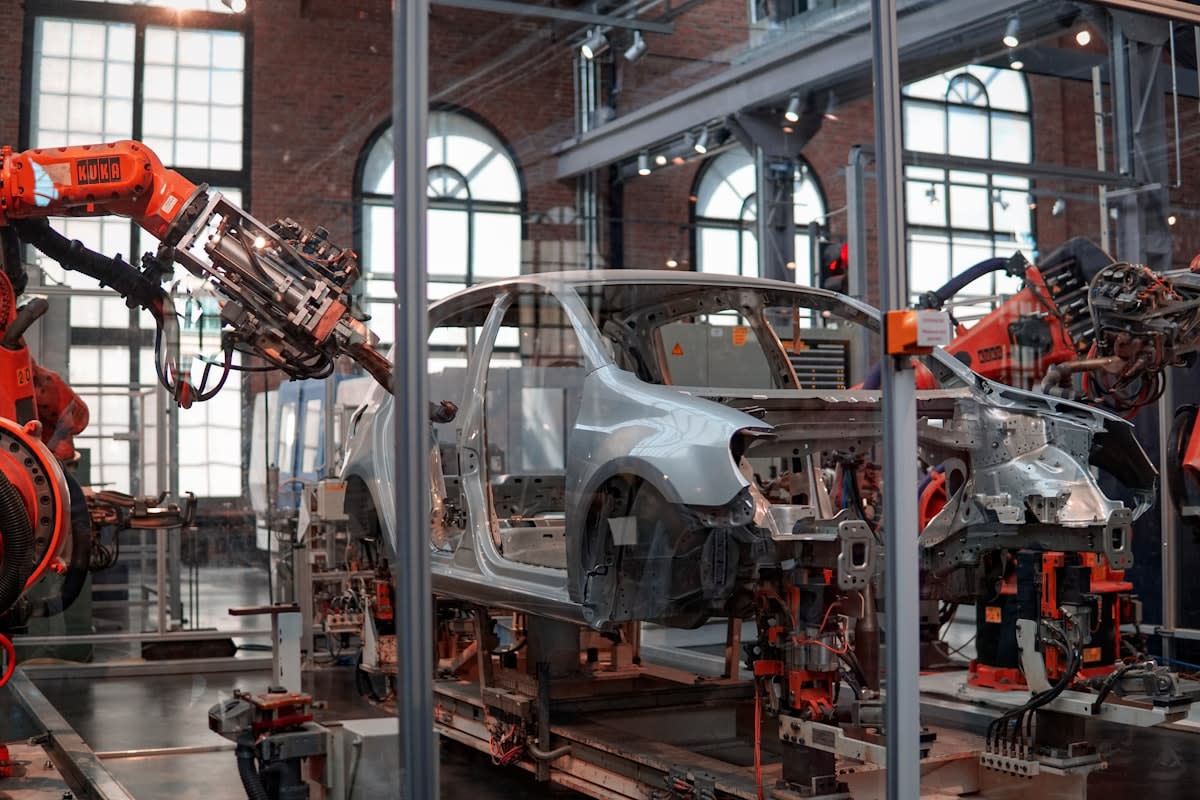
Chery Holding Group recently acquired a former Nissan plant in South Africa. Their plan involves spending millions of dollars to upgrade and add machinery before starting production in 2027. This investment prioritizes capital over headcount. Human labor is replaced by robots manufactured by the group itself.
Physical constraints define the success of these deployments. A firmware bug in Taipei might pause a line for an hour. Conversely, a brownout in Kinshasa renders an automated plant a graveyard of expensive steel. This disparity creates a scenario where only the most capitalized firms can afford to automate, further concentrating industrial power.
Vulnerability is not distributed evenly across the workforce. Bangladesh data indicates that women are particularly susceptible to automation-driven displacement. Young people and persons with disabilities face the steepest barriers to entry. These groups are effectively locked out of the industrial sector as the entry-level bar is raised to a degree of technical certification they cannot access.
- Unskilled youth: No longer a viable labor pool for entry-level assembly.
- Women in manufacturing: Disproportionately affected by AI-driven task replacement.
- Informal workers: Limited access to the 'digital skills' required for software-defined plants.
- Low-skill technicians: Displaced by robotic welding and automated quality mandates.
Corporate narratives regarding reskilling are often a distraction from the actual headcount reduction. Rockwell and Cisco's joint digital skills initiative aims to equip a small fraction of the workforce with networking and cybersecurity skills. This creates a tiny elite of technicians. The remaining 90% of the former labor pool finds no place in a software-defined environment.
The SDM Trap
Software-Defined Manufacturing (SDM) replaces hardware-centric manual labor with a full-stack software layer, effectively turning the factory floor into a data center where the 'worker' is a network administrator, not a machinist.
The industrial ladder is being dismantled from the bottom up.
The Economic Dead-End
Manufacturing was once the primary engine for lifting populations out of poverty. By removing the entry-level role, companies remove the training ground for future supervisors and engineers. No one becomes a master technician if they can never be a junior apprentice. This creates a talent gap that cannot be solved by a few networking courses.
Market demand for robotic welding equipment is driven by quality mandates and labor shortages. Paradoxically, the automation meant to solve labor shortages creates a permanent unemployment class. High-precision mandates in metal fabrication make human error unacceptable. Machines do not make mistakes, but they also do not pay taxes or consume local goods.
Projected Robotic Welding Equipment Growth (2026-2035)
Executive Insight
+18.4%
YTD Growth
The result is a bifurcated economy. On one side, a small group of highly paid software engineers manage the machines. On the other, a massive population of displaced workers competes for dwindling informal service jobs. This is the logical conclusion of software-defined industrialization in emerging markets.
Cost of failure is now measured in social instability rather than lost productivity. When 40% of a workforce is at risk, the economic incentive for automation outweighs the social cost for the corporation. The firm optimizes for the balance sheet. The state is left to manage the resulting instability.