
The Illusion of Public Market Diversification
Passive equity strategies are hitting a wall of concentration. When the top 10 companies in the S&P 500 command 38% of the index weight, diversification becomes a mathematical fiction. Institutional giants are realizing that holding a broad index is no longer a hedge against risk; it is a concentrated bet on a handful of tech behemoths.
This realization is compounded by the failure of the traditional 60/40 portfolio. The inflation shock of 2021 and 2022 eroded the historical inverse correlation between equities and bonds, leaving sovereign wealth funds exposed. The result? A migration toward private equity, private credit, and hard infrastructure.
Energy as the New Reserve Asset
Capital is seeking tangibility. According to an Invesco survey, sovereign investors and central banks managing $29 trillion in assets are reorienting toward energy assets. For 80% of those polled, energy security and transition infrastructure represent the most credible path to portfolio resilience. This is not a trend; it is a survival strategy.
| Metric | Previous Baseline | 2026 Status |
|---|---|---|
| Central Banks citing US debt as a USD risk | 20% (2024) | 61% |
| Investors predicting weaker USD status (5yr) | 12% (2022) | 29% |
| SWF Infrastructure Allocation | Approx 4.5% | 9% |
The underlying driver is a deepening skepticism of the US dollar. While a credible alternative remains elusive, the sentiment is clear: 61% of central banks now believe US debt levels jeopardize the dollar's long-term role as a reserve asset. The movement is incremental, but the direction is unidirectional.
"The lack of a credible dollar alternative is likely to make any movement away from it incremental, but concerns are widespread and deepening."— Invesco Survey Analysis
The APAC Industrial Engine
While the rest of the world sees a contraction in industrial and services deal volumes—estimated at a 7% global decline—the Asia-Pacific region is bucking the trend. PwC reports a projected 2% increase in APAC deal volumes for 2026, with manufacturing expected to outperform most other subsectors.
The real utility here is automation. The median share of industrial manufacturers utilizing highly automated processes is projected to climb from 18% to 50% by 2030. This is where the $30 trillion in projected sovereign wealth (by 2035, per Bain & Company) is likely to land: in the high-efficiency factories of India and Southeast Asia.

The Concentration of Power
Wealth is not just growing; it is concentrating. The top 10 sovereign wealth funds now hold over 75% of total global wealth, split evenly between the Middle East (40%) and Asia (40%), with Europe trailing at 20%. These funds—including Norway's $1.7 trillion Government Pension Fund Global and China's SAFE Investment Company at $1.4 trillion—are the new architects of global infrastructure.
The AI Catalyst
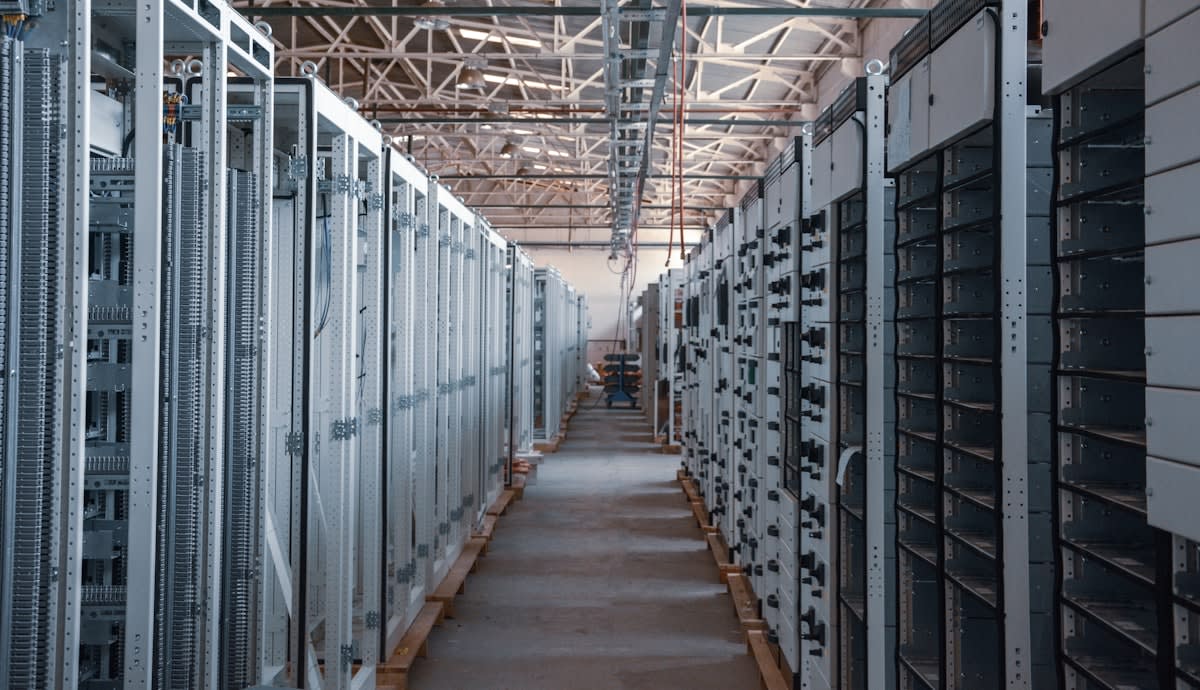
The demand for private assets is being accelerated by the AI investment cycle, specifically the massive energy and data center infrastructure required to sustain compute power.
We are witnessing a fundamental reorientation of capital. From the Middle East's Public Investment Fund to the industrial hubs of Bangalore and Tokyo, the objective is no longer simple growth. It is the acquisition of strategic autonomy through energy and automation.