Why are we still obsessing over LLM benchmarks and chatbot hallucinations when the real war is being fought over power grids in Batam and server racks in Kyiv? The hype cycle treats AI as a cloud-based miracle, but the money—the real, sovereign-grade capital—is treating it as a real estate and energy play. We are witnessing a violent correction in how the world's largest investors perceive risk. They are no longer satisfied with the digital promise; they want the concrete, the copper, and the kilowatts.
The Concentration Trap
Passive equity strategies are becoming a liability. When the ten largest companies in the S&P 500 command 38% of the index's weighting, diversification becomes a myth. Sovereign wealth funds (SWFs) have realized that betting on the index is essentially betting on a handful of tech giants. This concentration, coupled with the 2021-2022 inflation shock that shattered the traditional inverse relationship between bonds and equities, has forced a total rethink of portfolio construction.
| Metric | Previous Era (Pre-2022) | Current Trend (2025-2026) |
|---|---|---|
| Infrastructure Allocation | ~4.5% | 9% |
| S&P 500 Top 10 Weighting | Lower/Distributed | 38% |
| Dollar Reserve Confidence | High/Stable | 61% Central Banks flag US debt risks |
| Primary Asset Focus | Public Equities/Bonds | Private Credit/Infrastructure/Energy |
The flight to private markets isn't just about avoiding a bubble. It is a strategic migration toward assets that provide a hedge against geopolitical instability and currency devaluation.
AI is a Physicality Game
Look at the geography of the new build-out. In Southeast Asia, Firmus Technologies is moving beyond its Bitcoin mining roots to deploy massive GPU infrastructure. They aren't just renting cloud space; they are building a 360MW data center campus in Batam, Indonesia, through a partnership with Nvidia. This isn't a boutique project. Firmus is eyeing over $70 billion in AI infrastructure across Australia, backed by a $10 billion debt facility. They are building the factories of the 21st century.
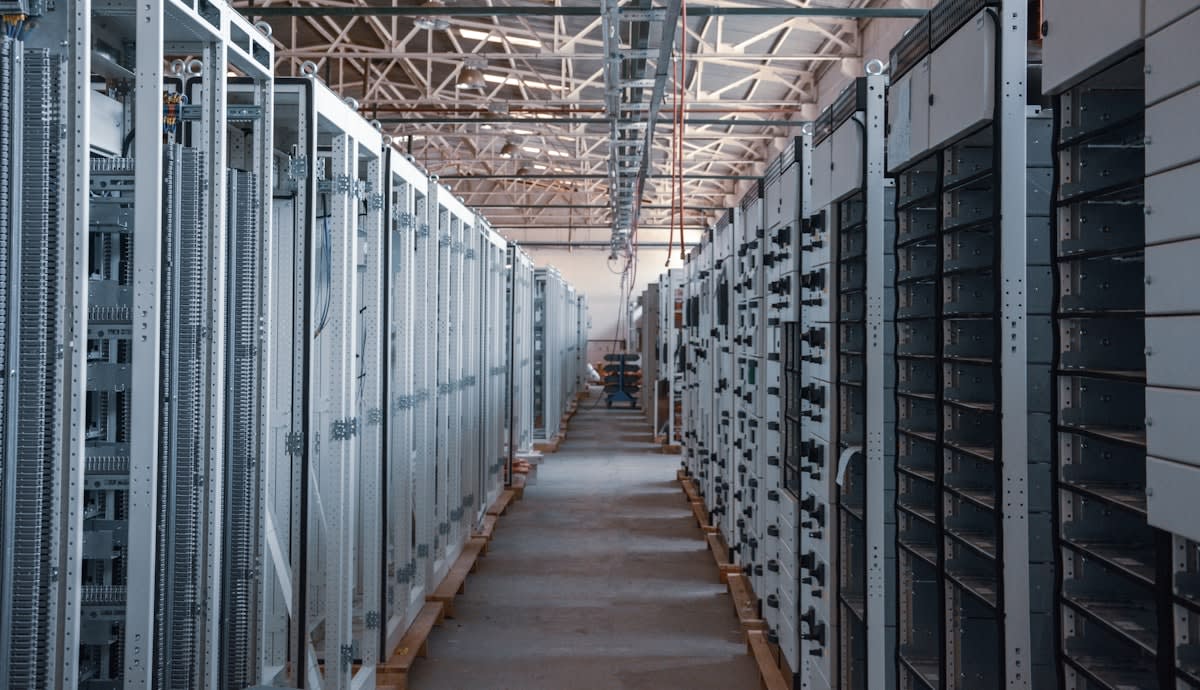
While the West focuses on corporate profits, other nations view this infrastructure as a matter of national survival. Kyivstar's partnership with the Ukrainian government to build a sovereign AI data center proves that latency and data residency are now security imperatives. When response time is critical for robotic systems and defense technology, relying on a server in Virginia or Dublin is a strategic failure.
"The development of artificial intelligence is already creating a new level of demand for computing infrastructure, and its practical use is expanding rapidly in everyday services."— Oleksandr Komarov, President of Kyivstar Group
This hunger for hardware extends down to the most granular levels of maintenance. Startups like Omen AI are now selling spectrometers to monitor fluid health in GPU racks to prevent bacterial growth from crashing a multi-million dollar cluster. When the scale of investment reaches this magnitude, the smallest physical failure becomes a systemic risk.
The Dollar and the Energy Hedge
The most unsettling trend for Western economists is the deepening skepticism toward the U.S. dollar. According to an Invesco survey, 61% of central banks believe U.S. debt levels are eroding the dollar's long-term position as a reserve asset. While there is no immediate alternative to the greenback, the exit is happening incrementally. How do you hedge against a weakening reserve currency? You buy energy security.
The Resilience Mandate
80% of sovereign investors polled identify energy security and energy transition infrastructure as the most credible investments for portfolio resilience. This is a clear signal: the world is trading paper promises for power plants.
We are seeing a convergence of interests. The same sovereign wealth funds managing $29 trillion in assets are simultaneously fleeing the S&P 500, questioning the dollar, and funding the energy grids required for Nvidia's GPUs. It is a closed loop of physical dependencies.
The era of 'asset-light' growth is over. The winners of the next decade won't be the ones with the cleverest algorithms, but the ones who own the power lines, the cooling systems, and the land. The digital economy has finally hit the wall of physical reality, and the sovereign funds are the first ones to start buying the bricks.