
Capital is pouring into a void. According to a KPMG Global AI Pulse report for Q2, 79% of leaders cite AI as a key investment area, yet a staggering 24% are already facing intense pressure to prove actual value to their investors. This gap represents a fundamental failure in how intelligence is priced and deployed. Most boards treat Large Language Models as magic boxes rather than expensive, data-hungry utilities. Meanwhile, the cost of maintaining these systems is spiraling beyond the reach of mid-sized firms.
The ROI Deficit and Hidden Overheads
Talent is the first hidden leak. Gartner warns that demand for AI skills has pushed compensation for these roles to three or four times that of the average employee. Such premiums create an unsustainable wage gap within organizations. Finance leaders often ignore these overheads until the quarterly budget collapses. Consequently, the promised efficiency gains are eaten by the payroll of the very people implementing the tools.
The Visibility Gap
Organizations are spending an average of $188 million on AI, but 42% of leaders have only partial visibility into where that money actually goes.
Spending is holding steady, but the utility is stagnating. KPMG data shows average spending at $188 million, a negligible increase from $186 million in Q1. This plateau suggests that companies are paying more for the same marginal gains. Many firms are simply funding the research and development of the labs they pay to use. The result is a balance sheet that looks innovative but performs poorly.
The financial leak is only the first symptom of a deeper structural theft.
The Data Extraction Engine
Data is the only real currency here. Palantir CEO Alex Karp argues that frontier labs are irresponsibly overselling their models while quietly absorbing proprietary enterprise data. This transaction is fundamentally one-sided. Companies provide the competitive advantage, and in exchange, they receive a generic API. It is a parasitic relationship disguised as a partnership.
"Frontier AI labs have completely, irresponsibly oversold their models while quietly absorbing the proprietary data and competitive advantage of the companies paying for them."— Alex Karp, CEO of Palantir
True value requires a sovereignty layer. Karp's thesis emphasizes that real enterprise AI requires a model, an application layer, and compute, all managed securely. Without this, the enterprise is merely a training set for the next version of a frontier model. The labs use corporate data to refine their general intelligence, then sell that intelligence back to the corporation at a premium. This loop ensures that the lab wins regardless of whether the client sees a return.
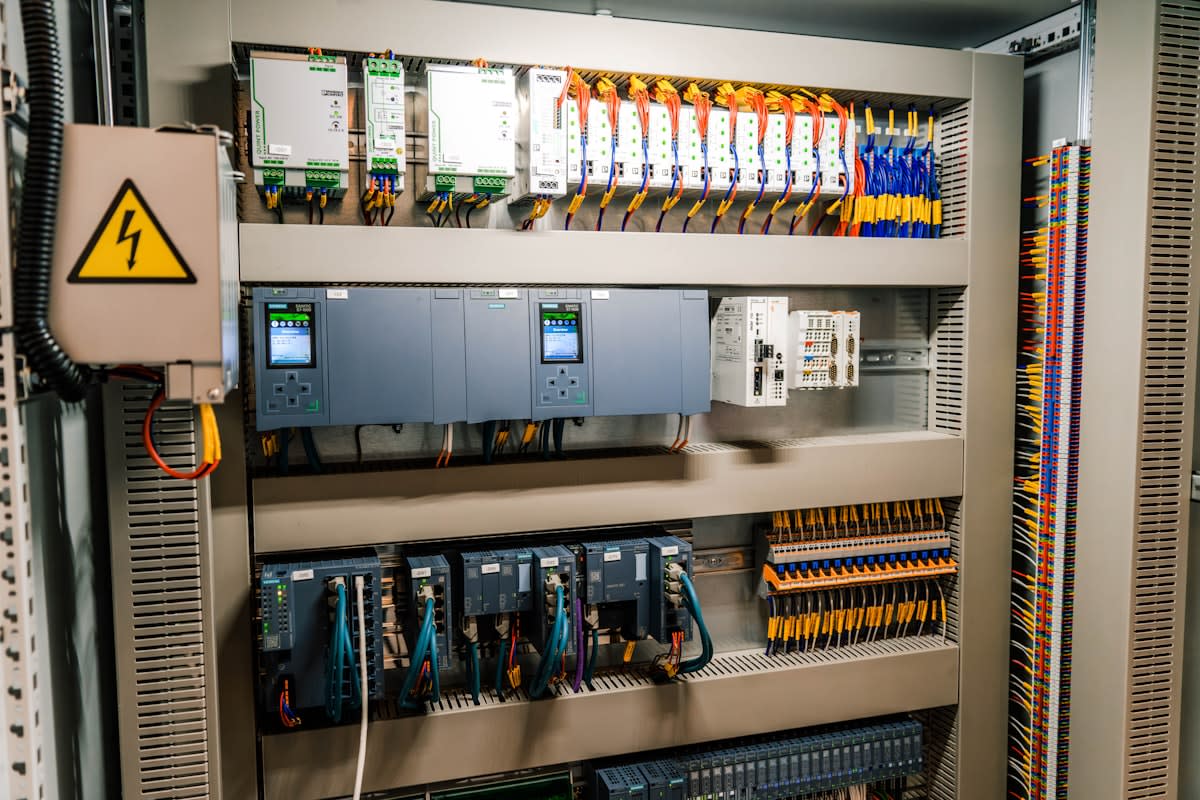
This extraction of value is fueled by a desperate hunger for raw processing power.
Compute Inflation and Diminishing Returns
Compute requirements are exploding. Meta's internal Watermelon model reportedly uses an order of magnitude more compute than its predecessor, Avocado. More power does not always equal more intelligence. We are seeing a trend where massive hardware investments only yield marginal benchmark improvements. This trajectory suggests a ceiling that no amount of GPUs can break.
Global constraints expose the absurdity of this race. While a developer in Lagos struggles with erratic power to maintain a local instance, the engineers in Hsinchu face a chip shortage that forces them to optimize for compute efficiency over raw intelligence. Both realities highlight the physical limits of the current paradigm. The belief that scaling compute linearly will scale intelligence exponentially is a dangerous gamble. It ignores the thermodynamics of the data center and the economics of the chip fab.
| Metric | Frontier Lab Model | Enterprise Reality |
|---|---|---|
| Compute Cost | Exponentially Increasing | Budgetary Black Hole |
| Data Ownership | Absorbed by Lab | Loss of Proprietary Edge |
| ROI Visibility | Obscured by Hype | 24% Under Pressure |
| Talent Cost | Market-Driven Spikes | 3-4x Salary Premium |
While the labs fight for compute dominance, they are leaving the back door open.
The Security and Sovereignty Gap
Safety is an afterthought for some. DeepSeek recently demonstrated the ability to generate in-browser ransomware with minimal prompting. Check Point researchers found that while the samples were incomplete, they required little effort to make attack-ready. Such capabilities turn a productivity tool into a weaponized liability. Boards are ignoring this risk in their rush to automate.
Geopolitics adds another layer of risk. When the US government forced Anthropic to cut foreign access to the Fable 5 model, businesses realized their core infrastructure was a rented lease. Relying on a cloud-based model from a single jurisdiction is a gamble with corporate survival. A sudden cutoff can paralyze a codebase that has become dependent on a specific model's logic. This is why air-gapped deployments are no longer a luxury but a requirement.

Infrastructure must be owned to be secure. The current model of API-dependency creates a vulnerability that no firewall can fix. If the model provider changes the weights or the government changes the law, the enterprise loses its intelligence. This is the ultimate cost of the synthetic loop. You pay to train your competitor, and you pay to rent back the result.
The Intelligence Death Spiral
Returns are evaporating. When compute costs increase by an order of magnitude for marginal gains, the ROI becomes negative. The talent premium further erodes the margin. Combine this with the loss of proprietary data, and the enterprise is effectively paying to be disrupted. This is not a temporary hurdle but a structural flaw in the frontier lab business model.
Survival requires a hard break from the API-first mentality. Companies must prioritize sovereignty and local compute over the convenience of the cloud. The goal is to decouple intelligence from the labs that seek to harvest it. Only then can a company stop funding its own obsolescence. The era of blind investment is over; the era of the audit has begun.
AI Investment vs. ROI Pressure
Executive Insight
+18.4%
YTD Growth