
For decades, the economic narrative centered on the reduction of cost through efficiency. We believed that as technology evolved, the 'friction' of doing business—the delays, the paperwork, the logistical hurdles—would simply vanish. But a closer look at current global markets reveals a contrarian reality. Simplicity hasn't become free; it has become a premium product. Whether it is the price of a barrel of oil or the interface of a digital wallet, we are now paying a hidden tax for the privilege of not having to deal with the underlying complexity of the system.
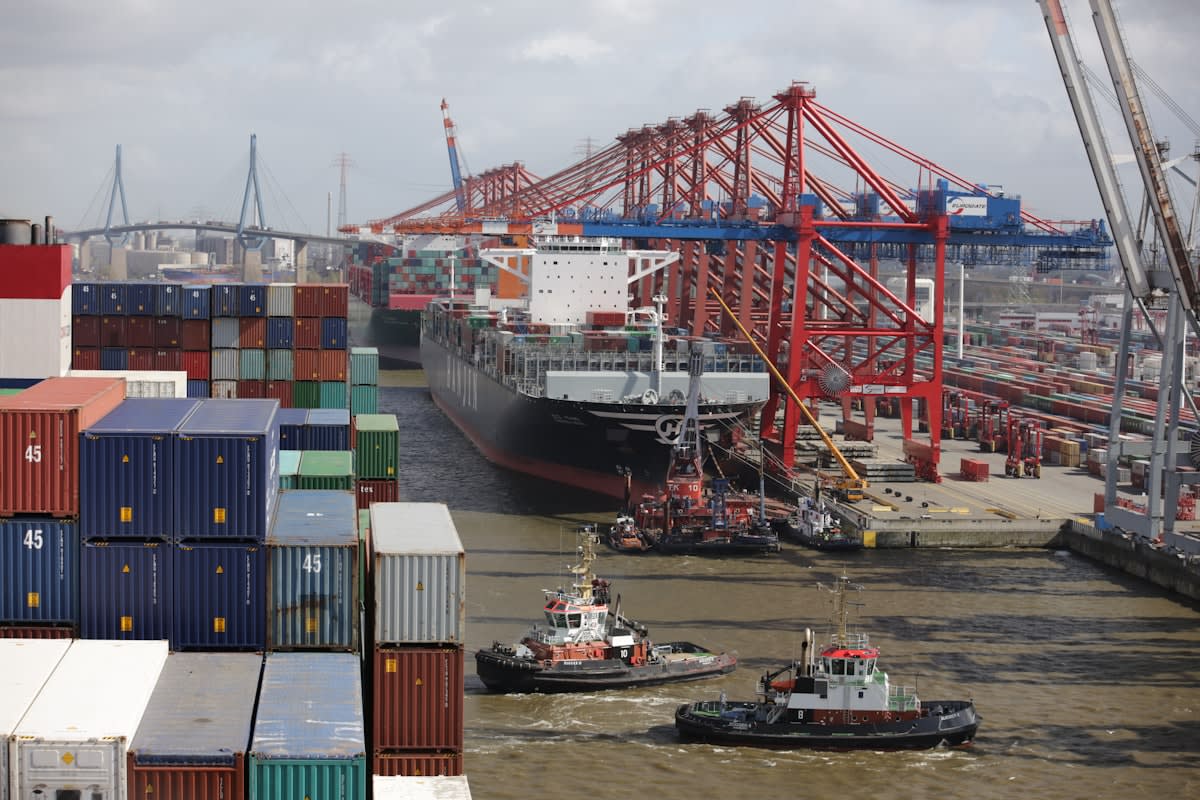
This phenomenon is most visible in the energy sector, where the distinction between risk and reality has blurred. According to research by Dr. Jennifer I Considine, the market has begun to differentiate between a 'fear premium'—the price hike driven by geopolitical instability—and a 'friction premium.' The latter is a direct charge for the physical processes required to transform crude oil into delivered petroleum products. In this context, the friction premium is not about the fear of a shortage, but the tangible cost of operational and logistical constraints. Immediate access to refining capacity and shipping routes has become materially more valuable than barrels promised months into the future.
The Logistics of Immediacy
Why does this happen? Because the global supply chain is brittle. When the physical process of moving a resource from point A to point B becomes a bottleneck, those who can bypass that friction command a higher price. This isn't a crisis; it's a market correction. The industry is pricing 'optionality'—the ability to pivot trade routes or access storage instantly. When the system is clogged, the shortcut becomes the most valuable asset in the portfolio. We are seeing a systemic shift where the value is no longer in the commodity itself, but in the speed and ease of its delivery.
This logic extends far beyond oil tankers and pipelines. Look at the global payments landscape. Companies like Adyen and Nuvei market 'seamless' experiences, promising to reduce friction for the end user. On the surface, this looks like a benefit to the consumer. In reality, it is a strategic optimization of the 'checkout journey.' By integrating local payment methods—like Apple Pay in the US, or PayPal's global network of 300 million users—retailers aren't just being helpful. They are removing the cognitive friction that leads to abandoned carts, effectively capturing revenue that would have been lost to the complexity of the transaction.
The Conversion Paradox
The 'seamless' experience is rarely a gift; it is a conversion tool. By lowering the barrier to payment, firms increase the velocity of consumption, often while maintaining high retail margins.
The financial friction premium is subtly embedded in the infrastructure. Nuvei, for instance, highlights the value of guaranteeing that payments cannot be reversed, effectively eliminating the 'friction' of chargebacks. While this provides security and stability for the merchant, the cost of this stability is baked into the processing fees and the closed-loop nature of the ecosystems. The user enjoys a one-click experience, but the systemic cost of that simplicity is distributed across the network, often favoring the platform provider over the individual.
| Friction Type | Traditional Cost | The Friction Premium | Example |
|---|---|---|---|
| Logistical | Shipping & Handling | Immediate Access/Optionality | Refining & Petroleum Delivery |
| Transactional | Processing Fees | One-Click Conversion/No Chargebacks | Digital Wallets (Apple Pay, PayPal) |
| Cognitive | Research & Comparison | AI-Curated Consumption | AGI-driven preference production |
| Entry | Hardware Cost | Ecosystem Integration | Next-Gen Consoles (PS6/Xbox Helix) |
Moving from the physical and financial to the digital, we find the most aggressive application of this premium: Artificial Intelligence. A recent paper on Post-AGI Economics suggests that AI doesn't just solve problems; it enters the 'preference-production process.' By removing friction from consumption, AI can learn which emotional states increase engagement and personalize persuasion in real-time. We are no longer just paying for a product; we are paying for a system that removes the friction of deciding what we want.
This shift has created a massive market-valuation premium for firms with high generative-AI exposure. The value doesn't reside in the LLM itself, but in the AI's ability to integrate into organizational processes and human capital to streamline output. When a platform can remove the friction between a user's vague desire and a completed purchase, the economic value of that platform skyrockets. It is the ultimate expression of the friction premium: the monetization of the shortest possible path to satisfaction.
"Efficiency cannot substitute for democratic legitimacy, but in the market, efficiency—specifically the removal of friction—is often priced as the highest form of value."— Analysis of Post-AGI Economic Theory
We see this play out in the 'superstar' economy of live-streaming platforms. Research from Springer Nature indicates that influencers with high exposure can expand their product variety because the platform framework provides 'low product introduction frictions.' Because it is so easy to add a new item to a stream and sell it to a captive audience, the friction of market entry is virtually zero. This allows for horizontal assortment expansion that would be impossible in a traditional retail environment, where the friction of shelf space and inventory management acts as a natural brake on growth.
Even in consumer electronics, the friction premium is becoming explicit. Reports suggest the PlayStation 6 and Xbox Project Helix will launch in 2027 with price points starting around $800. While hardware costs are a factor, these devices are increasingly sold as gateways to frictionless ecosystems. The high entry price is a ticket to a world where software, social interaction, and entertainment are integrated into a single, seamless flow. You aren't just buying a console; you are paying a premium to enter a walled garden where the friction of fragmented entertainment is eliminated.
So, where does this leave the global consumer? We are trading autonomy for ease. Every time we choose the 'seamless' option, we reinforce a system that prices simplicity as a luxury. The friction premium is a signal that the world is becoming more complex under the hood, and the only way to avoid that complexity is to pay the tax. This is not a crisis to be feared, but a shift to be navigated. The opportunity lies in identifying where friction is artificial—created by platforms to extract a premium—and where it is structural.
The strategic winner in this new economy is not the one who removes all friction, but the one who manages it most effectively. For the consumer, resilience means regaining the ability to tolerate a bit of friction in exchange for lower costs and more control. For the business, the goal is to provide genuine simplicity without creating a dependency that eventually becomes a liability. The hidden tax of simplicity is real, and as we move toward an AGI-integrated world, the cost of 'easy' will only continue to rise.