Manu Bhaker after leading India at Asian Games parade: ‘Missed Jaspal sir a lot’
Source Entity
The Indian Express
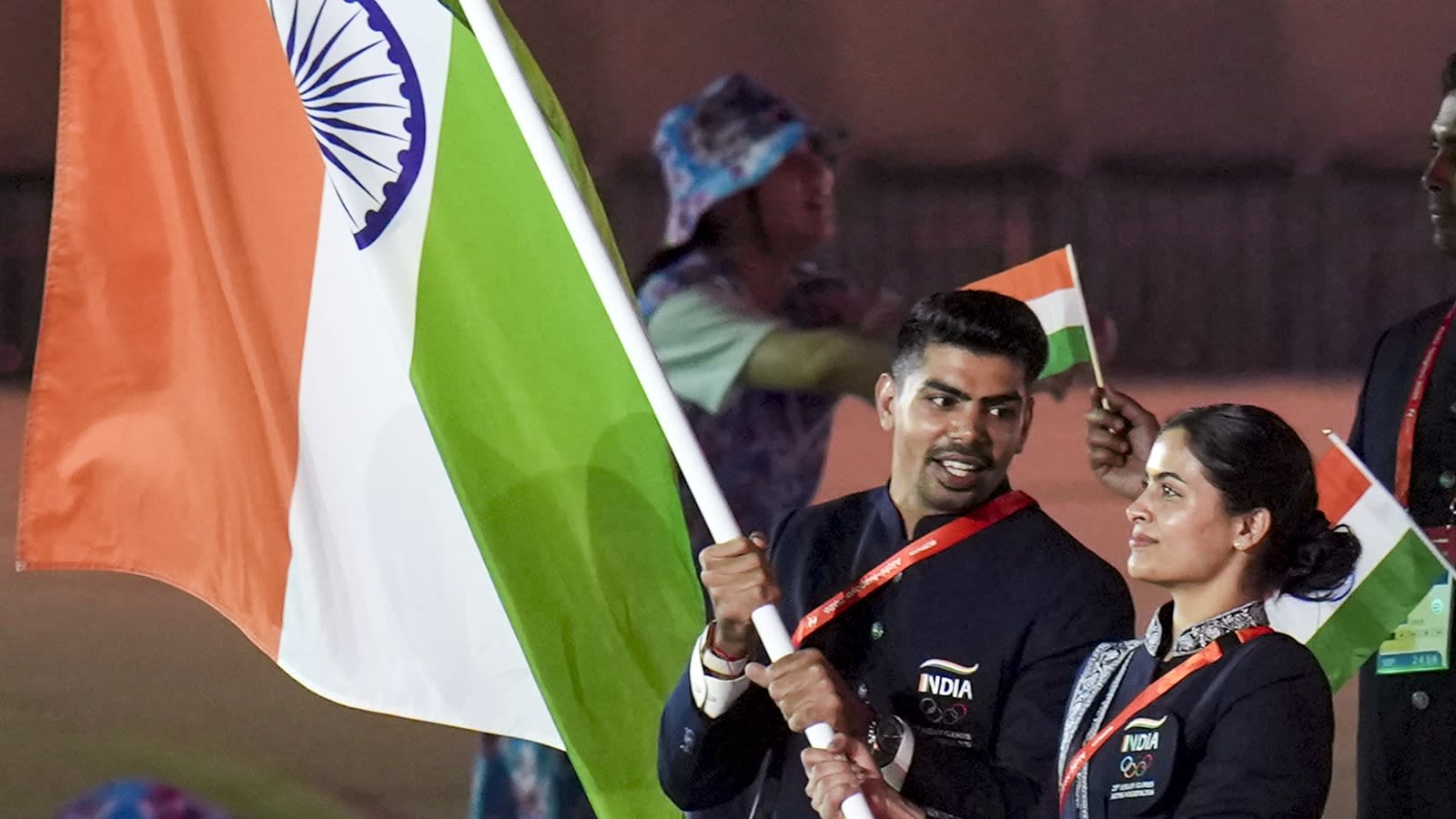
Indian shot putter Tajinderpal Singh Toor was replaced by kabaddi star Pawan Sehrawat as flag-bearer for the Asian Games opening ceremony due to a kit delivery delay. Sehrawat will now lead the contingent alongside shooter Manu Bhaker in Aichi-Nagoya.
Logistical Hurdles at the Aichi-Nagoya Asian Games
The 20th Asian Games in Aichi-Nagoya have faced significant scrutiny even before the official commencement of the opening ceremony. While international multi-sport events are inherently complex, the organizers have found themselves on the defensive following a series of operational gaffes and logistical challenges that have hampered the smooth arrival and preparation of various national contingents.
The Flag-Bearer Substitution
Among the most notable ripples caused by these logistical failures is the last-minute change to the Indian contingent's flag-bearers. Shot putter Tajinderpal Singh Toor, initially selected to represent the nation alongside shooter Manu Bhaker, was forced to withdraw from his ceremonial duties. The reason cited for this absence is the failure to deliver Toor’s official competition and ceremonial kit in time, rendering him unable to participate in the high-profile gala event.
Enter Pawan Sehrawat
In a swift administrative pivot, the Indian Chef-de-mission, Sahdev Yadav, confirmed that kabaddi star Pawan Sehrawat would step in to replace Toor. Sehrawat, a seasoned athlete who secured a gold medal at the previous Asian Games, brings significant pedigree to the role. His elevation to the flag-bearer position ensures that India’s presence at the parade remains robust despite the unfortunate circumstances surrounding Toor’s kit delay.
The Significance of the Opening Ceremony
For athletes like Manu Bhaker, being named a flag-bearer is a career-defining honor. Bhaker, who has previously held this responsibility at the Commonwealth Games, brings a level of seasoned professionalism to the role. Her public reflection on her coach, Jaspal Rana, and his strict attendance policy highlights the discipline required to reach such heights in international sports. The parade serves as a global stage, and for the athletes, it is the culmination of years of rigorous preparation.
Broader Implications for Event Management
This incident serves as a poignant reminder of the fragility of large-scale sporting logistics. When fundamental requirements—such as the timely delivery of official kits—are not met, it directly impacts the morale and ceremonial representation of athletes. As the Aichi-Nagoya Games progress, the ability of organizers to rectify these operational lapses will be critical in maintaining the integrity and reputation of the competition.
Future Outlook
Looking ahead, national sports federations will likely re-evaluate their logistical contingency plans to ensure that athletes are never again sidelined from ceremonial honors due to supply chain or administrative delays. While the Indian contingent has successfully mitigated the impact of this specific oversight, the incident underscores the necessity for flawless coordination in the high-stakes environment of international athletics.
Multiple Citing Sources